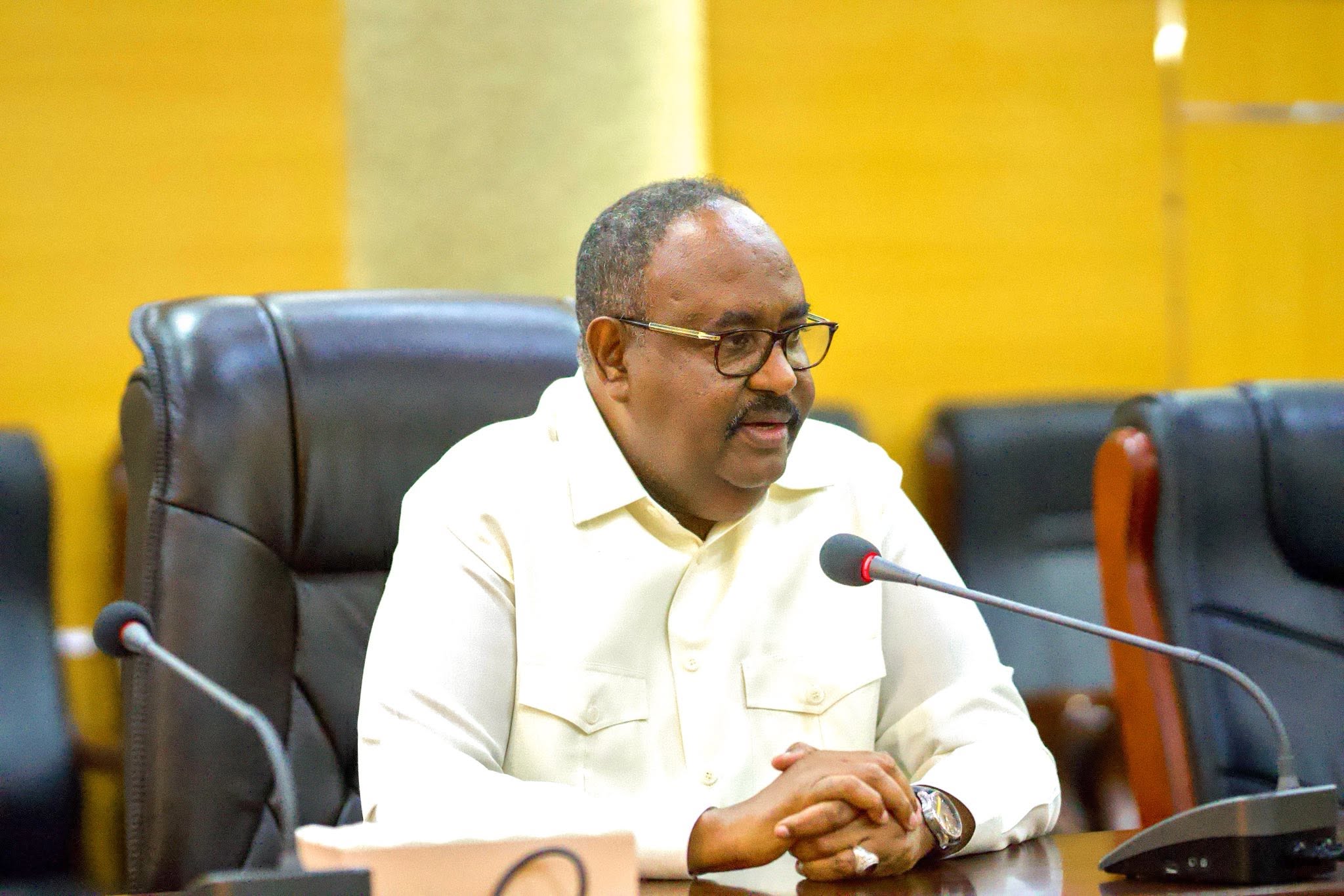
Garowe, SOMALIA – Puntland President Said Abdullahi Deni opened the latest session of Puntland’s parliament in Garowe with what amounts to a declaration of political war. In a sweeping address to lawmakers, President Deni accuses Hassan Sheikh Mohamud of creating armed pirate groups, dismantling Somalia’s federal system, and orchestrating political coups across the country’s member states. The charges arrive at a moment when every federal member state is challenging Villa Somalia’s authority.

“Puntland has stood against the political and legal abduction committed against the agreed system of governance, and we will continue to resist it,” Deni told parliament.
The Piracy Bombshell
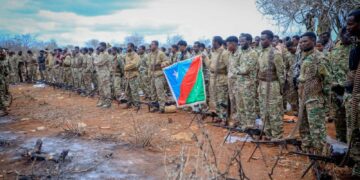
President Deni accused Hassan Sheikh of having “openly created pirates”. His speech also tied the federal presidency to the military attack in Ras Kamboni that killed Somali citizens. “He has launched a direct assault on the federal system and the administrations operating in the country,” Deni said. “He openly created pirates. Earlier, he carried out an armed attack in Ras Kamboni in which Somali citizens were killed.”
The piracy allegation has been building for months. In May, Puntland’s Deputy Minister of Information Bile Mahmoud Qabowsade publicly accused “the outgoing president, Hassan Sheikh, and his group” of “working to strengthen acts of terrorism and piracy, creating insecurity within the Federal Member States.” Qabowsade went further. He claimed that “the Federal Government has diverted international funds meant for counterterrorism toward undermining the Federal Member States.” If accurate, that allegation means Mogadishu is actively weaponising aid against its own regions.
All this benefits Al-Shabaab, which may gain the edge over the SNA after the AU withdrawal. If Puntland’s claims about federally backed piracy hold any substance, Mogadishu is actively manufacturing new threats along Somalia’s coastline while Al-Shabaab consolidates inland.
What makes this moment different from previous Mogadishu-Puntland spats is the sheer weight of corroborating evidence from other federal member states. President Deni accuses Hassan Sheikh of engineering a “political coup” in Southwest State. The divisive elections bill that Villa Somalia pushed through parliament gave Mogadishu the constitutional machinery to control regional votes. In Baidoa, that machinery produced an 88-1 election result on June 10. A loyalist took office after the sitting president fell to military pressure.
The pattern extends to Galmudug, where armed civilians took to the streets of Cabduwaaq in open defiance of federally imposed elections. In Jubaland, the federal government deployed troops to influence the political landscape during Ahmed Madobe’s re-election. In Mogadishu itself, local elections were marred by armed coercion. When President Deni accuses Hassan Sheikh of systematically destabilising regional administrations, the evidence across multiple fronts makes the case difficult to dismiss.
The Constitutional Hijacking
President Deni’s accuses Hassan Sheikh of carrying out an abduction of Somalia’s governance; the constitutional record supports every element of the charge. President Deni accuses Hassan Sheikh of abandoning the power-sharing arrangement. That process began with Hassan Sheikh’s constitutional gambit, a unilateral rewriting of Somalia’s governance framework that Puntland rejected outright. That gambit centralised authority in Mogadishu and stripped federal member states of powers they had held since the formation of the federal system.
When that approach met an international rebuff from Western partners who warned against undermining federalism, the president pressed forward regardless. Both Puntland and Jubaland then walked out of the National Consultative Council. They accused it of serving as a rubber stamp for Villa Somalia’s centralisation agenda.
“We are at a point where all Somali people must awaken,” President Deni said in an earlier parliamentary address in 2025. “I am calling on all Somali politicians, wherever they may be, to prioritize the salvation of the country above all else and work together to restore stability without pursuing personal or political interests.”
President Deni accuses Hassan Sheikh of pursuing political consolidation while Somalia’s security collapses around him. The timing underscores the point. While Mogadishu deploys troops to install loyalists in Baidoa and isolate the Galmudug president in Dhusamareb, Al-Shabaab continues to exploit the security vulnerabilities. Federal resources that should be fighting militants are instead being spent on subjugating regions.
The federal government has not responded to President Deni’s accusations. The silence is becoming a pattern of its own. President Deni accuses Hassan Sheikh of creating pirates, engineering coups, and hijacking the constitution. These are not rhetorical flourishes from a disgruntled opposition figure but from the president of Somalia’s oldest and most stable federal member state. The international community has so far limited itself to statements of concern. Whether it will treat these charges with the seriousness they demand remains an open question.