GAROWE, SOMALIA – Puntland’s two day ultimatum to the armed units that had signed themselves over to the federal government expired on Thursday, and most of them came in. The administration recovered the bulk of the defectors on terms negotiated through traditional elders, under which the men are re-registered into the state forces, Puntland assumes their pay and entitlements, and they sever the relationship with Mogadishu that produced the confrontation. Its defence forces then took two more positions on Saturday, the command at Carmo in Bari and a further camp in Galkayo. A recruitment drive Villa Somalia announced from a public stage on 1 July has ended five weeks later with its personnel back on Puntland’s payroll, its equipment in Puntland’s stores and no federal minister willing to account for either.

How the Puntland Deadline Actually Ended
The instruction from the Puntland Defence Forces command reached every armed body inside the state operating outside its chain of command. Fighters were told to hand themselves in, join the regional forces and take what the command called an opportunity to return to the legal framework. President Said Abdullahi Deni warned that anyone still outside that structure when the two days ran out would face prosecution, and the administration extended the warning to civilians, saying that sheltering or supplying armed personnel would carry legal consequences of its own.
What followed was mostly paperwork rather than fighting. Elders from Bari, Nugal and Mudug carried the terms into the camps. The administration recovered most of the men who had gone over as the deadline expired. That bargain has three parts. Returning fighters are entered back onto the state’s rolls, Puntland takes on their salaries and entitlements, and they give up the federal registration that had made them a separate army. Agreement has been reached on most of what remains outstanding in Bari and Mudug, where the same terms are being extended to units that never left their garrisons.
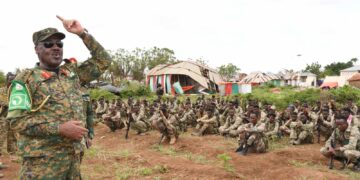
One further piece is expected to fall on Sunday. The units under General Jimcaale at Ligle in the Nugal region style themselves Danab while forming no part of that force, and their commander was given the 54th Division, a formation that exists on paper and nowhere else. He has agreed to renounce the appointment and bring his men back on the same terms as the rest, which by now settles very little, since the federally aligned militias have already been beaten and their members are either in custody or working through registration into the Puntland Defence Forces. Even the one group that ran is coming back. The garrison at Barda-dheere north of Galkayo abandoned its camp overnight in the middle of the week and crossed to federal positions on the Galmudug side of the city, and those men are now in talks to return.
Carmo, Galkayo and the Camps Before Them
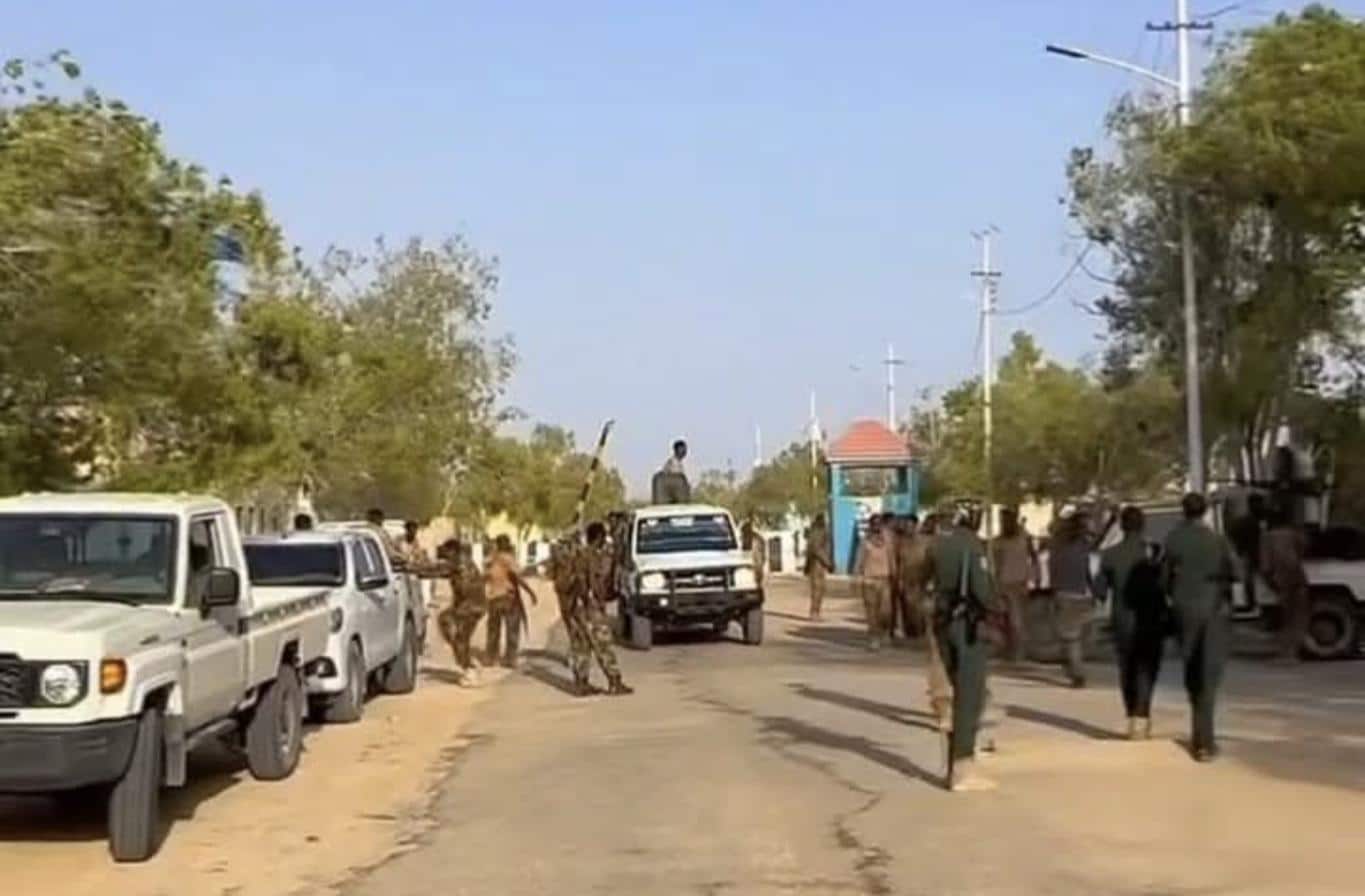
Saturday brought in the Carmo command and another camp in Galkayo, closing the military side of the operation. The Puntland police command announced that the state had formally taken over a military headquarters in the town, describing its previous occupants as armed militias carrying out acts that destabilised security and public order in Puntland’s districts. “Puntland forces have fully taken over the headquarters, its security and the administration of the site have been secured, and all armed parties have been ordered to submit to the lawful institutions of the Puntland Government,” the statement said, adding that operations against remaining federally aligned units would continue in accordance with the constitution and laws of the state.
Galkayo, six days earlier, was the one that had to be fought for. Puntland forces attacked the base on the northern outskirts before dawn, took 101 men into custody along with 60 wounded, and recovered vehicles, ammunition, communications equipment and police gear including uniforms, boots and handcuffs. Some of that equipment turned out to be part of a Chinese donation to the Somali Police Force. Regional reporting put the number who gave themselves up during the fighting itself at around seventy. Mortar rounds fell in residential districts during the exchange, one civilian was killed and two wounded, and families left for safer parts of a city that has been divided along a north to south line since the 1990s.
Bosaso needed no shooting at all. Clan-mediated talks brought the former Puntland Security Force militia at the headquarters in the port city to surrender to the government the next morning, handing over its weapons along with the camp, which mattered a great deal in a city whose port carries most of the state’s revenue.
Three cities, three methods, and the pattern is consistent. Puntland applied force where a position was defended and mediation wherever the clan link gave it a lever, and it holds all three compounds a week later. Federal deployments into Gedo and the fighting at Ras Kamboni followed the older Somali pattern of escalating first, and produced neither the ground nor the political result Mogadishu wanted.
What Puntland Has Bought and What It Now Owes
The victory arrives with a bill attached. Several hundred men are returning to a payroll that has been the subject of complaint before, and the fighters coming back have themselves protested about entitlements and conditions in the past. Puntland has committed to paying them at the moment it is also financing its campaign against the Islamic State faction in the Calmiskaad mountains largely from its own revenue, without the logistics package the African Union mission provides further south. Managing those obligations is the harder half of what the administration has just taken on. The units being absorbed are largely what remained of the Puntland Security Force, a counterterrorism formation raised and trained with American money and used for years against the Islamic State faction in those mountains, so the men arriving are experienced and expensive rather than raw.
Officials have set out where they intend this to end. The state has said it will build a single unified command, with military integration that removes power built on clan and on individual commanders and replaces it with forces answering to the administration’s formal institutions. That is the correct diagnosis of what went wrong, since the units that defected were able to defect precisely because they answered to a chain of command outside the state. The instrument used to recover them, negotiation through elders whose communities supplied the men, carries its own tension with that ambition, and Puntland will have to hold both at once.
A legal track runs alongside all of it. Puntland’s cabinet has ordered prosecutions of politicians and officers it accuses of undermining state security, which converted a week of tactical gains into a standing legal position and gave the elders something to bargain against. A fighter choosing between re-registration with back pay and a court appearance has a reason to choose quickly, and the deadline existed to make that choice urgent. Puntland has also told neighbouring administrations that armed men leaving its territory are their problem now.
The Programme Villa Somalia Cannot Explain
None of this was hidden in advance. During the commemorations on 1 July, Prime Minister Hamza Abdi Barre told President Deni to his face that Mogadishu would raise troops on his territory regardless. “We will recruit 30,000 soldiers from Puntland. I represent them,” he said. “Whether you like it or become angry enough to explode, that is the reality.” President Hassan Sheikh Mohamud afterwards defended the programme on the grounds that the men would belong to the Somali National Army and threatened nobody. Five weeks on, the federal government has said nothing about the compounds it has lost, the detentions, or the return of its recruits to the state they were raised against.
The arithmetic should worry Mogadishu more than the humiliation does. Weapons, vehicles, police equipment and several hundred trained men were committed to a project inside a state already carrying its own counterterrorism war, while al-Shabaab held Teedaan and other towns in Hiran and the army’s brigades in the central regions went short of ammunition. The mission that supplies the south loses its logistics package on 31 December. Every rifle sent north went somewhere the insurgency is not, and every officer occupied with the Mudug file was an officer not occupied with Hiran. That equipment is now inventoried in Garowe.
Puntland ends the week with the compounds, the prisoners, the equipment, the recruits and a legal framework for what follows. It has also demonstrated that a member state can face down a federal deployment and absorb it, which is a lesson Jubaland has watched closely and Hirshabelle’s politicians are watching while their own succession is arranged over their heads. The argument President Deni has made since 2023 about a presidency that manufactures armed groups now carries five weeks of physical evidence behind it, and the men who were supposed to prove him wrong are drawing Puntland salaries.