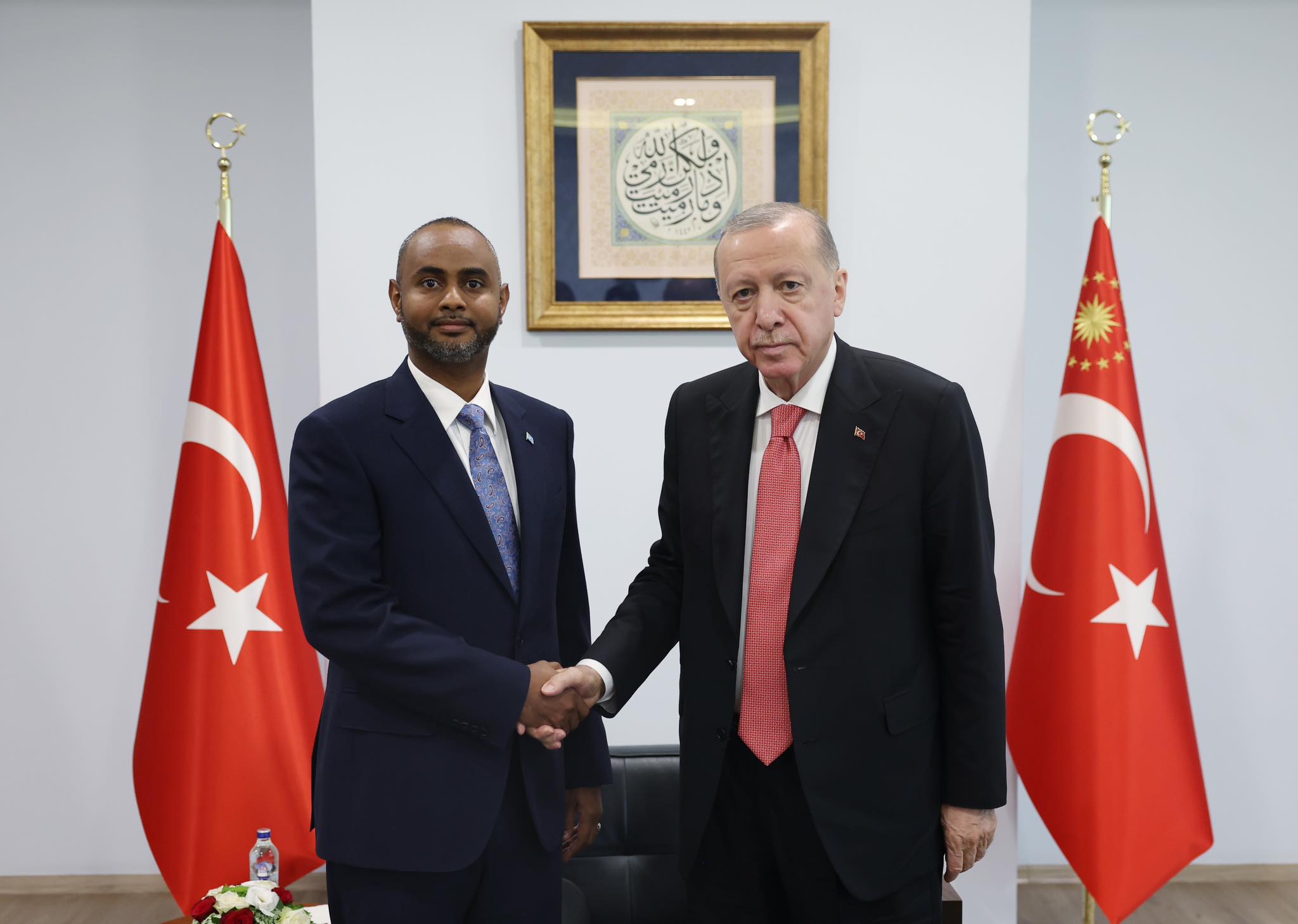
MOGADISHU, SOMALIA – The House of the People convened at Villa Hargeysa on Monday to fill the speakership vacated in June, with Abdulkadir Mohamed Nur, the minister of ports and marine transport known across Mogadishu as Jama, entering the chamber as the presidency’s candidate against a rival his own supporters describe as a companion. He is forty years old, educated in Ankara, spent eight years inside Somalia’s embassy there, ran the intelligence service as its acting director, and lost the defence ministry in March 2025 after American officers pressed for his removal over the Turkish military agreement he had signed the year before. The chamber elevating him has been sitting past the end of its four-year term since April. The office he takes sits second in the constitutional order and chairs the joint sittings where the constitution itself is rewritten.

How Abdulkadir Mohamed Nur Reached the Chair
His working life began in Turkiye. Abdulkadir Mohamed Nur joined the Somali embassy in Ankara as second secretary in 2009, moved up to first secretary in 2012, then first counsellor, and finally served as chargé d’affaires until May 2017, holding the file through the years when Turkish involvement in Mogadishu grew from a humanitarian gesture into the largest foreign presence in the country. His degree in international relations comes from the political science faculty at Ankara University, the school Turks still call the Mekteb-i Mülkiye, which has supplied that state with diplomats and ministers for a century and a half. He speaks Turkish fluently, and the relationships he built in those years have shaped every post he has held since.
The rest of his record sits inside the security state. He served as head of security at Villa Somalia, then returned home from Ankara to become deputy director of the National Intelligence and Security Agency in May 2017, acting as its director from October of that year until February 2018. In August 2018 he crossed to the legislature as senior adviser to the speaker of the House of the People, learning the chamber’s procedures from the office he now proposes to occupy. Two years later he became minister of justice, and in December 2021 he took the defence ministry.
That last appointment carried him across a change of president. Abdulkadir Mohamed Nur was made defence minister in the final weeks of Mohamed Abdullahi Farmaajo’s term and kept the portfolio when President Hassan Sheikh Mohamud returned to Villa Somalia in May 2022, surviving a transition that swept out most of the previous administration and its appointments. Few Somali officials have managed that crossing, and the ones who do tend to hold files that any presidency needs continuity in. Intelligence, justice, defence and ports form a single line of work, since each is a ministry where the presidency exercises power directly and answers for it afterwards.
The Ankara File Washington Objected To
On 8 February 2024 he signed the defence and economic cooperation framework agreement with his Turkish counterpart in Ankara, and parliament ratified it thirteen days later. The ten-year text commits Turkiye to build, train and equip a Somali navy and to protect Somali waters, and it opened the door to Turkish exploration of Somali hydrocarbons. Mogadishu presented the agreement as its answer to Ethiopia’s memorandum with Somaliland, and it remains the most consequential security instrument Somalia has signed with any state since the collapse of 1991.
Signing it eventually cost Abdulkadir Mohamed Nur the ministry that had made him a signatory. On 17 March 2025 the president moved him to ports, a reassignment two sources familiar with the discussions attributed to repeated pressure from American military officers who complained of poor coordination, demanded sight of the February text, and were unsettled by Turkish plans for a spaceport and by the arrival of two Bayraktar Akinci drones in Mogadishu that month. Somalia’s ambassador to Turkiye rejected the account as an affront to Somali autonomy. Weeks later Washington cut its funding for the Danab special forces, and the finance minister told parliament the government would have to find those salaries elsewhere.
Abdulkadir Mohamed Nur kept the Turkish relationship through the demotion. Three months after losing defence he was received alone by President Erdogan at his office in Ankara, a closed-door meeting the Turkish presidency announced and Somalis spent days questioning, since a ports minister holds neither the foreign nor the defence brief that would explain it. Somali officials describe him as the man Ankara trusts most in Mogadishu, and he has guarded that channel against colleagues who might share it.
His elevation now hands the third office of the state to the man American officers wanted out of the second, at the moment Washington is ending the logistics funding that keeps the African Union mission alive. Villa Somalia has read the American objection as a complaint about one appointment, and has answered it by giving that appointment a bigger office and a constitutional one. Ankara, for its part, spent the year after his removal signing directly with the presidency and the prime minister, which is where its agreements always sat.
The Ports Portfolio and the Emirati Rupture
His eighteen months at ports produced one decision of consequence. On 12 January this year the Council of Ministers annulled every agreement with the United Arab Emirates, naming the ports of Berbera, Bosaso and Kismayo and terminating the bilateral security and defence arrangements alongside them, citing evidence of steps against Somalia’s sovereignty and territorial unity. Emirati forces began evacuating their base at Bosaso within days, moving personnel and equipment towards Ethiopia, and Abu Dhabi made no public reply to a government it had bankrolled for years. The decision reversed a decade of Emirati investment in Somali harbours in a single cabinet sitting.
The three harbours listed in the annulment Abdulkadir Mohamed Nur helped carry describe the limits of Mogadishu’s reach. Berbera is operated by a Dubai company alongside the Somaliland administration and a British state investor, Bosaso runs under a concession Puntland signed, and Kismayo answers to Jubaland. Puntland called the annulment illegal and carried on, a Somaliland minister dismissed it as daydreaming and reminded Mogadishu that Berbera is the birthplace of his own president, and the port operator confirmed within a day that work there continued under its existing agreements. A ministry led by Abdulkadir Mohamed Nur had voided contracts at three harbours whose gates its own inspectors cannot pass.
The timing of the decree explains its function. Israel had recognised Somaliland on 26 December, its foreign minister visited Berbera in the first week of January, and talks about an Israeli military facility there were already public, so the annulment answered a diplomatic defeat with the only instrument Villa Somalia holds. That same instrument is being turned on the member states themselves, and the Gulf rivalry running through Somali politics has repeatedly rewarded the administrations that ignore it. Abdulkadir Mohamed Nur leaves the ports ministry with a portfolio whose writ ends at the Mogadishu waterfront, and takes a chair whose authority the same three administrations dispute.
A Chair Filled by a Chamber Whose Term Has Ended
The legislature seating him has outlived its own mandate. Parliament’s four-year term lapsed in April and the president’s expired in May on the opposition’s reading of the constitution, a claim the government disputes and which the opposition has carried to the capitals that supply Somalia’s peacekeepers. A caretaker chamber is therefore installing a presiding officer whose tenure will outlast the mandate of every member who voted for him, and the ballot itself was held in a hall inside a presidential compound under guard.
The process narrowed the field long before any ballot was cast. Candidates had to be sitting members, pay thirty thousand dollars for men or fifteen thousand for women into a Central Bank account with no refund, renounce a second nationality and declare their assets, and the nine-member committee running the exercise was appointed by the acting speaker from the ruling party’s own benches, which the Free Parliament bloc gave as its reason for rejecting the committee outright. The clan formula that governs federal offices reserves the chair for the Digil and Mirifle, and the Arlaadi Council of academics from those communities objected on 7 August that the political destiny of their people cannot be reduced to a single post.
What remained of the contest was pure arithmetic. A state minister withdrew days before the vote after an accommodation with Abdulkadir Mohamed Nur that Villa Somalia brokered, leaving one opponent from Tiyeeglow whom commentators in Mogadishu describe as a courtesy entry, and the president and prime minister put their weight behind the ports minister openly. The chair Abdulkadir Mohamed Nur is taking carries the second position in the line of succession, control of the order paper, and the gavel at the joint sittings of both houses where the constitutional amendments that extended this presidency are ratified. Every federal member state that has refused those amendments now faces a chamber whose presiding officer owes his chair to the man who wrote them.