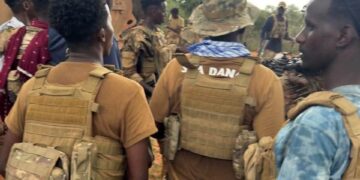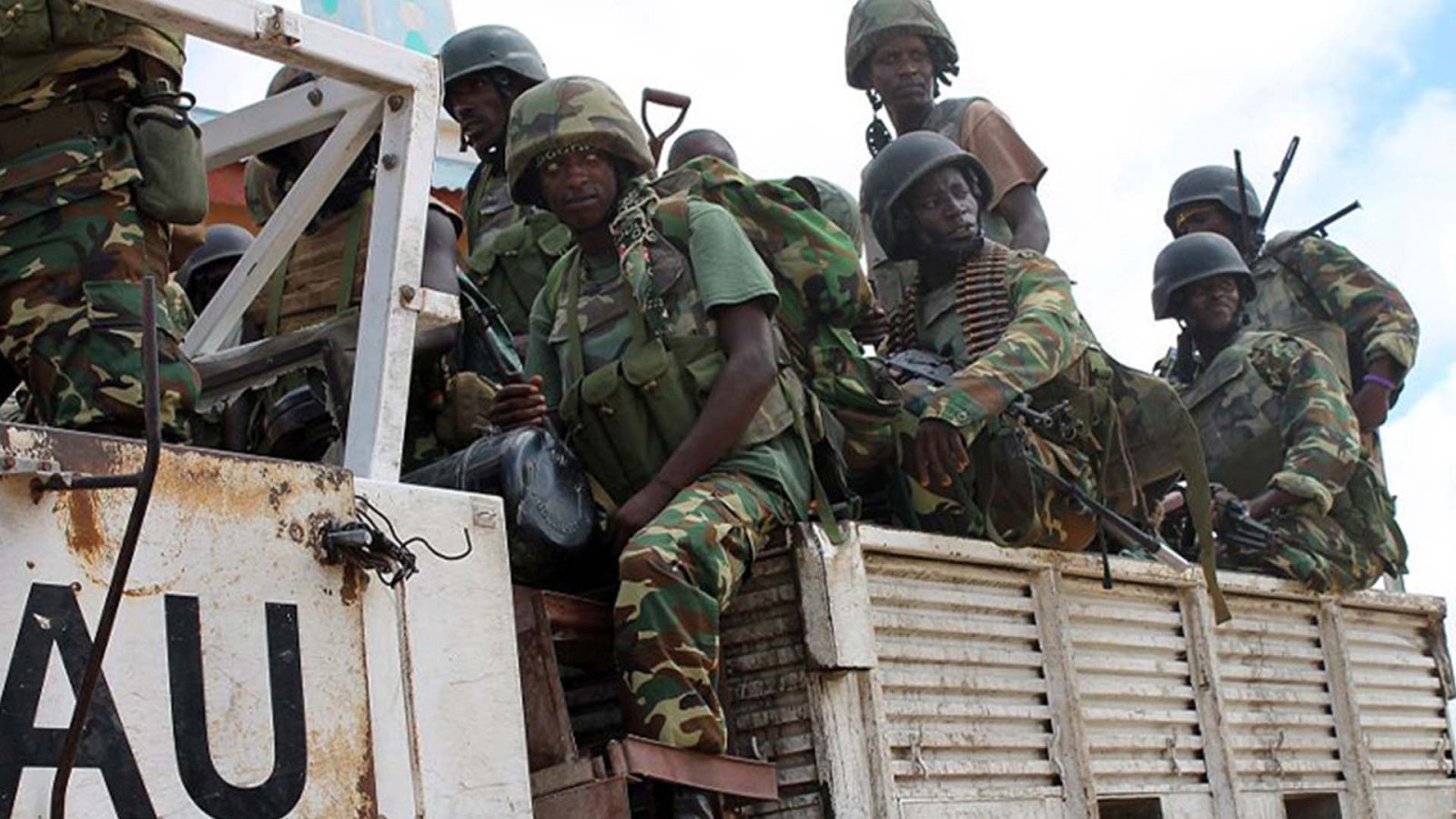
MOGADISHU, SOMALIA – Ten civilian staff of the joint African Union and United Nations information team in Mogadishu have been told their contracts end on 10 September, the first terminations in a drawdown that is reaching AUSSOM through procurement notices and payroll decisions taken far from any Somali battlefield. The support office that feeds, moves, treats and supplies the mission has begun auctioning its vehicles, generators, medical equipment and heavy machinery, and more staff are expected to go within days. President Hassan Sheikh Mohamud spent the same fortnight telling Somalis that the country can now carry its own security and that the African troops should be handed flowers and sent home. The calendar taking AUSSOM apart was set in Washington, and it answers to nobody in Mogadishu.

Termination Letters Reach the AUSSOM Support Chain
The ten employees belong to the African Union and United Nations Information Support Team, and their notice landed alongside a procurement exercise that had already announced the direction of travel. On 6 August the support office invited auctioneers to bid for the right to sell mission property, allowing them five days to respond, and listed vehicles, computers and office equipment, shipping containers, medical and laboratory kit, prefabricated accommodation and heavy construction machinery. The arrangement runs for three months, with three further extensions of three months each available to whoever wins it. Disposing of worn or surplus equipment belongs to the ordinary business of any long mission, and the volume and the timetable here describe something closer to a liquidation.
The financial architecture underneath AUSSOM explains why the paperwork moves faster than the diplomacy. A budget of 481 million dollars has been approved for the financial year ending on 30 June 2027. Washington, until July the largest single contributor to the support office, will block any attempt in the Security Council to spend that money on the mission’s logistics beyond 31 December. Last year the support office ran on 502 million dollars against the 190 million dollars allocated to AUSSOM itself, most of which reimburses the governments that send the soldiers. The authorised force stands at 11,862 uniformed personnel, including 680 police officers, with United Nations money covering up to 85 civilians attached to the military and police components.
Weeks before the letters went out, the under-secretary-general for operational support flew from New York to Mogadishu to assure staff, Somali officials and international partners that the uncertainty surrounding the mission could be managed. The auction notice and the terminations followed regardless, which leaves the practical decisions about AUSSOM’s future with procurement officers and budget holders while the argument about its mandate continues in other rooms. Mogadishu holds no vote in either forum, and the federal government’s leverage over the drawdown consists of the speeches it makes about being ready for one.
A Readiness Claim Delivered on a Parade Ground
On 16 August the president stood at Xananbuure in northern Galgadud and closed the training of more than three thousand soldiers, the largest class trained inside the country since 1991. “We have reached a point where we can now take full charge of our security,” he said, before asking that the African contingents be given a bunch of flowers and returned to their capitals. Somalia has indeed become better at producing soldiers, with Saudi money behind the February pledge of five thousand troops and instructors drawn from Romania, Ukraine and Sudan. The difficulty has always been what happens to those men after the parade ends.
Pay, ammunition, fuel, transport and the casualty evacuation chain are precisely the services the support office provides, and precisely the services now going to auction. A brigade with no resupply convoy holds a town until its food runs out. The federal army has demonstrated this repeatedly across the riverine districts, where positions taken with considerable courage were abandoned within months because nothing arrived behind the assault. Asking AUSSOM to leave is therefore a request to inherit a logistics burden that the United Nations has been carrying at more than half a billion dollars a year, at a moment when the federal treasury cannot reliably pay the soldiers it already has.
August also showed where those soldiers are actually being sent. Army units fought a pitched battle inside Baidoa against militias loyal to the president they helped remove. The Southwest flag came down in Marka in favour of a rival administration, and heavy weapons were turned on residents of the Tookiyo quarter of Yaqshiid during the Mogadishu demolitions. Every battalion committed to those tasks is a battalion unavailable for the towns AUSSOM currently garrisons. The readiness being claimed at Xananbuure is measured in graduates, while the readiness the drawdown requires is measured in the ability to hold ground nobody is fighting the government for.
Kampala Reads the Same Numbers Differently
Uganda’s defence minister told a gathering of the Eastern Africa Standby Force in Kampala last week that Ugandan troops will remain in Somalia whatever becomes of the mission’s funding. “The arrangement that we are going to have on how we remain in Somalia is going to evolve, but we already have a force there under a bilateral arrangement with Somalia,” he said, adding that Somalia’s partners must find the resources for an orderly and coordinated exit. Kampala contributes 4,500 soldiers to AUSSOM and keeps a further 2,000 in the country under its own agreement with Mogadishu, and President Museveni has signalled that the region intends to stay engaged.
Ugandan military sources expect Kenya, Ethiopia and Egypt to maintain forces in Somalia through 2027 as well, though none of those governments has confirmed it. Should that happen, the foreign military presence would survive the collapse of the framework that currently governs it. Troops would remain on Somali soil without the African Union command structure, the troop-reimbursement system or the United Nations logistics chain that has organised them since 2007. The reimbursement question alone would be formidable, because contributing capitals are currently paid from the 190 million dollars allocated to the mission each year. A bilateral deal moves that bill onto Mogadishu or onto their own treasuries. Neither the federal budget nor the region’s finance ministries have made provision for the transfer.
That shift changes who the soldiers answer to. A contingent serving under AUSSOM operates within a mandate the African Union sets and the Security Council renews, with reporting lines that exist independently of whoever occupies Villa Somalia. A contingent serving under a bilateral memorandum answers to the two governments that signed it. Somalia already runs several such relationships, most visibly with Turkiye, whose aircraft flew over the capital during the evictions and whose drones have drawn protests in Baidoa. Converting the AUSSOM contributors into bilateral partners of the federal government would hand a president with an expired electoral timetable a set of foreign forces accountable to him alone.
The Insurgency Works to the Same Calendar
Al-Shabaab has read every previous transition with more attention than the transitions themselves received. Analysts warned before the last handover that the group would gain the advantage over the national army once the African mission thinned out, and the towns retaken across Hiiraan and Middle Shabelle in the two years since settled the argument. Its operational tempo tracks the security calendar with some precision, rising as a garrison changes hands and easing where a supply route is reinforced. The insurgency has outlasted three foreign missions in two decades, and it treats each announced withdrawal as a scheduling document. The group does not need to defeat AUSSOM. It needs to know the date the convoys stop.
That date is now being published in procurement documents. The Ethiopian contingent has already walked out of Buurhakaba, one of several forward positions handed to Somali units ahead of the December funding cutoff, and the transitional political mission is due to fold into an ordinary United Nations country office by October. The logistics arm and the political arm are therefore contracting in the same quarter, and the equipment that supported both is being sold into the local market. Anyone tracking the tender notices can map the withdrawal more precisely than most member states can.
Puntland offers the instructive comparison, having fought its campaign against Islamic State in the Calmiskaad mountains without any of this machinery, on its own budget and with its own casualties. The federal government has spent the year proving it can mass force against Baidoa, Marka and its own capital, and it now proposes to inherit a war it has been treating as a secondary concern. The two processes have never been synchronised, and they are diverging fastest at the point where AUSSOM stops and the Somali National Army is supposed to begin.