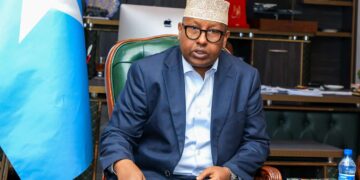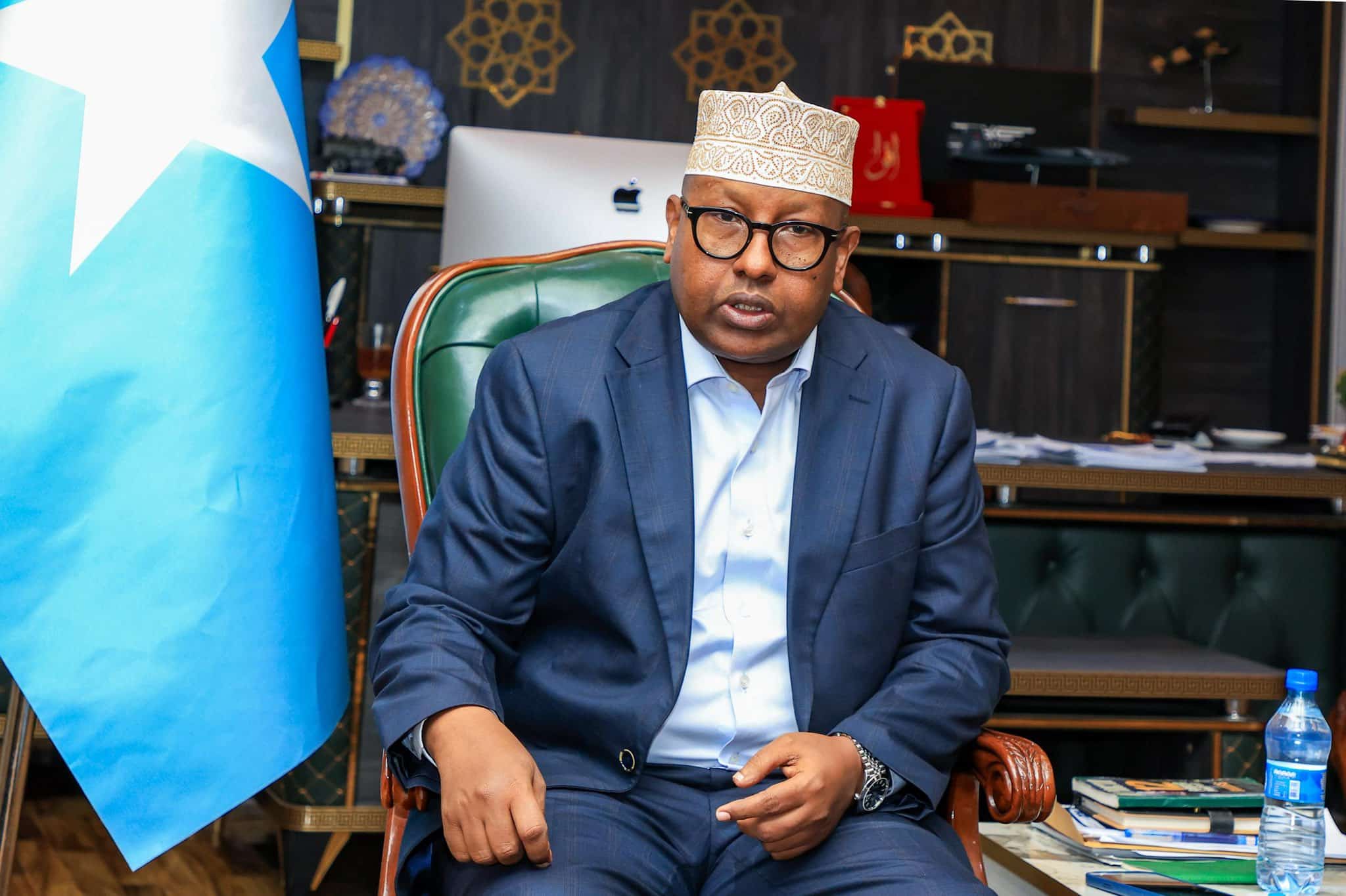
MOGADISHU, SOMALIA – Defence Minister Ahmed Moalim Fiqi has said that the federal government financed the Waddani campaign that made Abdirahman Mohamed Abdullahi Irro president of Somaliland in November 2024, and that Mogadishu paid the largest share of its costs. In a television interview published on Thursday 22 October he said the money followed private signals from President Irro, during the campaign, that he would differ from his predecessors and was ready to discuss Somaliland’s relationship with Somalia. Fiqi named no amount, no channel and no recipient, and he was federal foreign minister when the vote took place. In January he called President Irro a big hypocrite who had led a hostile power into Somalia’s land, and none of the reports of his new remarks carried a response from Hargeisa by Saturday 24 October.

What Fiqi Said About the Waddani Campaign
“Irro was supported here, he was financed here,” Fiqi said in the interview, and he added that “the Somali government paid the largest share of the expenses.” In remarks captured on video he presented the support as a bet on a candidate who had told Mogadishu that the two sides could agree on new conditions for unity. He described the Waddani candidate of 2024 as a reasonable man who could bring unity, and he said the federal leadership had expected a different course from Somaliland’s new government.
Fiqi said he regretted the ties President Irro has built with Israel since taking office, which he set against the hopes Mogadishu had placed in Somaliland’s new leadership. He then turned to the abuses committed in the north under the military government of Siad Barre in the late 1970s and 1980s. “The suffering that occurred cannot be buried,” he said, and he named President Irro, Muse Bihi Abdi and Mohamed Ibrahim Egal as men who had served that government, while he, President Hassan Sheikh Mohamud and Prime Minister Hamza Abdi Barre had not. President Irro joined the foreign service of the Somali Democratic Republic in 1981 and was later its acting ambassador in Moscow.
The minister said he could not accept responsibility for the military regime, and he said he was willing to discuss the grievances it left behind. Anything missing from the agreements of the 1960 union, he argued, should be put on the table, and both sides should settle how power and other shared matters are divided. The claim about the Waddani campaign is unverified and carries no detail of how any money moved, and no federal ministry has published a record of it. President Irro won the vote of 13 November 2024 with nearly 64 percent against Muse Bihi Abdi’s 35 percent and was sworn in on 12 December 2024.
The Foreign Minister of November 2024
Fiqi became foreign minister on 8 April 2024 in Prime Minister Hamza Abdi Barre’s reshuffle and held the post until 27 April 2025, when he moved to defence. That placed him in charge of Somalia’s foreign policy through the whole Waddani campaign, the count and the inauguration, and through the months in which Mogadishu was fighting the memorandum of understanding Ethiopia had signed with Hargeisa on 1 January 2024. Before that he was interior minister from 2022, and he directed the National Intelligence and Security Agency from May 2011 to March 2013.
Born in Galkayo in 1971, he was internal security minister of Galmudug from April 2020 to October 2021, and he ran for the presidency of that state in 2015 and lost by nine votes. He was secretary-general of the Union for Peace and Development Party, the party of President Hassan Sheikh Mohamud, from 2018 to 2020, and he has held three cabinet posts since 2022. As defence minister he oversees the army now fighting the forces of former President Abdiaziz Hassan Mohamed Laftagareen in South West State, and on Thursday 1 October he accused Somali politicians meeting in Abu Dhabi of learning from Sudan’s Rapid Support Forces how to raise militias, and warned that every traitor to the nation would be given his due. A federal MP answered the same evening by accusing him and the president of moving foreign fighters to the RSF through Mogadishu’s airport.
On 7 January, a day after Israel’s foreign minister landed in Hargeisa, Fiqi told a graduation of Turkish-trained officers that the Somaliland president was a big hypocrite who had brought an enemy into Somali territory. On Saturday 10 January he said in a television interview that President Irro would end up a fugitive like Aidarous al-Zubaidi, the southern Yemeni leader who had just fled his country, that Israel’s recognition would not last, and that Israel planned to move Palestinians from Gaza into Somaliland. He called the recognition a direct attack on Somalia’s independence and asked Benjamin Netanyahu to reverse it.
Waddani in Office and the Israel File
Israel recognised Somaliland on 26 December 2025, thirteen months after the Waddani victory, and the two governments agreed to open embassies in each other’s capitals. On 1 January Hargeisa denied reports that it had agreed to take refugees from Gaza or to host Israeli military bases, and Israel’s foreign minister, Gideon Sa’ar, visited Hargeisa on 6 January. On 14 January President Irro said Somaliland would defend itself against Somalia and its allies, and at the World Economic Forum in Davos later that month he met President Isaac Herzog. President Irro led Waddani as its chairman from 2012 to 2021 and was Speaker of Somaliland’s House of Representatives from 2005 to 2017.
President Irro took his case to Washington in September. He told an interviewer on 10 September that Somaliland would put up to two thousand soldiers into the stabilisation force planned for Gaza if Washington or Israel asked, he gave a keynote at the Hudson Institute on 14 September, and in a Washington interview he offered American investors Berbera, minerals and other facilities while leaving military access open to negotiation. China warned him on 16 September of “serious consequences” over Taiwan. On Monday 12 October President Donald Trump told a rally in Youngstown, Ohio, that Somaliland is a totally different country, and Somaliland’s presidency and both of its main parties welcomed the words.
The director general of the Somali Civil Aviation Authority, Ahmed Moallim Hassan, said on 21 October the dispute over Mogadishu’s electronic visa was resolved, and Somaliland’s aviation minister answered that no agreement exists and that Hargeisa still cancels the federal visa at its airport. On 23 October Somaliland said a separate federal measure on airline ticketing would not affect it. At home President Irro’s government has drawn criticism of its own, and between 29 August and 9 September police in Hargeisa held two journalists and a poet, two of them over an interview in which the poet attacked the president in verse, with no formal charges reported.
Seats in Mogadishu and a Campaign in Hargeisa
Somalia’s own vote is set for 15 May 2027, and on 17 October the chairman of the electoral commission said that seats won in other states can stand for areas that do not vote. Somaliland’s seats in the federal parliament have been voted in Mogadishu since 2016, by delegates assembled there, and the same model is now being prepared for Puntland’s federal seats. The commission’s chairman, Abdikarim Ahmed Hassan, said the same rule could cover Puntland and Jubaland, the two member states whose leaders reject the federal electoral model. Villa Somalia has filled Somaliland’s places in its own parliament for a decade, and its defence minister now says it also paid for most of the Waddani campaign in Hargeisa.
The federal government treats Somaliland as part of Somalia and does not recognise the elections Hargeisa holds under its own constitution, including the vote of November 2024 that Fiqi now says Mogadishu financed. Waddani took the presidency from Muse Bihi Abdi’s Kulmiye in that vote, with nearly 64 percent against 35, and the result was announced on 19 November 2024. Somaliland’s next presidential election falls due in 2029, five years after President Irro’s inauguration. Muse Bihi Abdi, whom Fiqi named alongside him as a servant of the military government, had signed the January 2024 memorandum with Ethiopia that Fiqi spent his time at the foreign ministry opposing. In January Fiqi had told the officers’ graduation that al-Shabaab was tying the hands of the state while Israel and other hostile states violated Somalia’s borders, and he named President Irro as the man who had let one of them in.
Fiqi offered no document, figure or name, and none of the reports of his interview carried an answer from President Irro, his ministers or Waddani by the afternoon of Saturday 24 October, the day federal troops under his ministry were moving from Baledogle toward Buurhakaba to fight Laftagareen’s forces. The minister who ran Somalia’s foreign policy in November 2024 has now said that the president of Somaliland was elected with Mogadishu’s money.