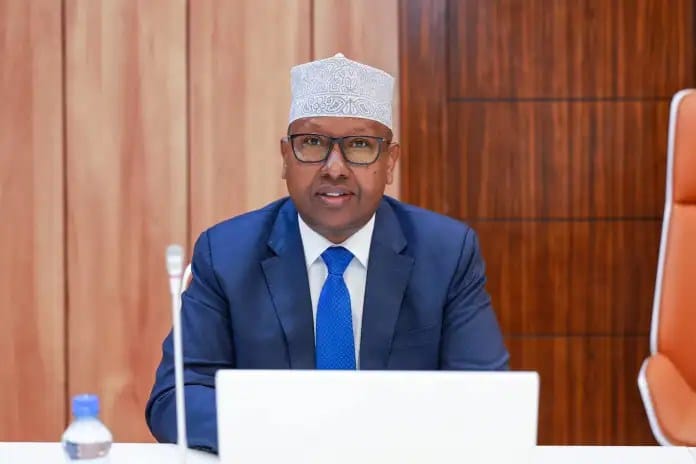
MOGADISHU, SOMALIA – On Thursday 1 October Defence Minister Ahmed Moalim Fiqi accused Somali politicians meeting in Abu Dhabi of learning from Sudan’s Rapid Support Forces (RSF) how to raise militias, and warned that every traitor to the nation would be given his due. He named nobody, while reports circulating in Mogadishu placed former President Sharif Sheikh Ahmed, Puntland President Said Abdullahi Deni, Jubaland President Ahmed Madobe and the former intelligence chief Abdullahi Sanbalolshe in Abu Dhabi for talks on the election dispute. The statement came three days after Prime Minister Hamza Abdi Barre said the government would welcome al-Shabaab members who leave the group. On the same evening a federal MP answered Fiqi by accusing President Hassan Sheikh Mohamud and Fiqi himself of moving foreign fighters to the RSF through Mogadishu’s airport.

What Fiqi Wrote About the Abu Dhabi Meetings
In a statement posted on social media, Fiqi wrote that “the individuals who call themselves politicians, for whom meetings are being held in Abu Dhabi to plot against their country, have no hope of a political future in Somalia.” He described the RSF as a force hired to destroy Sudan and called it unfortunate that the politicians and the paramilitary had been brought together in one place, where, in his account, they were studying how the RSF does the work of those who employ it and massacres its own people. The politicians, he wrote, would come home with plots against the state and the peace, and would try to gather militias and bring back the rule of faction leaders.
The government, Fiqi wrote, has a duty to confront firmly anyone who endangers peace, statehood, sovereignty and the independence of the country, and he closed with the line that every traitor to the nation would be given his due. His statement named no meeting, no date and no RSF figure, and it offered no document or photograph to place any representative of the Sudanese paramilitary in a room with any Somali politician.
Accounts of the gathering itself said the talks in Abu Dhabi concerned the electoral dispute and the future of the federal government, and some claimed they included ways of pressing President Hassan Sheikh Mohamud’s administration to leave office, which no participant has confirmed. The federal government has treated Abu Dhabi as an adversary since 13 January. That day President Hassan Sheikh Mohamud annulled every agreement Somalia held with Abu Dhabi, covering ports, security and defence, and said the UAE “did not conduct itself as a single, independent state”. Former President Sharif Sheikh Ahmed said in July that he had lived in the Emirates with his family for close to ten years, that the connection was personal, and that he received no money or political backing from the Emirati government.
Fiqi’s Record Against the Opposition
Fiqi was born in Galkayo in 1971, studied at the University of Khartoum and served as Somalia’s ambassador to Sudan in 2010 and 2011, before running the National Intelligence and Security Agency from 2011, under Sharif Sheikh Ahmed’s presidency. He entered the federal parliament in 2016 and held the interior and then the foreign ministry in President Hassan Sheikh Mohamud’s government. He moved to defence at the end of April 2025, in a reshuffle that sent his predecessor, Jibril Abdirashid Haji Abdi, to the post of second deputy prime minister after three weeks in the job.
In May Fiqi told members of the opposition Somali Future Council that “the day you take up militias, your hand will be broken”. On 4 June, after more than twenty hours of fighting around the Mogadishu homes of former Prime Minister Hassan Ali Khaire and former President Sharif Sheikh Ahmed, he declared a coup attempt thwarted. He called the opposition forces the RSF’s “Somali wing” and said those involved had been “hired by the United Arab Emirates”. On 7 July he said only two parties were competing for Somalia, al-Shabaab and the ruling Justice and Solidarity Party, and that “the rest are just bread”. Rashid Abdi, an analyst at the Nairobi-based Sahan Research, said at the time that such language legitimises jihadist violence while undermining the peaceful opposition.
On Sunday 6 September Ali Wajis, an adviser to President Hassan Sheikh Mohamud, told a gathering of senior officials with Fiqi among them that anyone who fights the government should be punished as a terrorist and killed. On Saturday 26 September the House of the People’s Defence Committee summoned Fiqi and the army commander over cuts to the allowances of six thousand soldiers and families, and he is due before it on Sunday 4 October. The next day he said there should be no mercy for anyone who reaches for the country’s security, and that if the opposition organised militias they should be met with an iron hand. His statement on the Abu Dhabi meetings followed four days later.
An Open Door for al-Shabaab Defectors
In an interview published on Monday 28 September, Prime Minister Hamza Abdi Barre denied that the government was in talks with al-Shabaab and said it would welcome individuals who left the group and renounced violence. In remarks to Dawan TV reported on Wednesday 30 September, he said that members who abandon the group could even join the government if they chose, that former members already work for the state, and that some of them hold senior official posts. He also dismissed as baseless reports that the government pays al-Shabaab to reduce its attacks on Mogadishu, and he blamed inadequate planning and the rapid deployment of newly recruited troops for the loss of momentum in the 2022 offensive.
In August 2022 President Hassan Sheikh Mohamud’s first cabinet took in Mukhtar Robow, the group’s former deputy leader and spokesman, as minister of religious affairs, and Hamza’s remarks place other former members in office today. Meanwhile, the four men reported in Abu Dhabi have between them governed the country, run its intelligence service and held two of its federal member states against al-Shabaab and the Islamic State. Puntland’s forces under President Said Abdullahi Deni have fought the Islamic State in the Cal Miskaad mountains for nearly two years, and Kismayo has been held against al-Shabaab since 2012 by the forces of President Ahmed Madobe.
On 27 July the Somali Future Council wrote to the heads of state and defence chiefs of the six countries that supply AUSSOM, putting the government’s legitimacy on their agenda before the Kampala summit. On 13 September President Said Abdullahi Deni wrote to the UN Security Council asking it to tighten the arms restrictions on Somalia, restore its sanctions Panel of Experts and deal directly with the federal member states. President Hassan Sheikh Mohamud’s four-year term ran out in May, and no electoral model has been agreed with the states or the opposition since.
An MP’s Answer About the Mogadishu Airport
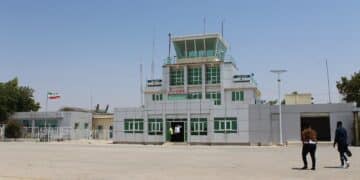
The federal MP Abdillahi Hashi Abib answered Fiqi on X on Thursday evening. He asked for evidence and wrote that a political visit to Abu Dhabi did not establish support for an armed group. He then said he held passport copies of Colombian mercenaries and Emirati intelligence personnel, flight information and first-hand accounts of what he described as a logistics operation carrying Colombian fighters through Mogadishu’s international airport for onward deployment with the RSF in Sudan. Abib named President Hassan Sheikh Mohamud as the man who authorised the operation and Fiqi as the minister responsible for carrying it out, and he demanded an independent investigation into the roles of both.
Abib also reminded the minister that Sudan had educated him, and told him that gratitude to that country meant supporting full disclosure of any operation that had added to the suffering of its people. He has not published the documents he says he holds, and Fiqi has published no evidence for his own charge against the politicians in Abu Dhabi. A UN fact-finding mission on Sudan has reported that up to 2,000 former Colombian military contractors operated combat drones and advanced weapons alongside RSF units. The mission traced their supplies through air, land and maritime routes, and the RSF’s war against the Sudanese army is now in its fourth year. Sudan’s army-led government cut diplomatic relations with the Emirates in May 2025, accusing Abu Dhabi of arming the RSF, a charge the Emirates have denied.
Fiqi’s warning described politicians coming home from Abu Dhabi to raise militias and revive the rule of faction leaders. Two of the men reported there govern Garowe and Kismayo, with security forces that answer to their own administrations, and the fighting of early June reached the Mogadishu home of the third, former President Sharif Sheikh Ahmed. The minister responsible for the federal army has now told all of them, in writing, that every traitor to the nation will be given his due.