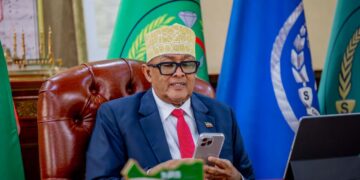

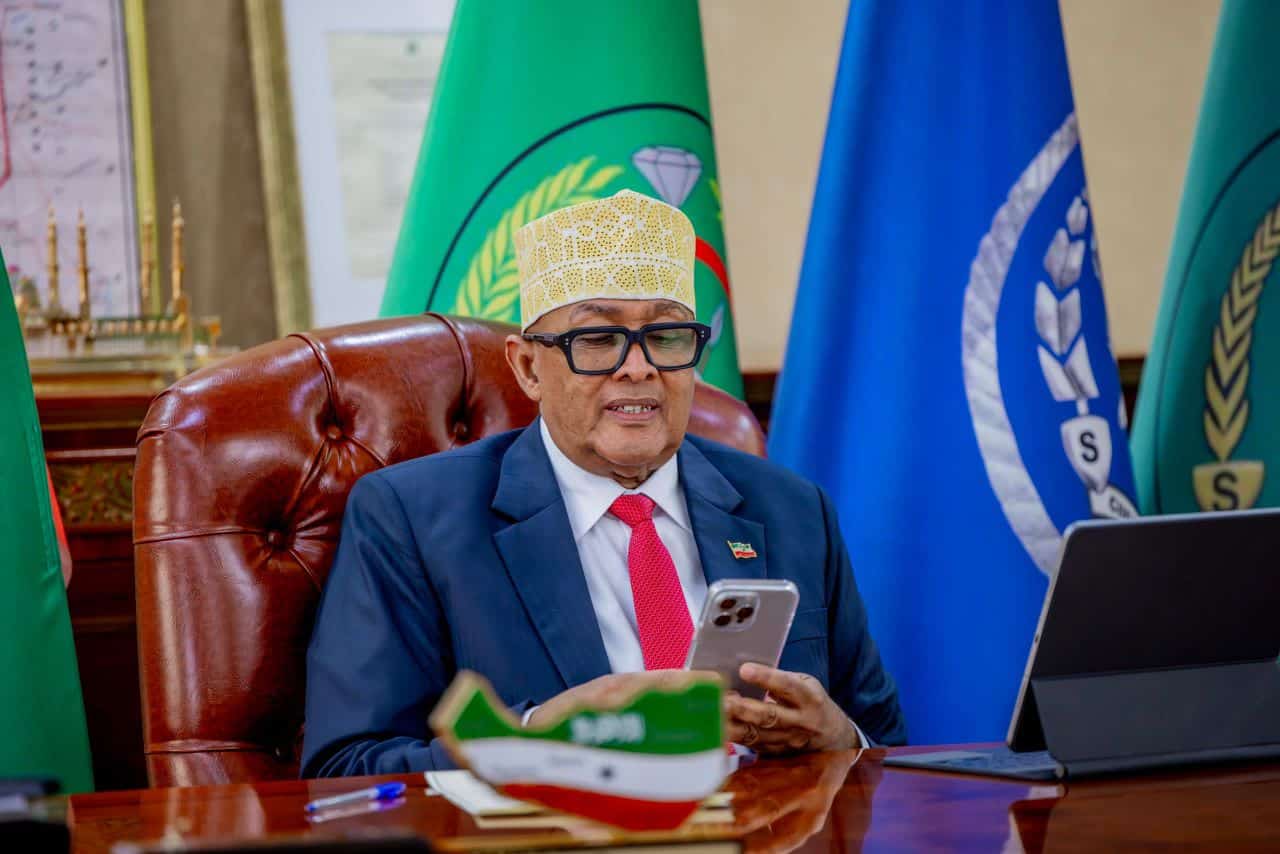
Jerusalem/Hargeisa — Israeli Prime Minister Benjamin Netanyahu today announced his nation’s formal recognition of the Republic of Somaliland as an independent and sovereign state, accompanied by commitments for immediate cooperation in agriculture, health, technology, and economic development, a decision that arrives at the precise moment when the Federal Government of Somalia faces cascading crises from Al-Shabab’s territorial gains, regional state rebellions, and the collapse of its democratic legitimacy through gunpoint elections. This recognition comes naturally as the PM of the Mogadishu government has publicly supported Hamas.

Netanyahu’s statement on X, invoking the Abraham Accords framework and acknowledging contributions from Mossad chief David Barnea, signals that this recognition extends beyond bilateral relations to encompass broader strategic realignments in the Red Sea region. The timing following Ethiopia’s failed attempt at recognition through the controversial Memorandum of Understanding and occurring while President Hassan Sheikh Mohamud desperately attempts to maintain control through increasingly authoritarian measures.
The Israeli recognition represents a potential paradigm shift that could trigger cascading recognitions from other nations watching to see if the taboo against recognizing Somaliland has finally broken. For Mogadishu, already reeling from a string of losses to Al-Shabab, the complete breakdown of relations with Puntland and Jubaland, and yesterday’s farcical elections that required forcing citizens to vote at gunpoint, this development may prove the final blow to any pretense of representing a unified Somali state.
Why Israel, Why Now?
The Red Sea region’s growing importance for global trade and its proximity to Yemen, combined with Israel’s need for allies along crucial maritime routes, makes Somaliland’s stable governance and strategic location increasingly attractive. The Berbera port and its proximity to the Bab el-Mandeb strait offer Israel potential alternatives to Suez Canal dependencies while providing presence near critical shipping lanes.
By framing Somaliland recognition within the context of Trump-era normalization agreements, Israel positions this move as continuation of regional peace initiatives rather than destabilizing innovation. This framing may encourage other Abraham Accords participants to consider similar recognition.
Somaliland’s relative stability, effective counter-terrorism efforts, and control over strategic coastline offer Israel potential partnership opportunities in a region where such allies remain scarce. The contrast between Somaliland’s security achievements and the Federal Government of Somalia’s spectacular failures cannot have escaped Israeli strategic planners.
The Federal Government of Somalia’s response to Israeli recognition will likely follow the playbook established during the Ethiopia-Somaliland Memorandum of Understanding crisis, but with potentially diminished effectiveness given Mogadishu’s further weakened position. President Hassan Sheikh Mohamud will undoubtedly condemn this as violation of Somalia’s sovereignty and attempt to mobilize Arab League and Organisation of Islamic Cooperation opposition to Israeli actions.