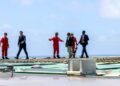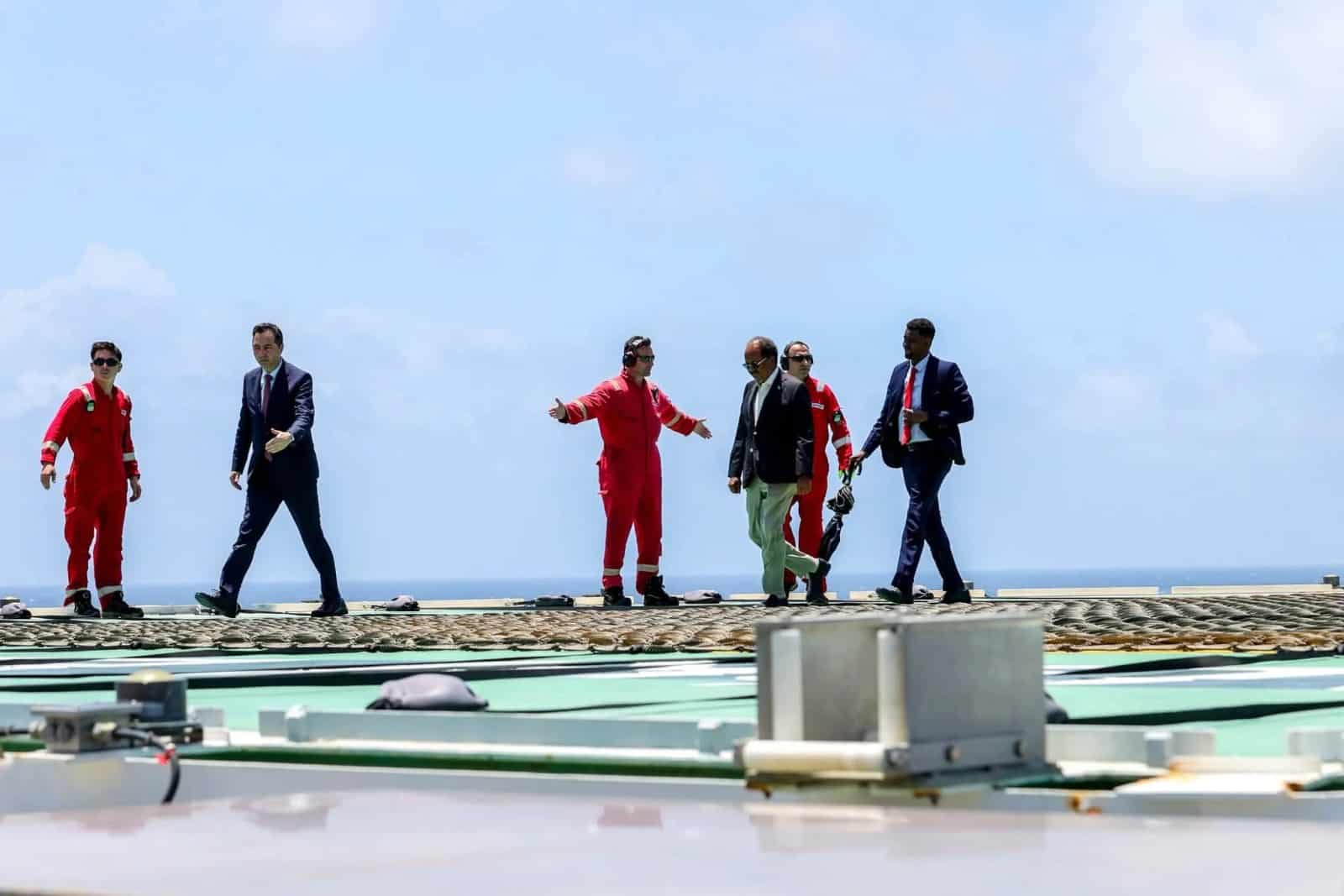
MOGADISHU, SOMALIA – President Hassan Sheikh Mohamud went out to the Turkish drillship Cagri Bey at the CURAD-1 well, about 370 kilometres off Mogadishu, and heard its crew report on the drilling and its preliminary results, in a visit made public on Friday 16 October, the day after the Electoral Commission set his next election for 15 May 2027. Turkiye’s embassy said the visit showed the progress of energy cooperation between the two countries. The ship has been drilling since April under an agreement Mogadishu signed with Turkiye’s state oil company in March 2024, and published analyses of that agreement say the company may recover up to 90 per cent of its costs from production. Puntland, whose constitution reserves the management of its natural resources to Garowe, said when the survey ship arrived in 2024 that no agreement on oil extraction had been reached with it.

The Cagri Bey on the CURAD-1 Well
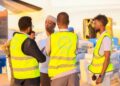
Experts and officers on the Cagri Bey briefed President Hassan Sheikh Mohamud on the drilling under way, the work completed so far and the preliminary results, and none of those results was published with the visit. The Turkish embassy in Mogadishu said the trip reflected the progress of cooperation between Somalia and Turkiye in energy, and it called the ship’s operation an important step in relations between the two countries. No depth reached and no date for results were announced, and no minister was named among those who went with him. The well is planned to go about 4,000 metres below the seabed, to a total depth of 7,500 metres.
The Cagri Bey left Tasucu in southern Turkiye on 15 February and reached Mogadishu in early April after a voyage of 53 days. CURAD-1, a name meaning eldest child in Somali, lies about 372 kilometres off the coast and the operation was expected to last about 288 days. Three Turkish navy ships, the Sancaktar, the Gokova and the Bafra, were assigned to protect the drillship, three support vessels serve it, and about 500 people work in rotating shifts across the ships and the onshore base. Turkiye’s navy operates in Somali waters under the defence and economic agreement the two governments signed in February 2024, a ten-year pact under which Ankara undertook to help build and protect Somalia’s navy.
The well site came out of a seismic survey by the Oruc Reis, which began on Saturday 5 October 2024 and covered about 4,465 square kilometres across three offshore blocks over roughly 234 days, and out of nearly seven months of preparation and data analysis after that. On Saturday 11 April President Hassan Sheikh Mohamud welcomed the Cagri Bey at the port of Mogadishu and said that the country’s resources, oil among them, would not set its people against one another. He called natural resources national property belonging to every Somali and promised transparent and accountable management of any revenue the well produces.
The Terms Behind the Cagri Bey
The federal government signed the hydrocarbon agreement with Turkiye Petroleum, the state company known as TPAO, in March 2024, weeks after the defence pact, and presented it as a groundbreaking hydrocarbon deal. Published analyses of its terms say it lets the company recover up to 90 per cent of its costs from production, against a 70 per cent ceiling in Somalia’s own petroleum framework. They say it sets a royalty of up to five per cent with no formula tied to market prices, and that it exempts TPAO from any signature bonus, licence fee or production bonus.
Ali Haji Warsame, a former Puntland minister, said in July that the Cagri Bey was carrying out exploration and test drilling, that Turkiye would need the major international energy companies before any commercial production, and that commercial offshore oil was unlikely before 2034. “The public is being led to believe commercial oil production is imminent when the process remains years away,” he said. He accused Ankara of seeking ninety per cent of the profits under an opaque deal. A revenue-sharing arrangement agreed with the member states in Baidoa in 2018 divides offshore oil income between the federal government and the states, and the well being drilled now lies off the coast of a federation in which two member states reject the constitution Mogadishu governs under.
President Hassan Sheikh Mohamud said on Friday 21 August that it was still not known whether Somalia would have oil. “It is still not known whether Somalia will have oil, but our hopes are very high,” he said, and he warned against treating those hopes as established fact while more wells are planned. His petroleum minister, Daahir Shire Mohamed, said the government expected visible results by the end of the year and gave no estimate of any reserve. President Hassan Sheikh Mohamud heard the preliminary results on board the Cagri Bey, and the photographs of his visit were published without them.
Puntland and the Map at the Oruc Reis Ceremony
In October 2024, a year and a half before the Cagri Bey arrived, a map shown at the ceremony welcoming the Oruc Reis to Mogadishu marked Mudug, Nugaal and Sanaag as disputed, labelled Somaliland the Republic of Somaliland and left out the Khaatumo administration. The federal petroleum ministry called it a technical error by the company that presented it. Puntland’s interior minister, Abdi Farah Juxa, said that after 33 years President Hassan Sheikh Mohamud was still trying to alter Somalia’s map. President Said Abdullahi Deni warned that the map could open new tensions in Mudug and said Puntland and Galmudug had no border dispute between them.
Articles 50 and 54 of Puntland’s constitution give the state sole authority over the management and protection of its natural resources, and Garowe read the map as a sign of federal plans it had never been told about, with no agreement on oil extraction in place. The federal petroleum minister at the time, Abdirizak Mohamed, answered that Garowe was obstructing exploration. He said Puntland had single-sourced a company of its own, which Mogadishu rejected, and accused President Said Abdullahi Deni of seeking to politicise the government’s work toward oil production.
On 21 May Puntland’s cabinet said it no longer recognised President Hassan Sheikh Mohamud as a legitimate president, counting his term as ended on 15 May. In July Puntland and Jubaland walked out of the federal election talks after backing a transitional direct elections model that Mogadishu’s negotiators rejected. On Thursday 15 October the Electoral Commission set the presidential vote for 15 May 2027, counting a five-year term under the constitution parliament amended this year, and on Friday members of parliament from Puntland and Jubaland came out against the timetable. Mogadishu has signed for the Cagri Bey’s well, the seabed around it and the revenue it might yield on behalf of a federation in which Puntland stopped recognising the president five months ago.
Turkish Aircraft, Tanks and a Drillship
On Thursday 15 October former President Abdiaziz Hassan Mohamed Laftagareen wrote to the Turkish government, with a copy to its embassy in Mogadishu, asking Ankara to halt all F-16 operations over Baidoa. He asked it to investigate the deaths and damage he says the strikes have caused since 30 March, publish the findings and use its influence to have federal troops withdrawn from South West State, and he accused Turkiye of enabling a clan-based political agenda. Ankara has not accepted responsibility for any strike, and his claims have not been independently verified. In September General Mahad Abdirahman Aden, known as Taliye Shub, named a Turkish F-16 for the strike in Doolow that wounded him, and the federal government rejected any link.
A Turkish transport ship docked in Mogadishu in February with M48 and M60 tanks, reported to be meant for the defence of Turkish installations at Warsheikh, where Turkiye is preparing a site for missile and satellite launches. In early October Turkiye’s ambassador inspected the Warsheikh site, and Mogadishu has published no terms for it. Opposition figures have accused Ankara of taking sides in the quarrel over the election and of seeking to keep President Hassan Sheikh Mohamud in office, and they repeated the charge as the Cagri Bey visit was made public.
Former President Sheikh Sharif Sheikh Ahmed has asked the Supreme Court to annul the constitutional amendments and warned that the commission’s calendar could produce parallel elections and civil conflict. On Thursday evening President Hassan Sheikh Mohamud told members of parliament from his own party that nobody was preparing for war and that no politician was in prison. The next day’s news showed him on a Turkish drillship working a Somali well under the protection of the Turkish navy, 370 kilometres from a capital where Turkish tanks were landed for a Turkish launch site and from a South West State where Turkish aircraft are accused of bombing Baidoa.