BUURHAKABA, SOMALIA – Fighters loyal to former President Abdiaziz Hassan Mohamed Laftagareen attacked federal troops and forces of President Aden Mohamed Nur Madobe’s South West administration in Buurhakaba district at about five in the morning of Thursday 15 October, and by mid-morning ministers of his camp were speaking from the centre of the town, on the Mogadishu road about 60 kilometres from Baidoa, and saying they had taken over its administration. Ethiopian soldiers serving with the African Union mission held the base in Buurhakaba district from 2014 until 8 August, when they handed it to the Somali National Army’s 60th Division. The attack came two days after a federal committee put Laftagareen, General Mahad Abdirahman Aden and the camp’s spokesman on a terrorist financing sanctions list. By the afternoon neither the defence ministry, nor Baidoa, nor the Ethiopian command had published a word about the town.

Thursday Morning in Buurhakaba District
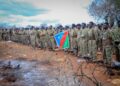
Fighting broke out at dawn when Laftagareen’s Darawish attacked military positions inside Buurhakaba district, and federal soldiers and South West forces fighting on the same side answered them with every kind of weapon they carried. Residents described explosions and sustained gunfire in several parts of the town from about five in the morning, and local sources said the situation was out of control. Reports published within half an hour said the attackers were inside the town after a heavy clash, and added that the claim still needed independent confirmation. By mid-morning residents were telling reporters that the fighters had moved into the neighbourhoods.
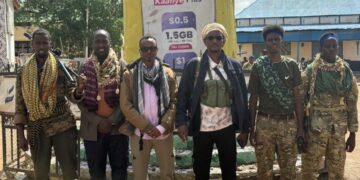
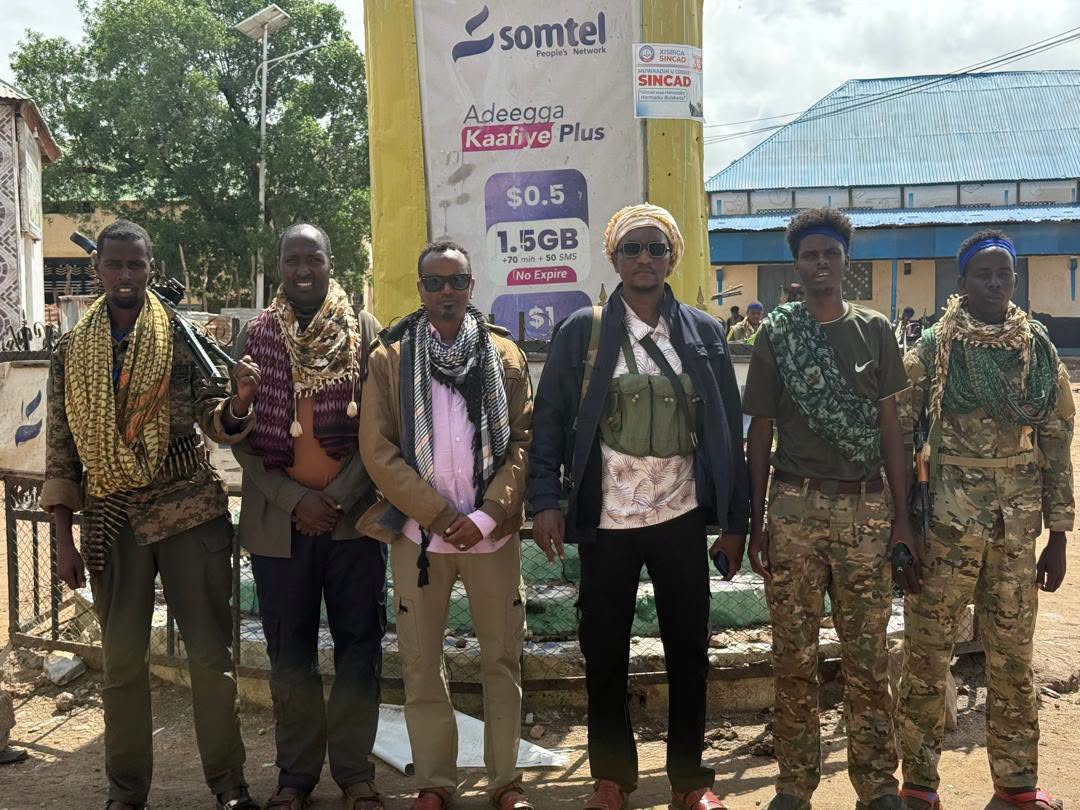
Ugaas Hassan Abdi Mohamed, the man the camp calls its information minister, announced the attack in a written statement. “This morning a security operation began in the town of Buurhakaba, carried out by the heroes of the Darawish forces of the South West government of Somalia,” he wrote, “and we ask our honourable people of Buur district to stay in their homes.” Later that morning he spoke on video from the town itself, said the Darawish had restored order and would single nobody out, and told those who had fled to surrender. “I am speaking right now from the centre of Buurhakaba district, and the forces will remain here,” he said.
Ministers of the camp told reporters in the district centre that they had taken over its administration and would keep fighting the government of President Aden Mohamed Nur Madobe, and the camp’s security minister, Hassan Abdulqadir, was reported to have toured parts of the town with them.
Reports that the district commissioner was wounded and that his forces lost an armoured vehicle had no official confirmation by the afternoon, no side had published a casualty figure, and no outlet could independently confirm whether the Darawish held the whole town or only its centre. Residents of Baidoa reported strikes on that city the same morning, and nobody has said who carried them out or what they hit. Ugaas Hassan has held his title since 18 September, when the camp announced a cabinet with no decree or signed roster behind it, and on Tuesday 13 October his own name went onto a federal sanctions list alongside the man he speaks for.
The Garrison the Ethiopians Left in August
The Ethiopian National Defence Force had held the base in Buurhakaba district since 2014, and on Saturday 8 August the African Union mission said it had completed the handover of the base to the Somali army’s 60th Division as part of the gradual transfer of security responsibilities to national forces. Buurhakaba sits astride the main road between Mogadishu and Baidoa, and it is surrounded on every side by country where al-Shabaab holds varying degrees of influence. The handover was the first visible step in a drawdown running ahead of the money, with three more towns expected to follow within weeks.
Around 19 August President Aden Mohamed Nur Madobe asked the federal government for more troops in Baidoa, after South West units had been pulled out of the city and sent to Buurhakaba. Villa Somalia gave his request no public answer, and the federal forces expected to fill the gap the Ethiopians left in Buurhakaba district had still not arrived a fortnight after the handover. On Monday 28 September the Darawish struck the 60th Division inside Baidoa itself, the third assault on the city in six weeks, and the South West administration put the attackers’ dead at more than seventy and called them al-Shabaab.
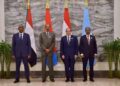
The African Union mission’s mandate expires on 31 December, the date the Security Council set when it renewed it last December, and the United Nations political mission in Somalia has been told to stop work on 31 October. Foreign Minister Ali Mohamed Omar met the deputy head of that mission, Raisedon Zenenga, on Wednesday 14 October to discuss its final phase. Ethiopia, which still keeps a camp in Qansaxdheere district, was reported at the end of September to be planning to withdraw more than 3,000 soldiers from Somalia as fighting with Eritrea spread. The 60th Division has units in Baidoa and took over the base at Buurhakaba, and the Darawish have now attacked it in both places.
Eight Months of Contest Over One District
In February district officials, security officers and traditional elders in Buurhakaba district cut their ties with the South West administration, accusing then President Laftagareen of playing politics with life-saving aid meant for families hit by drought. His administration gave no formal answer, and reports from inside the district warned that the quarrel could turn into armed clashes in a district linking Baidoa to the capital. Both sides were said to be preparing opposing measures. A month later Laftagareen told units of his Darawish finishing training outside Baidoa that federal forces were airlifting troops and weapons into the state. That same week Buurhakaba and Baraawe were reported to have passed to newly deployed federal troops.
Federal forces entered Baidoa on 30 March, the day he resigned, and the state assembly elected President Aden Mohamed Nur Madobe by 88 votes to one on 10 June. Laftagareen moved to Nairobi, and units of his fighters kept positions on the outskirts of the city he had governed for eight years. On Thursday 17 September Darawish units were reported at Ow Yaaye, a short distance from Buurhakaba, preparing to enter the town within hours.
The same report said a commander who had served with President Aden Mohamed Nur Madobe’s forces had broken with them and joined Laftagareen’s side, and that he was inside Buurhakaba at the time. It also described a quarrel between a commander named Sandheere and the district commissioner, both on the side loyal to Baidoa. No attack on Buurhakaba district was reported in the days that followed. On Thursday 8 October the Darawish took Qansaxdheere, 90 kilometres southwest of Baidoa, and part of its garrison surrendered to them while the rest withdrew into the Ethiopian camp. Within the same 48 hours al-Shabaab took Hees in Hiiraan and Jubaland took Beled Hawo, so the federal government lost three towns to three different rivals in two days.
A Sanctions List on Tuesday and Buurhakaba on Thursday
On Tuesday 13 October the National Anti-Money Laundering and Countering the Financing of Terrorism Committee published a list of ten men whose assets financial institutions must freeze, and it gave their names and four aliases with no accusation set against any of them. Laftagareen, General Mahad Abdirahman Aden, known as Taliye Shub, and Ugaas Hassan Abdi Mohamed were on it, beside a former Baidoa mayor. The committee’s December list of al-Shabaab leaders had given each man’s birth year, post and alleged role, and the October notice gave none of that, a listing Ugaas Hassan called revenge.
Prime Minister Hamza Abdi Barre said in an interview broadcast on Saturday 26 September that fighters with Laftagareen had entered areas run by al-Shabaab. “Where you have gone is not a good place. Come back,” he said, speaking directly to Laftagareen. In remarks reported on Sunday 27 September he said the former president was resting in Nairobi and had left those young men as guests of al-Shabaab. The South West cabinet resolved on 30 August that the camp would be treated like a terrorist group, and the defence ministry has described each attack on Baidoa as an al-Shabaab operation.
Two days after the committee published its list the Darawish attacked Buurhakaba district, which the government received from the African Union in August, on the road its convoys use to reach Baidoa. In Mogadishu the same Tuesday, Defence Minister Ahmed Moalim Fiqi told a conference that troops had removed 260 armed young men from a site in the capital, and he said some federal member states had sent armed groups into the city. Federal troops deployed around the Wadajir homes of former President Sheikh Sharif Sheikh Ahmed and former Prime Minister Hassan Ali Khaire on the night of 10 October, and on Thursday morning the ministers of a former president spoke from the centre of Buurhakaba district, 60 kilometres from Baidoa.