HARGEISA, SOMALIA – The director general of the Somali Civil Aviation Authority, Ahmed Moallim Hassan, said in remarks reported on Wednesday 21 October that the dispute with Somaliland over the federal electronic visa had been resolved and that there was now “a mutual understanding” on how the system runs. Somaliland’s minister of civil aviation, Fu’aad Ahmed Nuh, answered in his own interview that no agreement exists and that travellers who land at Hargeisa with the federal document have it cancelled at the airport. Mogadishu introduced the eVisa on 1 September 2025, Hargeisa has refused it ever since, and in November 2025 Somaliland began requiring every international flight over its territory to hold an overflight permit of its own. Neither government has published the text of any understanding, and the federal claim came nine days after President Donald Trump called Somaliland “a totally different country” at a rally in Ohio.

The Somali Civil Aviation Authority Calls the Dispute Settled
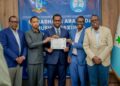
Ahmed Moallim Hassan said the obstacles surrounding the eVisa had been addressed, that the system is nationwide, and that travel agencies and other businesses in Hargeisa could use it, along with the payment arrangements tied to airlines and travel services. “The recent dispute concerning the eVisa has been resolved, and there is now a mutual understanding regarding the implementation of the system,” he said. He dismissed concerns that the system would disadvantage businesses based in Somaliland, arguing that it could open commercial opportunities for Somali operators wherever they work. When he was asked about taxes on air tickets he described it as unified and usable across the country. The Somali Civil Aviation Authority published no document recording the understanding, named no Somaliland official who had accepted it and gave no date for any talks that produced it.
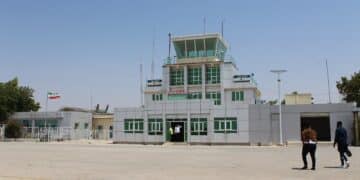
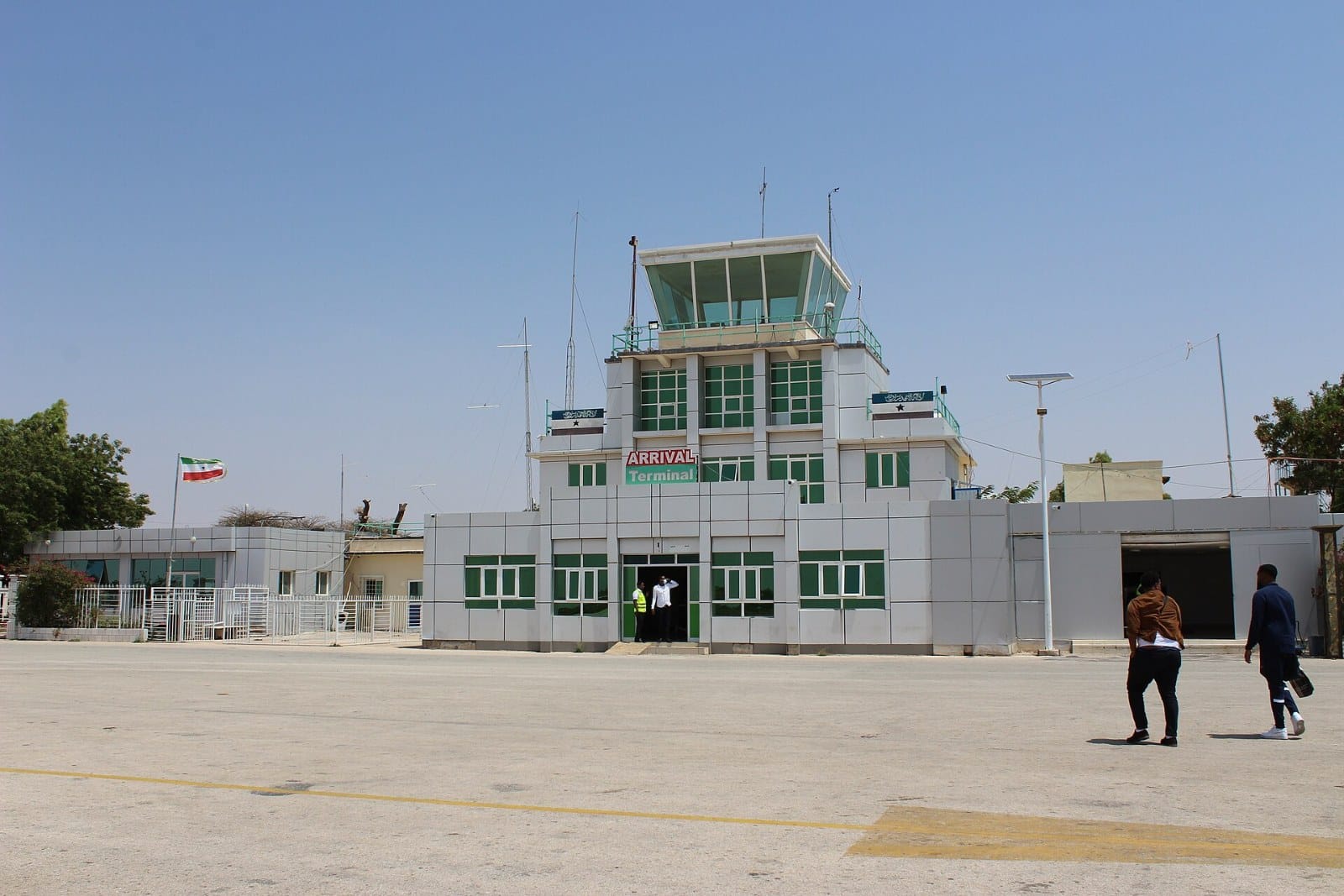
Fu’aad Ahmed Nuh, Somaliland’s minister of civil aviation and airports development, rejected the claim outright. “There is nothing to that claim, because if an agreement had been reached, their visa system would work in Somaliland, but it does not,” he said. Travellers who arrive at Hargeisa airport with the federal document have it cancelled and must obtain a Somaliland visa to enter, he said. Passengers may use the federal system when they book travel to Hargeisa, though Somaliland immigration will refuse what it issues. Somaliland’s own travel guidance states that visas and electronic travel authorisations issued by Somalia are invalid for entry, and that international passengers can buy visas on arrival at Hargeisa and Berbera.
The minister also said a delegation he leads was in Canada to raise the dispute with international aviation bodies and to seek a review of the existing arrangements, the federal visa among them, though he named none of those bodies and gave no detail of any formal complaint against the Somali Civil Aviation Authority. He alleged as well that the federal visa platform had suffered repeated breaches that could expose travellers’ personal information, an allegation no one has independently verified. The International Civil Aviation Organization, whose headquarters are in Montreal, is the body that by his account Hargeisa and Mogadishu agreed in 2013 to petition jointly over the northern airspace.
Two Airlines Between Two Sets of Rules
Somalia’s federal Immigration and Citizenship Agency describes the eVisa, introduced on 1 September 2025 for foreign travellers, as a unified national entry system, and Somaliland never applied it. On Sunday 2 November 2025 the Somali Civil Aviation Authority warned international airlines that carrying passengers to Somaliland without the federal document was “unacceptable” and a breach of international aviation rules, after reports that flydubai had joined Ethiopian Airlines in accepting Somaliland’s visa on arrival at Egal International Airport. Days later the authority served both carriers with a formal directive that threatened financial penalties, a ban on flights to Hargeisa and a review of their authorisation to fly in Somali airspace. The two airlines were then the only international carriers serving Hargeisa, and both had first followed Mogadishu’s instruction before returning to visas on arrival once Hargeisa said it would bar any airline that enforced the federal rule.
Somaliland’s ministry answered the Somali Civil Aviation Authority the same Sunday by ordering every international flight that lands in, crosses or carries cargo through its airspace to obtain an overflight permit from 10 November, and it said that “unauthorized overflight without prior approval constitutes a violation of national sovereignty.” On 9 November Somaliland’s border control commissioner, Mohamed Hussein Farah, said federal visas would no longer be recognised at any border point. “Individuals presenting these documents will be refused entry,” he said. Travellers were told to apply for entry permits at Somaliland’s offices in Kenya, Ethiopia, Britain, the United States, Taiwan, Turkiye and Djibouti.
Fu’aad Ahmed Nuh said that month that about 90 aircraft crossed Somaliland’s airspace every day and that each needed prior authorisation. “Forty per cent have already complied. Those that do not comply are being instructed to divert,” he said, and several international flights were reported diverted to Djibouti and Ethiopia. The quarrel was older than the eVisa. In 2024 Mogadishu told flydubai and Ethiopian Airlines to list Hargeisa as a Somali city in their booking engines, the Somali Civil Aviation Authority and its Hargeisa counterpart ended their responsibility-sharing agreement the same year, and in February 2024 pilots were warned of unauthorised interference on two aviation frequencies across a 150-nautical-mile stretch of the northern sky.
Istanbul, Montreal and a Flight Information Region Run From Mogadishu
At the second round of Turkish-hosted talks between Somalia and Somaliland, held in Istanbul from 7 to 9 July 2013, the two sides agreed that the body to jointly control the airspace of Somalia and Somaliland would be established in Hargeisa. Fu’aad Ahmed Nuh’s account adds that they also agreed to ask the International Civil Aviation Organization to transfer airspace management to Hargeisa and Mogadishu under a joint administrative framework, and he accuses the federal government of abandoning that arrangement and taking control alone. On 17 December 2014 the federal transport minister, Said Jama Qorshel, announced that Somalia had regained control of its airspace under an agreement with the organisation, and in December 2017 the Somali Civil Aviation Authority formally took over its management after decades of United Nations oversight that followed the collapse of the central government in 1991.
The Mogadishu Flight Information Region covers the whole country on the aviation charts, while the Hargeisa-based Civil Aviation and Airports Authority of Somaliland controls the sky over Somaliland in practice. Mogadishu’s levers over Hargeisa airport run through the airlines that serve it, the visa sold online to the passengers who board them and the flight plans filed through the federal region. Both of the federal directives of November 2025 were addressed to flydubai and Ethiopian Airlines. Ahmed Moallim Hassan heads the authority that issued those directives and threatened those carriers, and an understanding on Hargeisa’s terms would leave his own instructions to them unenforced.
Fu’aad Ahmed Nuh came to government from Dahabshiil, where he led the group’s eDahab digital money division, when President Abdirahman Mohamed Abdullahi Irro named his first cabinet on Saturday 14 December 2024. He is the minister who announced the overflight permits, who told non-compliant aircraft to divert and who now leads the delegation in Canada, so a settlement on the federal terms would dismantle the policy he built in his first year in office. Mogadishu was reported in 2024 to have considered legal action over earlier diversions ordered from Hargeisa.
Hargeisa’s Case Abroad and Mogadishu’s Quarrels at Home
Israel recognised Somaliland on 26 December 2025, the first state to do so. President Irro left Hargeisa on Thursday 3 September for a working visit to the United States and offered Washington rare earth deposits, a coastline of more than 850 kilometres and a position beside the Bab el-Mandeb, and he gave a keynote at the Hudson Institute on 14 September while the federal government sent Deputy Prime Minister Salah Ahmed Jama on a rival mission. On Monday 12 October President Donald Trump told a rally in Youngstown, Ohio, that Somaliland is “a totally different country” from Somalia, and Somaliland’s presidency, its foreign minister and both of its main parties welcomed the remark. Senator Ted Cruz called for formal recognition the next day.
Villa Somalia had issued no statement on the rally by Thursday 15 October, eleven days after President Hassan Sheikh Mohamud signed a communique at Alamein rejecting any recognition of Somaliland. In August the federal ministry of public works began contracting design studies for a road and bridge scheme in Hargeisa, 23 kilometres of a planned 45 at a cost of about 20 million dollars from a World Bank-supported programme, with the federal minister, Ayuub Ismaaciil Yuusuf, announcing the first phase. The Somali Civil Aviation Authority’s announcement offered Hargeisa travel agencies a federal payment system, while Somaliland’s immigration officers at the same airport continued to cancel the federal document on arrival.
President Hassan Sheikh Mohamud’s government made the claim in a week crowded with disputes closer to Mogadishu. On Tuesday 20 October the Future Council, which joins the Puntland and Jubaland administrations with opposition leaders and federal lawmakers, rejected the electoral commission’s timetable for both chambers and the presidency and warned of “further constitutional and political measures”, and Galmudug’s assembly, in which the president’s party holds 67 of 89 seats, sits on Thursday 22 October to elect a state president. Somaliland’s seats in the federal parliament were filled by delegates voting in Mogadishu in 2016 and again in 2021. On the day the Somali Civil Aviation Authority declared the visa dispute settled, the minister who runs Somaliland’s airspace was in Canada asking international aviation bodies to review the arrangements that govern it.