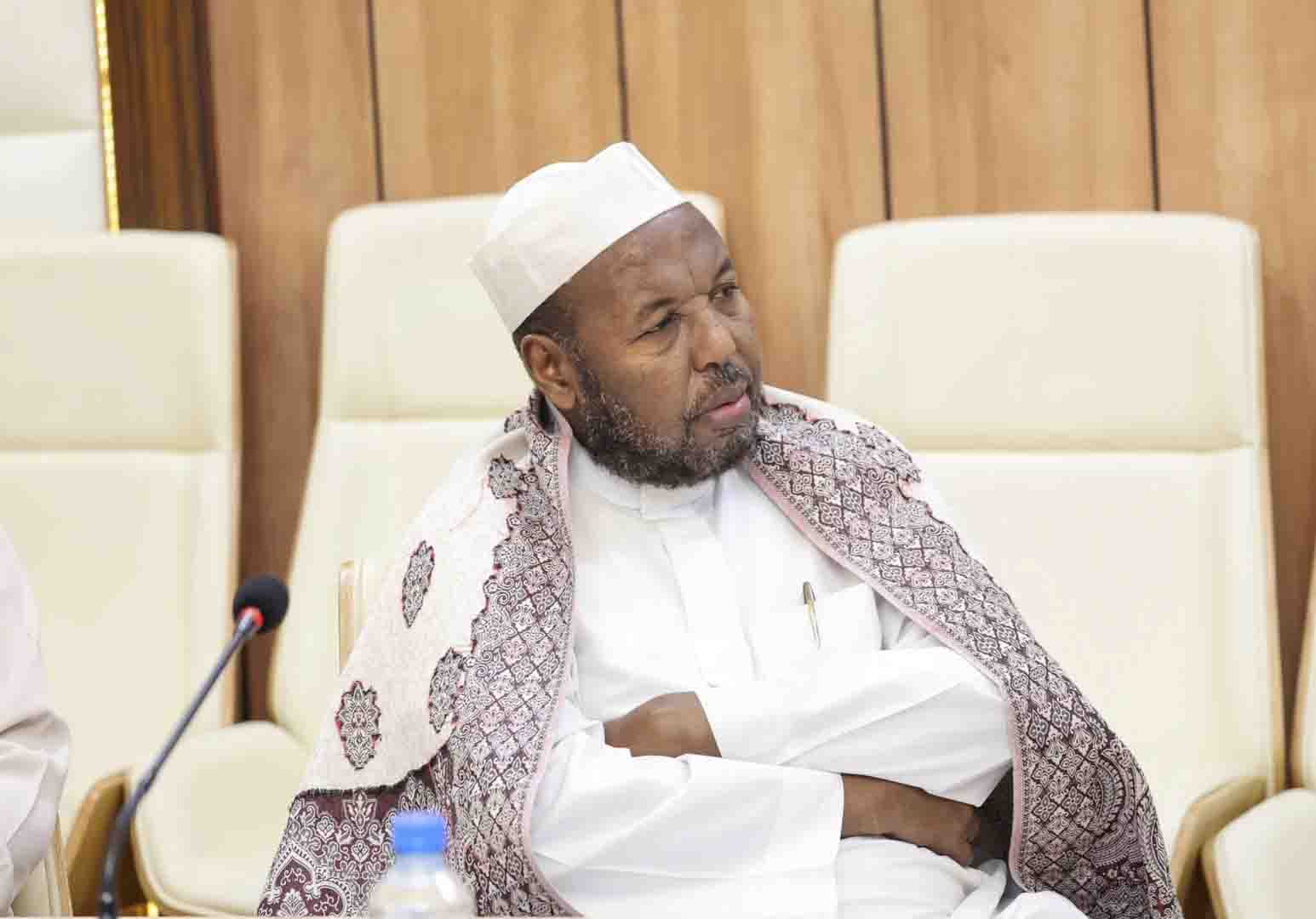
MOGADISHU, SOMALIA – An adviser to President Hassan Sheikh Mohamud told a gathering of senior officials on Sunday 6 September, with the defence minister sitting among them, that anyone who fights the current government should be punished as a terrorist and killed. Ali Wajis made the remark three days after a drone strike wounded a former security chief who had become one of the government’s louder critics, and he repeated it the next day in stronger terms, naming artillery and aircraft as permissible means. Villa Somalia has issued no response of any kind and no official present has distanced himself from either statement. The federal government has spent six months moving its domestic opponents into the same administrative file as al-Shabaab, counting their dead as Khawarij, freezing their assets and withdrawing their passports.

What Ali Wajis Said and Who Was in the Room
“Anyone who fights Somalia’s current government should face the same punishment as terrorists and should be killed,” Ali Wajis told the meeting, according to an account of a gathering attended by government officials including the Minister of Defence. The sentence carries no qualification about method, no distinction between armed opposition and political opposition, and no exception for the federal member states currently in open dispute with Mogadishu, three of which have suspended relations with it. The Minister of Defence commands the Somali National Army and the Danab brigades, and was sitting in the room when Ali Wajis said it.
Challenged over the remark, Ali Wajis said it again on 7 September and widened it. “Once again, I say anyone who is armed will be killed, and a rifle, artillery or an aircraft can be used to strike them. Let any sheikh who has a religious question about this respond to me.”
Neither Ali Wajis nor the defence ministry could be reached afterwards, and no statement has come from the presidency. Four days on, nobody who sat in that room has publicly separated the government from what was said in front of them, and the ministry of religious affairs has not been heard from either. The federal government runs a standing counter extremism communications programme, and its information ministry published new media guidelines on 8 September, two days after the remark, without addressing it. The Somali Journalists Syndicate and the opposition have both called for a response and received none.
Ali Wajis is an adviser to President Hassan Sheikh Mohamud and a member of the religious establishment in Banaadir, known for his consistent public backing of the federal government. He speaks at gatherings of this kind by invitation, which places the choice to invite him with the officials who convened the meeting. For years the federal government has asked religious scholars to contest al-Shabaab’s theology in public, on the reasoning that the war is fought over religious authority as much as over ground, and it cannot now treat a scholar’s ruling as ordinary private speech merely because this particular ruling runs in its own favour.
The Strike That Came Three Days Earlier
The aircraft Ali Wajis named had already been used. Two missiles struck the residence of General Mahad Abdirahman Aden on the night of Thursday 3 September, in the border town of Doolow in Gedo, wounding him along with his wife and several others and killing at least one person reported to be an Ethiopian domestic worker. He was evacuated across the border into Ethiopia for treatment. General Mahad, formerly Somalia’s Custodial Corps commander, was removed from his post earlier this year and briefly held under house arrest before emerging as a vocal critic aligned with the camp of the ousted Southwest president. He and his wife were later evacuated on to Nairobi.
Jubaland accused Turkish military aircraft of carrying out the strike and called it a deliberate, politically motivated attack tied to his opposition to Mogadishu, saying one of the two missiles also hit the residence of Doolow’s district commissioner. The federal government has denied any involvement in an airstrike and offered a different account of what damaged the house, while Ankara, which supplies the drones, the training and the aircraft, has said nothing publicly about the accusation. Residents of Doolow protested and demanded an independent investigation, and demonstrations followed in Garbahaarey, Kismayo and Afmadow.
A fact finding committee promised on 4 September has still not been named, and parliament voted 118 to 45 against putting Doolow on its agenda, with 165 members present. Jubaland, several federal MPs, the ousted Southwest president and opposition politicians have all named the federal government as responsible. Ali Wajis told his audience that an aircraft may be used against armed opponents four days after an aircraft was used against one. The six days that followed the strike, and the questions the government has left unanswered about them, are set out separately. An opposition figure was attacked by an aircraft nobody will claim, the government denied responsibility without producing an alternative account, protests spread across three regions, and Ali Wajis then told the defence minister that people in that man’s position should be killed.
The Precedent Ali Wajis Set in April
April was the first time this year that Ali Wajis supplied a religious framing for a problem the government was already solving by force. As desertions from the Somali National Army mounted during al-Shabaab’s offensive in the Shabelle regions, he publicly branded soldiers who abandoned their posts as apostates and called for their arrest, at a point when whole units were leaving the line. A senior Custodial Corps commander echoed the framing at the time, warning that deserters and their families could face arrest or execution. The offensive those men were running from cost the army a string of towns across Middle and Lower Shabelle, several of which it has not retaken.
Apostasy carries a death sentence in the readings al-Shabaab has propagated for nearly two decades, and placing its enemies outside the faith is the organisation’s central technique against the men who fight it. The federal government inherited that war and has built its religious messaging around contesting exactly this move. It has now twice allowed an allied cleric to reach for the same instrument, once against Somalis in uniform and once against Somalis in opposition, and nothing in the April episode drew a public correction from the presidency. Ali Wajis was still being invited to official gatherings five months later.
In April the category took in soldiers who ran from a battle, a military offence with a military remedy already written into Somali law. In September it covers anyone who fights the current government, a phrase broad enough to take in the Jubaland administration, the Puntland administration and the ousted Southwest leadership, all of which have rejected the constitutional amendments extending federal mandates and formally suspended relations with Mogadishu. None of those three governments is al-Shabaab. Between them they administer a majority of Somalia’s territory.
Terrorism as an Administrative Category
The roughly thirty dead of the August fighting in Baidoa were counted by the defence ministry as Khawarij, a designation that former Baidoa officials examining the same photographs identified instead as the ousted president’s own Darwish. On 8 September the counter terrorism finance machinery, including the national money laundering committee, was turned on a man Mogadishu had dealt with as a member state president until March, with asset freezes and passport withdrawals worked out between the finance and internal security ministries, the police, the immigration agency and the money laundering committee itself.
At a communication forum in Mogadishu on 7 and 8 September the deputy prime minister proposed that Somalis be required to use their national identity number to open a social media account, and the information minister announced guidelines obliging content about Somalia to align with national security interests, the package the ministry set out at the close of that meeting. The draft penal code now before the House of the People carries sentences of up to twenty years for publishing false or misleading information. Ali Wajis has proposed a shorter procedure for the same offence. A reporter shot in Baidoa on 3 September, Bashir Mohamed Abdullahi, died of his wounds on 7 September, and no arrest has been announced.
On 9 September the president ordered the army into an operation against the forces of the man he removed from Baidoa in March, the fifth instrument tried in six months. Fahad Yasin has separately placed the Doolow strike at the door of the speaker of parliament. President Hassan Sheikh Mohamud has said nothing about any of it. Four days after Ali Wajis told his defence minister that his critics should be killed, the position of President Hassan Sheikh Mohamud on that sentence remains unknown, and his government has eight months of its extended mandate left to run.