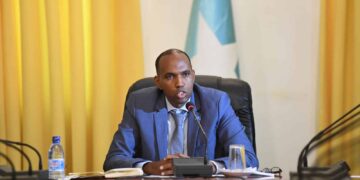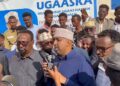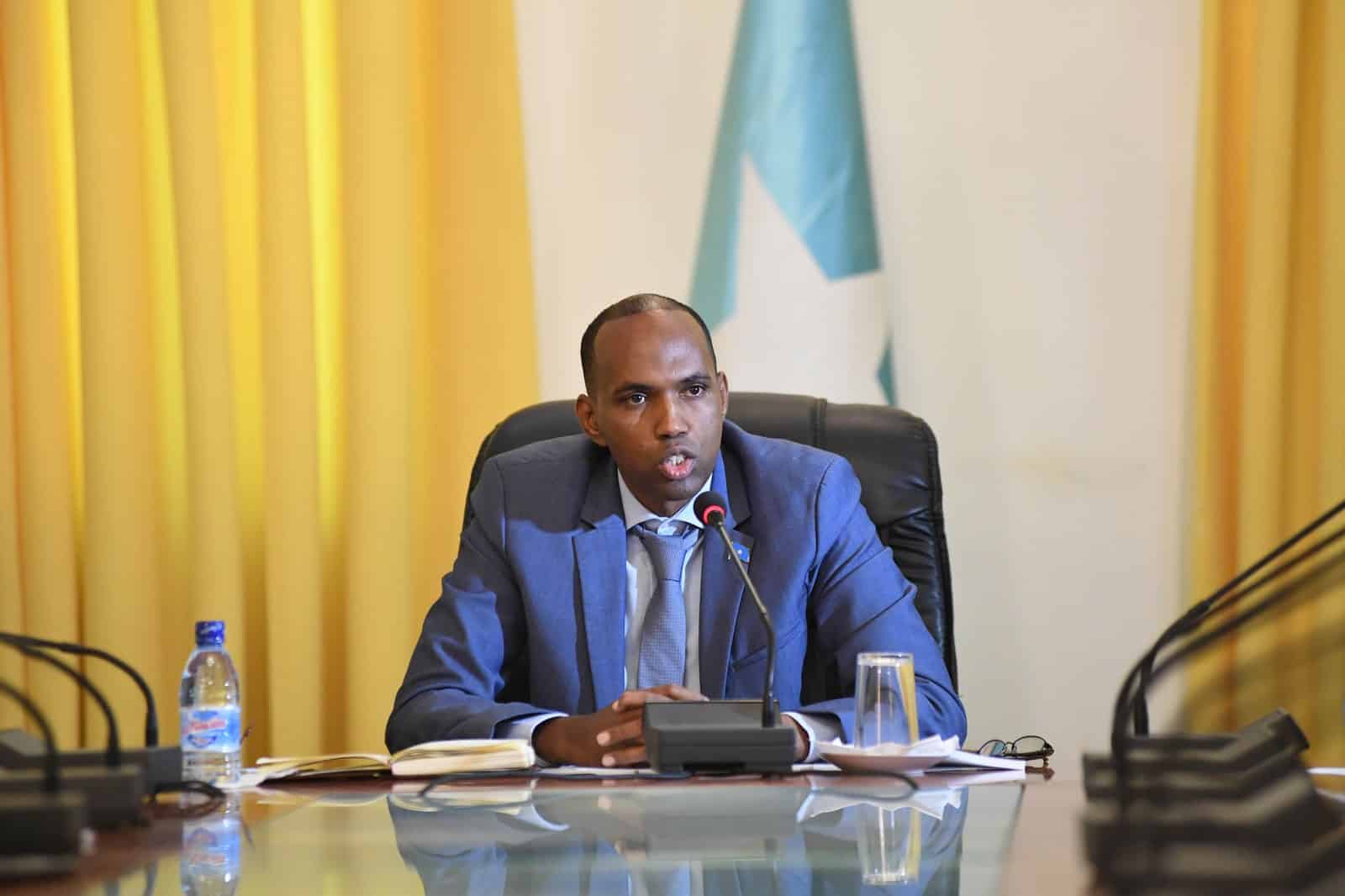
MOGADISHU, SOMALIA – Former prime minister Hassan Ali Khaire has accused the federal government of striking nearly 10,000 soldiers and military beneficiaries off the army payroll, among them the children of soldiers killed fighting al-Shabaab, and of diverting the money to people close to President Hassan Sheikh Mohamud. He made the charge at a news conference organised by the National Salvation Forum in Mogadishu and reported on 8 and 9 November, in a week when Hawadle soldiers were leaving federal ranks in Beledweyne, and the government has answered neither the number nor the accusation.

Hassan Ali Khaire Puts a Number on the Cuts
Hassan Ali Khaire said soldiers who were on the government’s own register had been taken off the pay records, and he singled out the children of soldiers who died defending the country, whose payments he said had also been stopped. He said the step had reached thousands of soldiers and their households, and he accused the government of moving the money cut from the army toward people he described as close to the president. He showed no documents, and neither the number nor the claim about where the money went has been independently verified. The government had made no public reply to the allegations by the evening of 9 November.
Hassan Ali Khaire’s figure matches a report published on 27 October, twelve days before his news conference, that nearly 10,000 members of the Somali National Army had their October pay reduced, with the deductions tied to suul-saar, the verification exercise that checks personnel and registration records to decide who is eligible for pay. Some soldiers received arrears in the same round for entitlements unpaid since 2024, while the exact number affected, the amounts withheld and the reason for each deduction were never confirmed, and the defence ministry and the army command gave no public explanation. Nor did either say how many ranks received the arrears, how much was paid or whether the debts from 2024 were settled in full.
Parliament’s finance committee has since asked for an urgent explanation of why the entitlements of some soldiers killed in battle were cut, and it said some soldiers serving in Jubaland had been told their pay would fall by 100 dollars, asking who had ordered the reduction and on what grounds. Hassan Ali Khaire’s figure therefore sits on top of a payroll exercise the government has run without public rules, and a parliamentary request it has not answered either.
Six Thousand in September, Ten Thousand in November
In late September, six weeks before Hassan Ali Khaire’s news conference, the parliamentary defence committee summoned Defence Minister Ahmed Moalim Fiqi and the army chief over cuts it said had halved the pay of some retired and disabled soldiers and reduced the benefits of fallen soldiers’ families by up to 60 percent. The committee estimated that nearly 6,000 soldiers and family members were affected and asked for the legal basis of the cuts. Families said the monthly payment for each child of a fallen soldier had fallen from 200 dollars to 100, a figure no official statement has confirmed. Fiqi is the minister who declared in early September that the Somali army was ready to take over from the African Union mission as the money for that mission ran out.
That week it also emerged that the army’s orphans had lost half their allowance, months after the government had launched an agency to care for them. Fahad Yasin Haji Dahir, a former director of the National Intelligence and Security Agency, criticised the reduced support for disabled soldiers and the families of fallen troops, called for an investigation and said retired soldiers, disabled troops and the families of the dead had been complaining for years. No result of any inquiry has been published since.
Between that hearing and Hassan Ali Khaire’s news conference the count rose from about 6,000 to nearly 10,000, and the categories widened from retired and disabled men and bereaved families to serving soldiers on the active register. Accordingly, the two figures may describe different exercises or the same one at different stages, and the government, which holds the payroll, is the only party able to say which. Its silence leaves the higher figure as the one now in circulation, attached to an opposition politician’s accusation of diversion and to a parliamentary committee’s demand for the order behind the Jubaland deductions.
The Army Hassan Ali Khaire Is Addressing
Hassan Ali Khaire served as prime minister from 2017 until parliament removed him in a no-confidence vote in July 2020, and he has since campaigned as a presidential hopeful and joined the opposition against the extension of President Hassan Sheikh Mohamud’s mandate, which the Supreme Court ruled on 5 November had expired in May. The National Salvation Forum gave him the platform for this charge. On 7 November he told officers and soldiers to take no part in any clash with civilians in Hiiraan, saying the region’s grievances over power-sharing were real and calling it unfortunate that the national army was being turned on the region, and on 8 November he condemned the shooting of civilians during demolitions in Deyniile.
Hassan Ali Khaire is speaking to an army that lost dozens of soldiers at Jameeco on 26 October, where the defence ministry reported only al-Shabaab losses and where, according to one report, soldiers’ bodies still lay on the roads ten days after the battle, and in Beledweyne armed Hawadle men from the federal forces went to their Ugaas after he told them there was no government left to defend. The Macawisley fighters who carried the 2022 offensive in Hiiraan alongside the army had already left the Bulo Burde and Mataban fronts for Beledweyne by the start of November. Meanwhile, Uganda began withdrawing its bilateral contingent at the end of October, and the African Union and European Union have warned of the funding gap facing the AUSSOM mission that the Somali army is meant to replace.
Hassan Ali Khaire has now addressed the soldiers whose pay was cut, the families whose allowances were halved and the officers whose units were being readied for Hiiraan, all in the same fortnight, while the government that holds the register has published neither the list of names removed nor the rule that removed them.