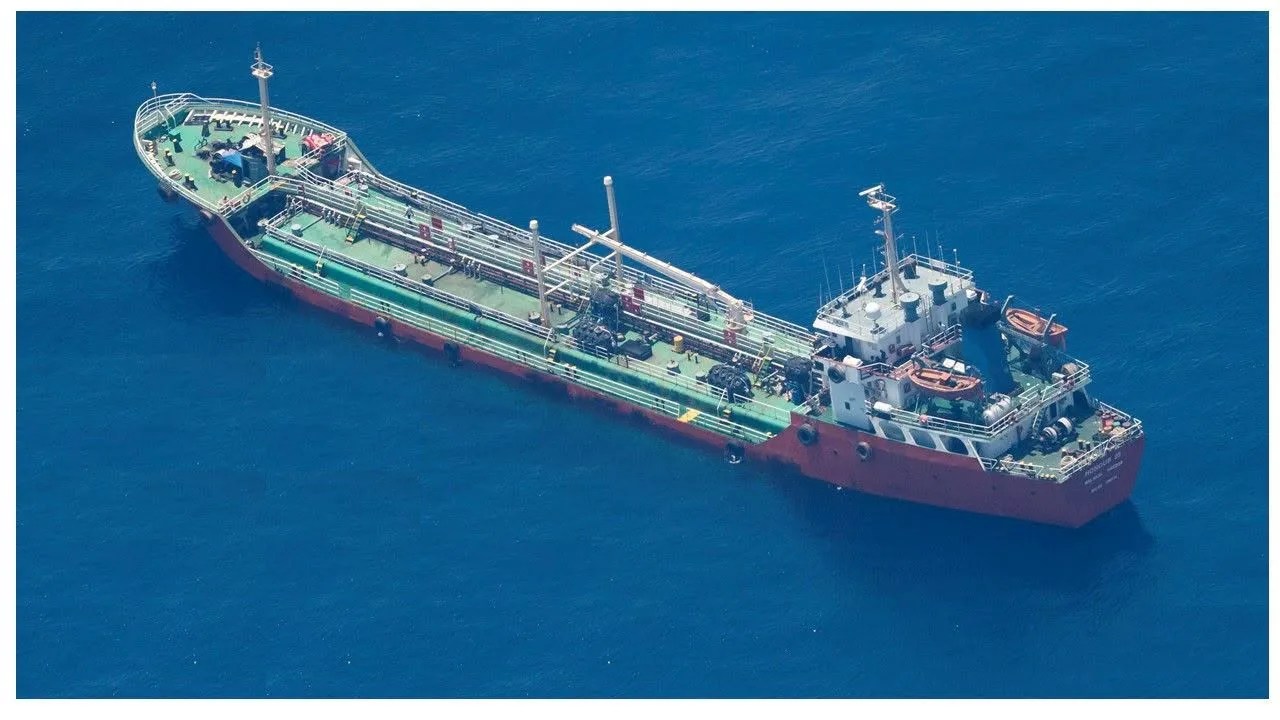
BANDARBEYLA, SOMALIA – Pirates holding the tanker Honour 25 at Dharinbaar shot dead five of its crew, three Pakistanis, an Indian and the ship’s Myanmar chief engineer, before the Puntland Maritime Police Force retook it on Tuesday 29 September, Puntland said. Four more sailors were wounded, three of them Pakistani. The deaths appear to be the first of hostages at the hands of Somali pirates in more than a decade, and they came after 161 days of captivity and a warning from the captain that the gang would kill the crew if anyone tried to free them by force. Two survivors say the shooting came during the clash, Puntland says it came before its operation began, and Pakistan’s Foreign Office, which first spoke only of unconfirmed reports, confirmed on Wednesday that three of its nationals were among the dead.

What Puntland Says Happened at Dharinbaar
Puntland’s first statement on Tuesday spoke of two wounded pirates and a ship in its hands, and the deaths were announced hours later. The maritime police then said the pirates had killed five of the crew before the operation began, that three Pakistanis and an Indian were among the wounded, and that the vessel was “now safe and under Puntland Government control.” The force said it had detained sixteen members of the group at Dharinbaar while others fled towards the shore and inland, and later accounts put the number held at twenty-one.
Puntland said it knew where the rest of the gang were, and it ordered its forces to arrest anyone suspected of taking part and to keep up operations along the coast. No photograph of the boarding at Dharinbaar had been released by Wednesday afternoon, and Puntland gave no figure for any casualties among its own forces. A Somali naval vessel used in the operation was towing the damaged tanker towards the shore, according to the Karachi welfare trust that has followed the case, and Puntland had not said where the bodies or the wounded were being taken, or which court would try the men it holds.
The Honour 25 is a small Palau-flagged product tanker of about 3,000 deadweight tonnes. It was carrying about 18,500 barrels of gasoline to Mogadishu when pirates boarded it on Tuesday 21 April, roughly thirty nautical miles off Puntland, and the European Union’s naval force reported six days later that it had been moved into Somali waters with all seventeen crew unharmed. By May it was anchored off Eyl, and it was held off the Bandarbeyla coast, in the district where Dharinbaar lies, when the Puntland Maritime Police Force moved on it. Four days earlier the same force had taken the Sibu 1 by assault and brought its twenty crew out alive.
The Survivors’ Account From Karachi
Two Pakistani survivors, Hussain Yousuf and Imran Ali, gave the Ansar Burney Trust in Karachi a different sequence from Puntland’s, in which the pirates opened fire on the hostages during the clash with Puntland’s forces and then ran. A Somali-language report noted that Puntland’s timing differs from the first accounts, and neither version has been independently verified. Both accounts place the gun in the pirates’ hands at Dharinbaar, and they differ only on the moment the shooting began. In Karachi the dead Pakistanis were named as the second officer, Kashif Umar, the third engineer, Mahmood Ansari, and Rafiullah, who worked the boilers, and all three came from the city.
On Friday 25 September, the day the Sibu 1 was freed, the captain of the Honour 25 sent a message through the same trust warning that the gang had repeatedly threatened the crew with firearms and would kill them if any military operation was attempted. Five months of talks over a ransom had freed nobody on the ship. The ransom was reported at $3 million in some accounts and $1.9 million in others, and the pirates were said to reject the standing of Osman Shire Quud, a Puntland businessman who says the ship is his, while the captain said its papers named a chartering company registered in Dubai.
The families in Karachi had said in the summer that the men were short of drinking water, living on boiled rice and without medicine, and that contact with the ship had been cut since mid-June. They later took their case to the streets of Karachi to press their own government for action. In May, Ayesha Ameen, whose husband is a fitter on the ship, asked how she was supposed to tell their three-year-old daughter that her father could not come home. Now the families of Kashif Umar, Mahmood Ansari and Rafiullah are asking for their bodies to be returned to Karachi from Dharinbaar, where the Honour 25 had been held when the force moved on it.
Islamabad Sends Its Djibouti Team to Bandarbeyla
Pakistan’s Foreign Office spokesman, Sajjad Haider Khan, first said on Wednesday that the mission in Djibouti, which is also accredited to Somalia, had received only unconfirmed reports and was in contact with the relevant authorities to ascertain the facts. Later the same day the ministry confirmed the deaths of Rafi Ullah Khan, Syed Kashif Umer and Mahmood Ahmed Ansari, said the surviving crew had been brought ashore at Bandarbeyla and the wounded were in a nearby hospital, and sent its embassy team from Djibouti to the town. Pakistan keeps no resident embassy in Mogadishu, and the names of the dead first reached Karachi through the Ansar Burney Trust, which said it had informed the government and the Ministry of Human Rights, the ministry Islamabad named in September as its focal point for the case.
On Tuesday 9 June Pakistan’s Deputy Prime Minister and Foreign Minister, Ishaq Dar, telephoned Somalia’s Foreign Minister, Abdisalam Abdi Ali, and was told that the federal government was making serious efforts to free the hostages as soon as possible. The two agreed to stay in close coordination until the case was resolved, and Pakistani diplomats travelled from Djibouti to Mogadishu to gather information. By late July the Ansar Burney Trust was complaining that nearly a hundred days had passed without concrete action from Pakistan’s own government. In September the Foreign Office said it had not received the captain’s latest warning. By Wednesday afternoon the federal government had issued no statement on the deaths at Dharinbaar or on the operation that preceded them.
Egypt, whose eight sailors on the MT Eureka came ashore at Hulcaanood on the same Tuesday, announced their release on Wednesday and credited its contacts with Somali and Yemeni officials, with its embassy in Mogadishu told to fly them home. Pakistan, whose sailors had been held on the same coast eleven days longer, spent Wednesday morning asking its mission in another country for confirmation of names the families had already received from the ship, and confirmed them only in the afternoon. Three of the four wounded from Dharinbaar are Pakistani, and Islamabad said only that they were being treated at a hospital near the coast.
The First Hostages Killed Since the Attacks Resumed
Fifteen attacks have been logged off Somalia this year, the most since 2013 and a sharp turn after the years from 2018 to 2023 in which attacks off the Somali coast had steadily declined, and six ships were seized or brought to the northeastern coast after 21 April. None of their crews had lost a man to the pirates until the Honour 25 operation at Dharinbaar. The cement carrier Sward was released near Garacad on 11 September after a ransom, and the MV Lutuf left the Nugaal coast on 29 August in a release Villa Somalia credited to Turkish and Somali forces and Puntland’s security ministry said was bought, after it monitored calls between federal officials and the hijackers.
Four days before Dharinbaar, the Puntland Maritime Police Force took the Sibu 1 by force on 25 September, killing one pirate and taking fifteen prisoner, and its twenty crew came out unharmed, though several of the prisoners escaped from a convoy near Jariiban two days later. On the day of the Dharinbaar operation, the gang on the MT Eureka left its ship at Hulcaanood without a fight, and its twelve sailors, eight of them Egyptian, came ashore alive. Of the six ships, only the Asana, seized on 17 July, is still in pirate hands.
On 9 September President Said Abdullahi Deni told the people of Xaafuun that the pirates would be fought the way Puntland fought Daesh in the Calmiskaad mountains, and his letter of 13 September to the Security Council asked for international cooperation against piracy that works directly with Puntland’s own forces. On 6 September the federal foreign ministry had described piracy as a problem off the coast of Puntland and claimed the leadership of every maritime security arrangement in the country. The five crew killed at Dharinbaar had been held for 161 days, and the captain’s warning of what the gang would do came four days before the operation that freed the twelve men who survived.