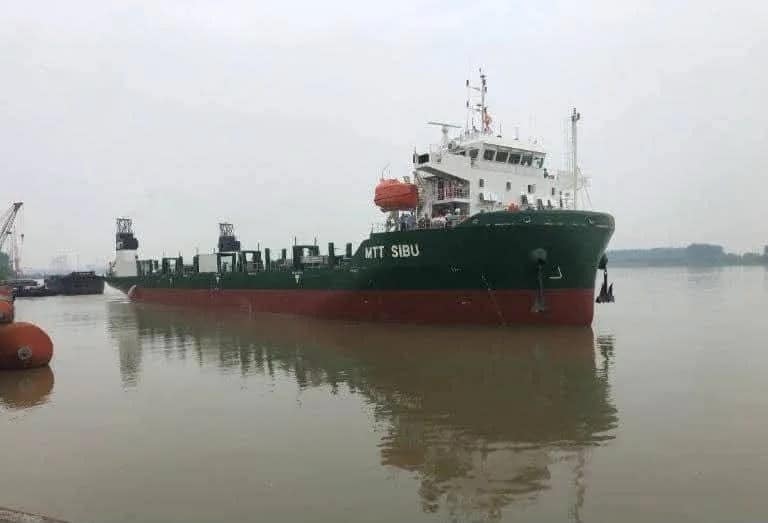
GAROWE, SOMALIA – Puntland’s maritime police freed the Eritrean-flagged tanker Sibu 1 off the Mudug coast on Friday 25 September after a two-day operation in which, by Puntland’s count, one pirate was killed, four were wounded and fifteen were taken prisoner, thirty-six days after six armed men boarded the ship 136 nautical miles east of Al Mukalla in Yemen. The twenty crew, sixteen of them Indian nationals, were reported safe with the cargo. The Sibu 1 has carried a United States Treasury designation since December 2025 for moving Iranian petroleum products. Two weeks earlier the cargo ship Sward left its anchorage near Garacad after 138 days in captivity and a ransom, and four weeks earlier Villa Somalia credited Turkish warships with freeing the MV Lutuf, a release Puntland says was bought.

Forty-Eight Hours Between Garacad and Hobyo
Commander Mohamed Jama of the Puntland Maritime Police Force described the raid on Friday as “a counter-piracy operation that was carried out by our forces from two days ago and it’s still going on”, adding that “the ship is free and the pirates are all in the hands of our forces”. The Sibu 1 was held between the Garacad and Hobyo coasts of Mudug, the stretch of shoreline from which the last generation of Somali pirates ran its anchorages. Puntland’s statement said its specially trained units took the tanker after an exchange of fire with the group holding it, and that the force had been conducting anti-piracy operations along the coast before it moved on the ship.
Puntland’s government put one suspected pirate dead, four wounded and fifteen captured in all, with one officer of the maritime force wounded across the two days of fighting. The international wire account filed while the raid was still under way said only that all the pirates were in Puntland’s hands. Fifteen prisoners is more than twice the six men who boarded the tanker off Yemen in August, and no account published so far explains when the others joined the group holding it. Puntland has also said nothing yet about where the prisoners are being held or which court will try them, and no photograph of the boarding had been released by Friday evening.
The seizure came at about 08:00 UTC on Thursday 20 August in the Gulf of Aden, while the Sibu 1 was carrying 228,000 barrels of gasoil from the Gulf toward Port Sudan. Its crew got one message out before losing control of the ship, a line typed into the transponder’s destination field that read “PRIRATE ONBOARD HEL”. The tanker’s last reported position had it heading west-southwest at about 9.3 knots, and it had entered the Somalia High Risk Area the previous evening. By the time the Puntland Maritime Police Force moved against it on Wednesday 23 September, the ship had spent close to five weeks at anchor off Mudug.
The Sibu 1 in a Year of Ransoms
The Sibu 1 was built in 2001 under German ownership and sailed as the Seamull before it took its current name, moving to the Palau flag in July 2020 and later to Eritrea’s, with its management run through a UAE company, Qatrat Alnada Almasi Ship Management. When the Treasury designated it in December 2025, officials said it had carried Iranian petroleum products, naphtha and gasoil among them, on several occasions and had called at Houthi-controlled ports in Yemen. A maritime-intelligence firm had flagged the same hull as high risk in 2023 for its change of identity, flag hopping, opaque ownership and long periods with its transponder switched off.
The Sibu 1 is the sixth ship hijacked off Somalia or in the Gulf of Aden since 21 April, following the Honour 25 on 21 April, the Sward on 26 April, the Eureka on 2 May, the Asana on 17 July and the MV Lutuf on 17 August. Fifteen attacks have been logged this year, the highest number since 2013, and the same analysts tie the resurgence to naval patrols drawn away to the Red Sea, captured ships put to work as motherships, and the value a laden tanker now carries.
The Sward, a cement carrier seized on 26 April with seventeen crew, fifteen of them Syrian, was held near Garacad for 138 days and used by its captors to take at least two Iranian fishing vessels and the MV Lutuf before it was released on Friday 11 September, twelve days before the Puntland Maritime Police Force moved on the Sibu 1. Estimates of the ransom run from 1.7 million dollars, the figure given by a maritime security firm, to 2.7 million dollars according to sources in Puntland.
Eight Egyptian sailors are still aboard the Eureka, which armed men took off Yemen’s Shabwa coast on 2 May and anchored in Somali waters near Puntland. Egypt’s foreign minister, Badr Abdelatty, pressed his Somali counterpart on Monday 7 September, at the Arab League’s ministerial session in Cairo, to accelerate their release. Four months of federal diplomacy on the Eureka have produced no release, while the Sibu 1 came out of the same waters in two days with its captors in a Puntland cell.
The Lutuf Precedent and the Letter to New York
The MV Lutuf was seized on Monday 17 August while carrying Turkish military supplies to Mogadishu and released on Saturday 29 August. Villa Somalia announced that Turkish naval forces and the Somali army had freed it in a ten-day operation that killed fourteen pirates and destroyed four boats. Sources on the coast said the Eyl hijackers took two and a half million dollars for the ship, and Puntland’s Ministry of Security then rejected the rescue claim outright, cited Mogadishu’s own defence ministry statement as evidence that no raid had taken place, and accused senior federal officials of acting as intermediaries on the telephone to move the ransom.
President Said Abdullahi Deni told the people of Xaafuun on the evening of Wednesday 9 September that the pirates would be fought “the way we fought Daesh” in the Calmiskaad mountains, and counted five hijacked ships off the Puntland coast. In Mogadishu the same day, the Upper House passed an anti-piracy and anti-kidnapping bill by 29 votes to none, days after a federal foreign ministry statement claimed leadership of every maritime security arrangement in the country. Two of those five ships have since left their anchorages, the Sward after a payment and the Sibu 1 after a Puntland raid, while the Honour 25, the Eureka and the Asana are still held.
Puntland’s letter to the Security Council, dated Sunday 13 September, counted nineteen piracy incidents this year and five vessels held by pirate groups, and called the Lutuf ransom an encouragement to piracy. It told the Council that Turkish forces struck the Jiifle and Garmaal coastline on 18 and 20 August, killing fourteen Somalis, and warned against partner-supplied counter-terrorism capabilities being used in domestic political disputes. It asked for international cooperation against piracy that works directly with Puntland’s own maritime and land forces, a restored Panel of Experts, and a UN political mission kept open past its closure on 31 October. The Council takes up Somalia in October, with the federal government holding one of its seats until the end of 2026. The fifteen men taken off the Sibu 1 are in Puntland’s custody, and every account of Friday’s operation names a single force, the Puntland Maritime Police Force.