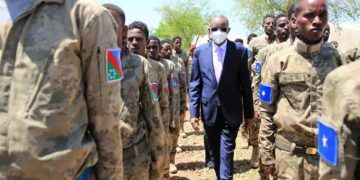
GAROWE, SOMALIA – General Takar is stuck in Lasanod, and with him the most ambitious federal attempt yet to plant an army inside Puntland. Regional authorities have barred Gen. Jima’le Jama’ Takar, recently named by Mogadishu as commander of the 54th Division, from entering Garowe or any town under Puntland’s control unless he resigns the post or publicly declares that it does not exist. The general, fresh from consultations in Mogadishu, insists that no one can keep him out of his own region. Former Puntland president Abdirahman Farole is now mediating between the two sides. His success or failure may determine whether the long war of words between Villa Somalia and its strongest member state finally acquires a front line.

A General Stuck at the Gate
The standoff, reported by the Somali Guardian on July 9, has a peculiar shape. Puntland has not simply declared General Takar unwelcome; it has offered him a choice engineered to destroy the appointment itself. He may return home as a private citizen who has resigned his federal command, or as a man who has publicly stated that the 54th Division post is a fiction. Either outcome would leave Mogadishu’s project decapitated, which is precisely the point. Puntland is negotiating over whether the federal government can conjure a military structure on Puntland soil by decree.
General Takar has rejected both conditions and vows to return regardless, describing Puntland as a region no one can bar him from. For now, he waits in Lasanod after authorities refused him entry into Garowe and other towns under the administration’s control. The location adds its own irony: a federal commander stranded on the contested edge of the state he claims to command. His leverage, though, is real. He commands forces loyal to him inside several of Puntland’s major cities, troops recruited and paid by Mogadishu. Both sides know that any attempt to force the issue would put those garrisons and Puntland’s own forces face to face in urban terrain.
The Payroll Army Behind General Takar
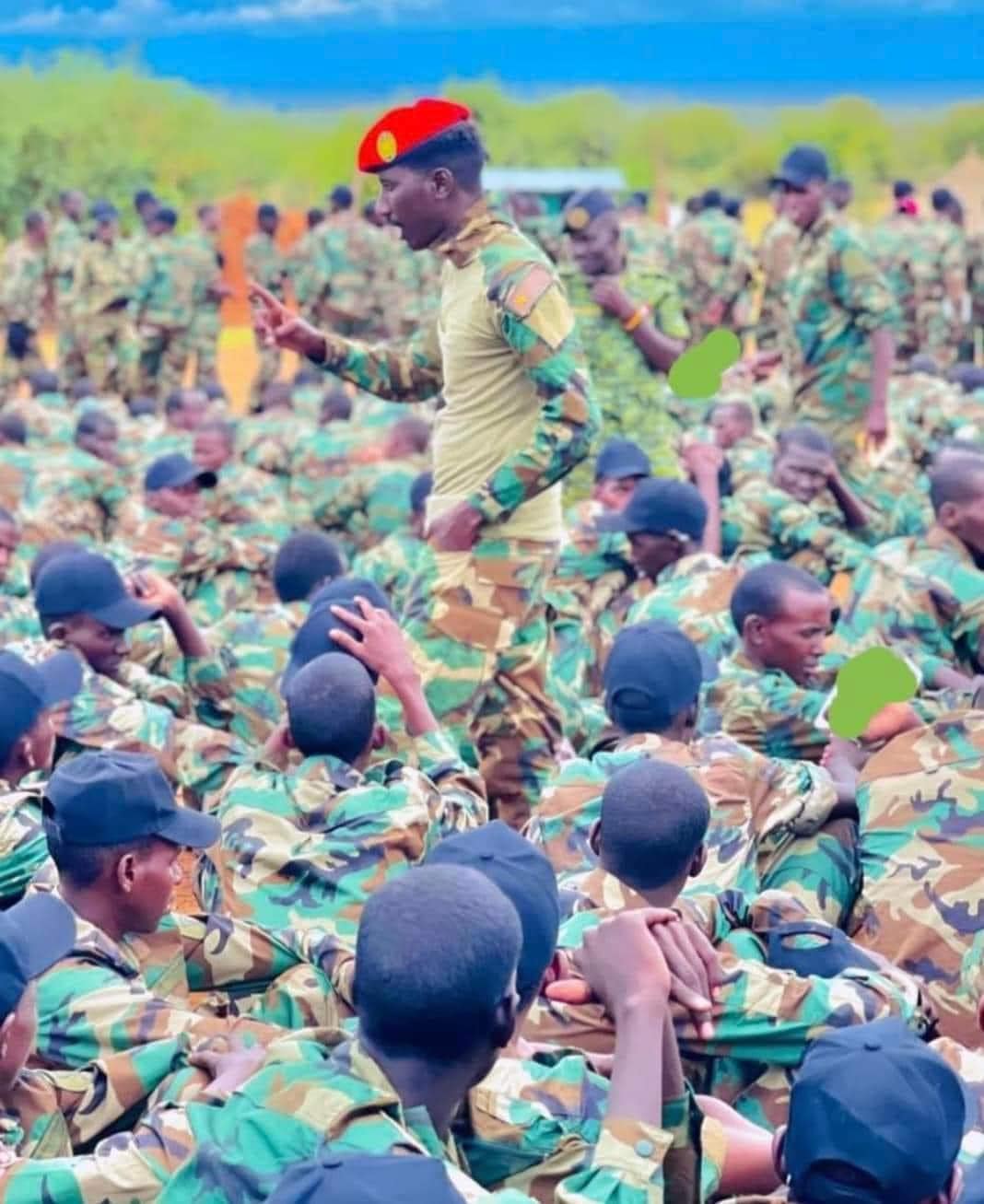
The appointment did not arrive in a vacuum. Mogadishu named General Takar to lead the 54th Division even though he already commanded federally funded units in the region. The new title formalised a payroll that Puntland has long described as a weapon aimed at its government. Puntland’s security adviser has put the figure at 1,376 soldiers inside the region paid directly from Mogadishu, a chain of salaries that bypasses the regional command entirely. In June, the administration warned against federal military recruitment in its territory, a warning the 54th Division’s creation ignored.
Garowe’s suspicion of the project runs deeper than payroll politics. On June 24, Puntland’s security ministry accused the federal government of smuggling weapons into the region to ignite a civil war, an allegation Mogadishu has not answered. Earlier reports suggested Puntland forces were prepared to arrest the general should he cross into the state. Seen from Garowe, the division is less a fighting formation than a flag planted in hostile ground. Reporting has set out how the scheme works, with critics dismissing much of its roster as ghost soldiers. Whatever its combat value, the unit gives Villa Somalia a budget, a commander, and a claim inside a state that has withdrawn recognition of the federal government.
Farole Steps In With a Warning
The mediation now rests with Abdirahman Mohamed Farole, the former Puntland president, who says his aim is to prevent escalation and steer General Takar and the administration toward agreement. His involvement matters because of who he is. Farole is no ally of convenience for President Said Deni; he is a rival elder statesman whose intervention signals that Puntland’s political class stands behind the entry ban across factional lines. Mogadishu has often bet on splitting Puntland’s elites against one another. A mediation led by Deni’s most prominent predecessor suggests that bet is failing.
Farole’s framing of the dispute was equally telling. He warned that Puntland would not allow the federal government to establish a military presence in the region, nor to use Puntland’s own people as instruments for destabilising its administration. That language echoes the accusation Garowe has levelled since a militia tied to federal money first appeared in the state: that Mogadishu’s strategy is to arm sons of Puntland, General Takar’s men among them, against their own government. The pattern traces back to the alleged destabilisation plan of November 2023. When the mediator himself repeats the charge, the space for a face-saving federal climbdown narrows.
A Playbook Running Out of Road
The Takar affair fits a sequence that Puntland’s leaders recite from memory. Villa Somalia engineered the removal of a sitting president in Baidoa, a takeover that followed a familiar script. Garowe has spent two years arguing it is next in line. Since Puntland withdrew recognition of the federal government in 2024, each federal move into the region has arrived dressed as state-building: a constitutional process, an electoral model, a payroll, now a division command. Each has hardened Garowe’s resistance instead of softening it.
The timing compounds the risk. Puntland and Jubaland walked out of the Turkiye-led mediation between the government and its opponents this week, citing Ankara’s closeness to Mogadishu. As a result, no credible national forum exists in which the dispute could be absorbed. That leaves the general’s fate to Farole’s shuttle diplomacy and to the discipline of armed men on both sides. General Takar still commands thousands of troops inside Puntland’s cities, and Puntland remains determined to keep him from joining them. A single misjudged convoy could turn the payroll war into a real one. The only force that profits from federal and Puntland troops trading fire is the insurgency both claim to be fighting.
For now, the general waits, and Mogadishu waits with him. The federal government can escalate on behalf of a commander stranded outside his own division, or it can quietly let the appointment die and absorb the humiliation. Neither option advances the war against al-Shabaab. Both advertise how completely the state-building project has collapsed into a contest over who commands whom. General Takar set out to take up a command. He has instead become the measure of how little command Mogadishu actually has.