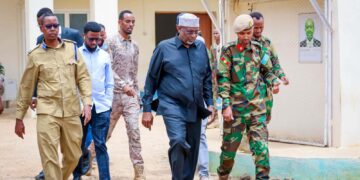

BAARGAAL, SOMALIA – President Said Abdullahi Deni told the far eastern districts of Puntland on Tuesday 8 September that every agreement with the federal government has been annulled, and that his administration will run its own constitution and its own statehood until Somalis agree on a political order to replace the one abandoned in Mogadishu. The declaration came in the middle of a road tour that has taken him through Dharjaale, Iskushuban, Baargaal and Gunbax with ministers, members of parliament and his police commander. It landed on the same day a United Nations Security Council assessment credited Puntland’s operations in the Calmiskaad mountains with cutting Islamic State in Somalia to a fraction of its former strength. President Said Abdullahi Deni is making the claim and the case for it in the same week.

Every Agreement Annulled
“Every agreement between us and the Federal Government has been annulled,” President Said Abdullahi Deni said, and the Puntland government “has decided that until there is a return to that constitution and Somalis reach agreement, it will administer its own constitution and its own statehood.” He drew the operational conclusion out loud, telling his audience that no party other than Puntland therefore holds the authority to operate in the territory, as the Puntland constitution and the constitution Somalis once agreed on both provide. The remarks were delivered to communities in districts that sit days of driving from Garowe and further still from Mogadishu, which is where the sentence acquires its weight.
The constitution he means is the provisional federal text of 2012, the document every Somali party signed up to when the transition ended and the one Puntland has treated as the only binding federal instrument since. Garowe’s position rests on procedure. The amendments carried through parliament in 2024 altered the shape of the presidency and the electoral system without the consent of the member states the federal compact was built on. Puntland’s reading is that a bargain rewritten by one party lapses for all of them. It withdrew recognition of the federal government on 30 March 2024 and has since dealt with Mogadishu as a foreign capital, a position it has held through two years of pressure and an attempt to redraw its territory from outside.
What President Said Abdullahi Deni described is a holding position with a stated exit. Puntland administers itself under the 2012 text until Somalis negotiate a successor they all accept, at which point the arrangement it is defending would be superseded by one with actual consent behind it. That framing keeps Garowe inside the argument about what Somalia should be, and it is the reason Puntland officials keep returning to the word agreement while Villa Somalia keeps returning to the word constitution.
President Said Abdullahi Deni and the Members Who Went to Work
Puntland’s president extended the argument to the men and women from the state who hold seats and offices in Mogadishu, saying they carry no formal legal standing and are individuals who went there to work. He warned them against attempts to disturb Puntland’s statehood and its unity, and he thanked the people of Raas Caseyr for having refused that traffic when it reached them.
“Your government from now on will give no opportunity to those who peddle bad news,” he said, before turning in the same breath to the roads being repaired and to the airport at Caluula, which he said will be opened to aircraft. Caluula sits at the northern tip of the Somali coast where the Gulf of Aden meets the Indian Ocean, and its strip has been unusable for years. Puntland’s case for the first half of that sentence is the one every administration in an armed confrontation makes. A security campaign against Islamic State and against piracy generates an information war alongside it, and a state is entitled to defend its institutions against fabrication. The reporting the districts themselves find credible is the strongest asset an administration whose claim is that it governs better can hold, and Garowe has more to gain from it than from silence.
Somalia’s House of the People passed the term-extending amendments that broke the compact, and it then watched a federal court void a member state election its own commission had run. The delegates President Said Abdullahi Deni is dismissing sit in that chamber on behalf of a state that stopped recognising it in 2024. Their seats were filled by a selection process Puntland took no part in, and Garowe has treated everything done with those votes as the act of a body speaking for itself. Mogadishu has offered no answer to the puzzle beyond repeating that the seats exist and that the men in them are Somali citizens, which nobody in Garowe disputes.
What the Security Council Counted
A new Security Council assessment published on 8 September puts Islamic State in Somalia at between 150 and 250 fighters, its leader Abdulqadir Mumin and his deputy Abdirahman Faahiye among them. In 2025 the then commander of United States Africa Command, General Michael Langley, put the group at 1,200 to 1,500. The council attributes the collapse to Puntland ground operations in the Calmiskaad range, which took the group’s bases and supply routes, and to the American air strikes flown against Islamic State positions in support of them. More than 900 fighters have been killed in the campaign since the start of 2025 on the council’s reckoning, and the territory the group can move through has shrunk to pockets of mountain.
Puntland fought that campaign with forces raised and paid inside the state while the federal army was committed elsewhere, and the districts President Said Abdullahi Deni is now driving through are the ones those operations cleared. The council’s own report qualifies the achievement, noting that the leadership structure survives and that fighters remain in remote mountain country, which is the ordinary shape of a campaign that has broken an organisation without finishing it.
Garowe now holds something no communique from Villa Somalia can offset. The body that seats Somalia’s federal government at the United Nations has put its name to the proposition that the most effective counter terrorism force in the country answers to a state which no longer recognises Mogadishu. It did so in the same fortnight Washington was negotiating a base at Bosaso directly with Puntland, and in the same month Ankara was flying over the Puntland coast without telling Garowe anything at all. Foreign governments have spent two years routing their security business to Garowe while declining to say anything about its constitutional status, and President Said Abdullahi Deni has stopped waiting for the two things to be reconciled. Statehood is being conceded in practice by the actors who will not concede it on paper.
Roads, Airstrips and a King’s House
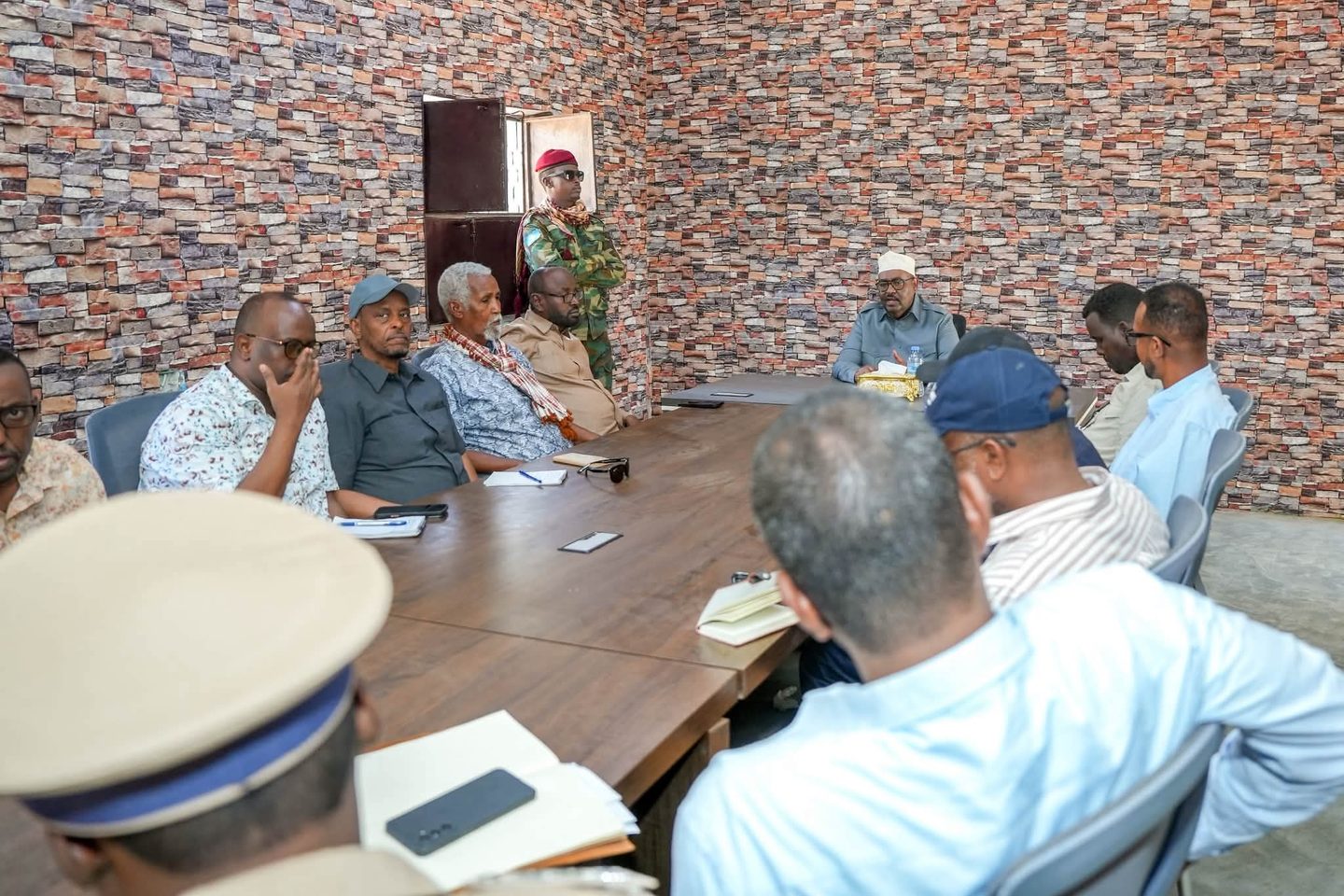
The tour began on 4 September through the Bari districts that sit off the tarmac, reached Dharjaale and the historic settlement of Iskushuban on 5 September, and arrived in Baargaal on 6 September. On 7 September President Said Abdullahi Deni met district and Raas Caseyr regional officials, with the Puntland councils represented by ministers and members of parliament alongside the police commander and the presidency’s director general. The agenda ran through security, the campaign against Islamic State, piracy and maritime protection, development, and the terms on which investment might come to a coast that has seen almost none.
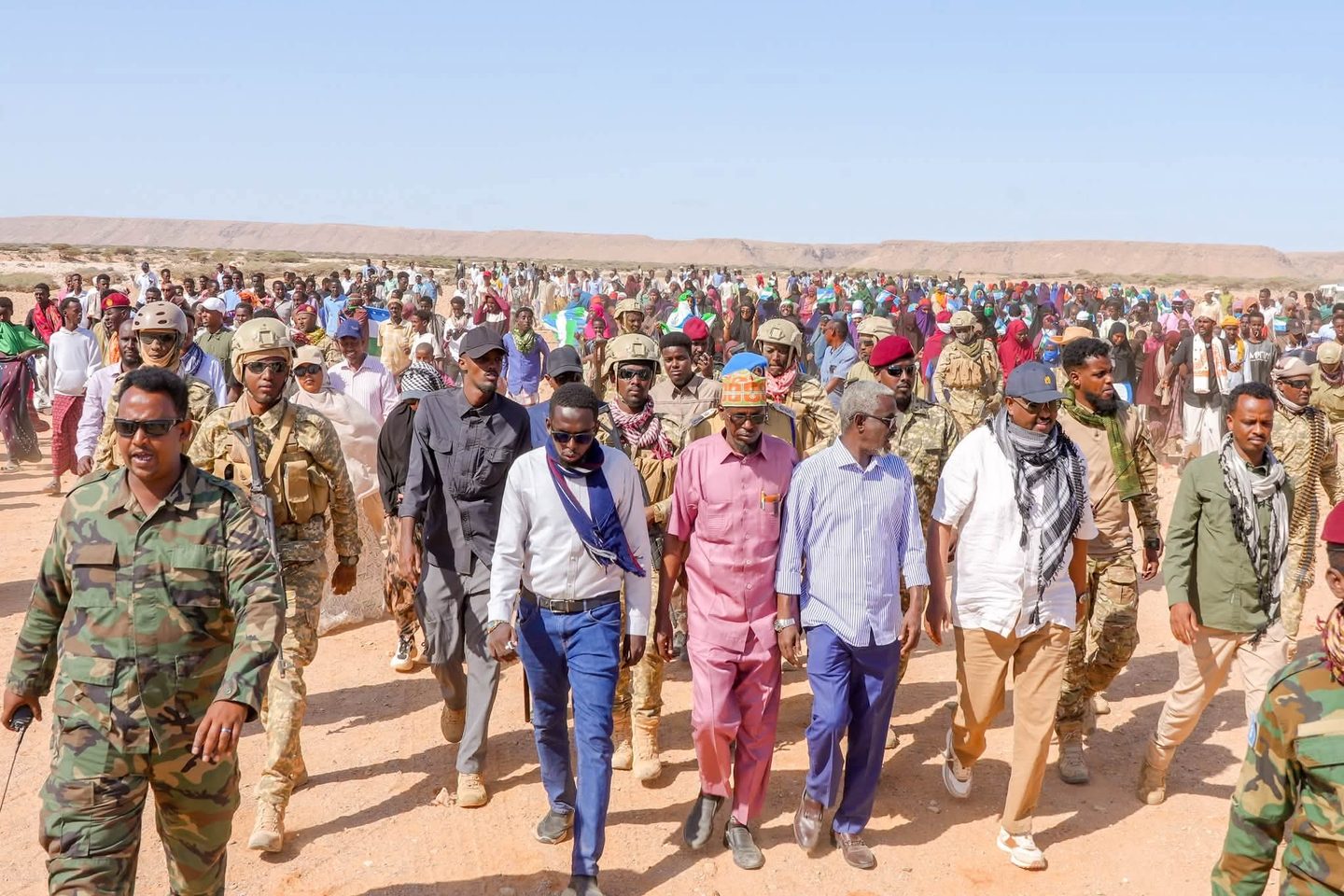
He laid a foundation stone the same day for the restoration of the house from which Boqor Cismaan governed, which is being rebuilt as a museum of Puntland’s history, and another for the historic mosque beside it. That evening he opened a new wing for orphaned girls at the Abdulaziz Zain centre in Baargaal. On 8 September President Said Abdullahi Deni reached Gunbax in Raas Caseyr accompanied by the first deputy speaker of the House of Representatives, Mohamed Bari Shire, and the crowd that met him on the open ground outside the settlement was the largest of the trip. The tour is due to finish at Xaafuun on the peninsula, which would put him at the far end of the Somali coastline that Mogadishu claims and has never administered.
Every item on that list is an act of ordinary government, performed in districts that no federal institution has reached in a generation and that were under an Islamic State shadow eighteen months ago. Mogadishu contests Puntland’s legitimacy in conference rooms and communiques. Garowe is answering with a road grader, an airstrip at Caluula and a king’s house rebuilt as a museum, and the districts at the end of those roads are keeping their own count of who turned up.