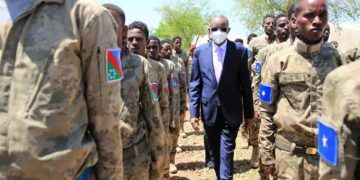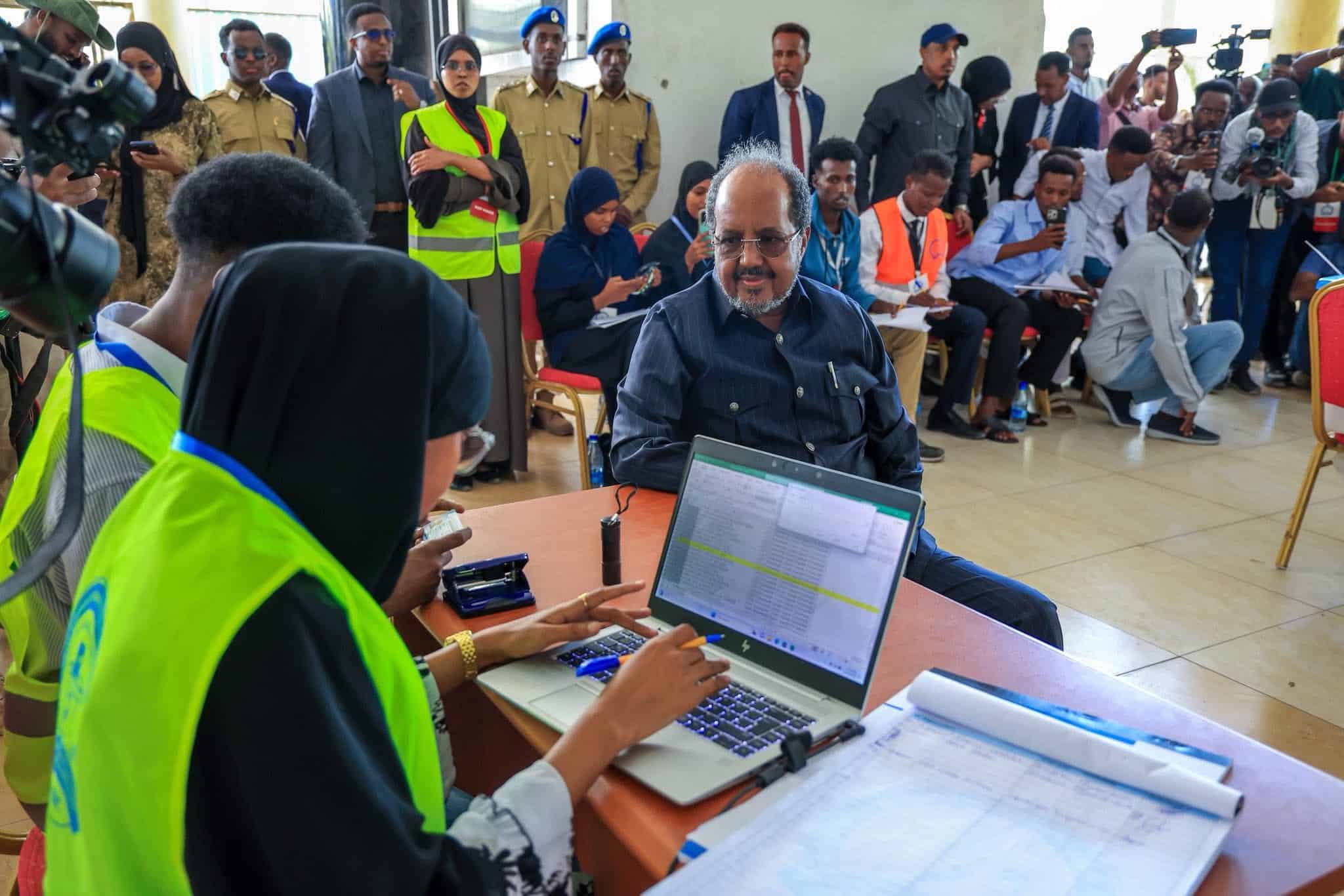
MOGADISHU, SOMALIA – The letter that may end Somalia’s foreign-backed war came on July 1. It read less like a funding notice than a verdict. Washington told the African Union it would stop paying into the UN office that supplies the AU force. It would also block further UN support at the Security Council. The reason cut deepest of all. The United States said Somalia’s federal government had failed to own its own security. That charge stings because it is hard to deny. For four years the federal government has fought a different war, one against its own regions. The campaign against al-Shabaab drifted. Now the money is leaving, and the quarrels remain.

A Cut That Lands Like a Verdict
The move was blunt. In a note seen by Reuters, Washington vowed to block any UN funds for the AU mission, known as AUSSOM. That mission fields about 12,000 troops from Uganda, Kenya, Ethiopia, and others. It leans on the UN for fuel, food, medical care, and transport. Strip that away, and the force cannot move. The African Union saw the danger at once. As a result, it called an emergency meeting on July 3 to save the mission.
Inside that room the mood was grim. One senior African diplomat called the decision final and said the mission was finished. Another warned that troop-sending states would soon head home. Meanwhile, the European Union, the top donor for years, shows little will to cover the gap alone. The numbers explain the panic. The UN office was set to spend more than 500 million dollars this year. America paid a large share of it. Remove the main donor, and the whole thing wobbles.
Yet the sharpest line was not about money. Washington faulted the government for failing to beat back al-Shabaab or to fix its army. Somali officials may reject that framing. So far, though, they have offered no real answer. Still, the charge fits the record. The funding exit reflects a simple view. A decade of help bought too little lasting strength, and that judgement will shape every donor talk to come.
A Coalition the Federal Government Chose to Break
Here lies the deeper problem. The federal government did not lose its regional partners by chance. It pushed them away. Puntland walked out of the National Consultative Council in 2023 and never came back. In May 2026 it went further. It declared that the mandates of federal bodies had lapsed, and that Mogadishu could no longer speak for the country. Critics say the palace answered not with talks but with pressure.
The pattern repeats across the map. In March 2026 South West State, once the closest ally, cut ties and accused federal forces of a power grab. Jubaland has been at odds with the centre since its leader’s contested vote. Federal troops have since clashed with its fighters near the Kenyan border. The Digest has traced how Villa Somalia’s takeover in the southwest followed a familiar script. It has also shown how Puntland and Jubaland closed ranks against the centre. Each break cost the war a partner it could not spare.
Behind the breaks sits a familiar charge. Opponents say the palace wants to pull power to the centre and hollow out the federal system. They point to a contested rewrite of the constitution that extended the president’s term. The opposition calls that change illegal. The Digest has weighed that constitutional gambit before. Mogadishu rejects the charge and calls its reforms nation-building. Whatever the label, the result is plain. The coalition that should fight al-Shabaab keeps shrinking.
Puntland’s Calm as a Standing Rebuke
Nothing embarrasses the federal government quite like Puntland’s calm. On July 1, at Independence Day events in Garowe, President Said Abdullahi Deni spoke plainly. His region, he said, would not accept federal meddling in its security. He accused Mogadishu of breaking the constitution and eroding the federal system. Puntland, he made clear, would rely on itself.
That self-reliance carries weight because it has largely worked. Puntland has run its own drives against Islamic State fighters in the Bari mountains. It has done so without the UN support now draining from the south. By contrast, the government still cannot supply its own army with the basics that donors provide. Deni’s critics fairly note that Puntland has its own flaws and its own aims. Even so, the contrast lands. A region that governs and guards itself makes an awkward foil for a capital that struggles to do either.
For Deni, the moment is a gift he did not have to earn. Every headline about the funding collapse backs his case that self-reliance beats dependence. The Digest has reported his repeated warnings that Mogadishu seeks to destabilise Puntland rather than work with it. Those claims stay contested, and the federal government denies them. Yet the summer’s news makes the pitch easier to sell across the other regions.
A War Fought on Two Fronts
The quarrel is not a sideshow to the war. It drains the war directly. A fight against al-Shabaab leans on regional forces, on local militias, and on state leaders who know their own ground. Alienate them, and the front thins. A federal government that treats state houses as prizes cannot easily ask their fighters to hold the line for it.
The costs already show on the ground. Frontline units report thin supplies and late pay. Meanwhile, the palace still finds cash to keep a lobbying firm in Washington polishing its image abroad. That order of priorities tells its own story. After all, al-Shabaab needs no better ally than a capital lost in its own feuds. The group governs, taxes, and waits. It is sure its foreign-funded foes will tire first. The Digest has shown how its raids feed on Mogadishu’s political chaos.
Now that chaos deepens as the props come out. The Somali National Army never built the supply chain the UN provided. Pull that support, and it lays bare a force with no backup. Add a leadership at war with its own partners, and the timing could hardly be worse. The federal government meets its most dangerous enemy with the smallest coalition in years.
The Off-Ramp the Federal Government Keeps Refusing
There is still a path that runs through the very partners Mogadishu has spent four years pushing away. A real deal with Puntland, Jubaland, and South West would rebuild the coalition the war needs. It would also answer Washington’s charge that Somalia cannot own its security. Consensus, not control, is the off-ramp.
So far the palace shows little sign of taking it. Instead, it presses on with a contested election plan that most regions reject. The opposition, for its part, now questions the president’s right to rule. The Digest has covered how Galmudug and others rejected the federal election model. Each refusal narrows the room for the deal the moment demands.
The summer’s headlines will fade, but the math will not. Foreign money is leaving on a fixed clock, and no local backup is ready. The federal government can spend its last leverage on subduing its regions. Or it can spend it on drawing them back in. Only one of those roads leaves a country able to fight the war still coming. For now, Mogadishu keeps choosing the other, and al-Shabaab keeps counting on it.