MOGADISHU, SOMALIA – The loudest Somali argument for joining the Mecca Agreement is coming from a man who does not work for the government. Fahad Yasin, the former director of the national intelligence agency, spent the weekend making the case in public for a collective defence pact Somalia had no part in negotiating, while the federal government has gone no further than a defence ministry statement welcoming it. Somali outlets now report that Mogadishu is considering membership, sourced to nobody in particular, and no minister has confirmed that a request exists. What Somalia would bring to the Mecca Agreement is an army that lost the town of Teedaan this month for want of ammunition, no navy to speak of, and a peacekeeping mission whose funding stops on 31 December.

What the Mecca Agreement Actually Commits
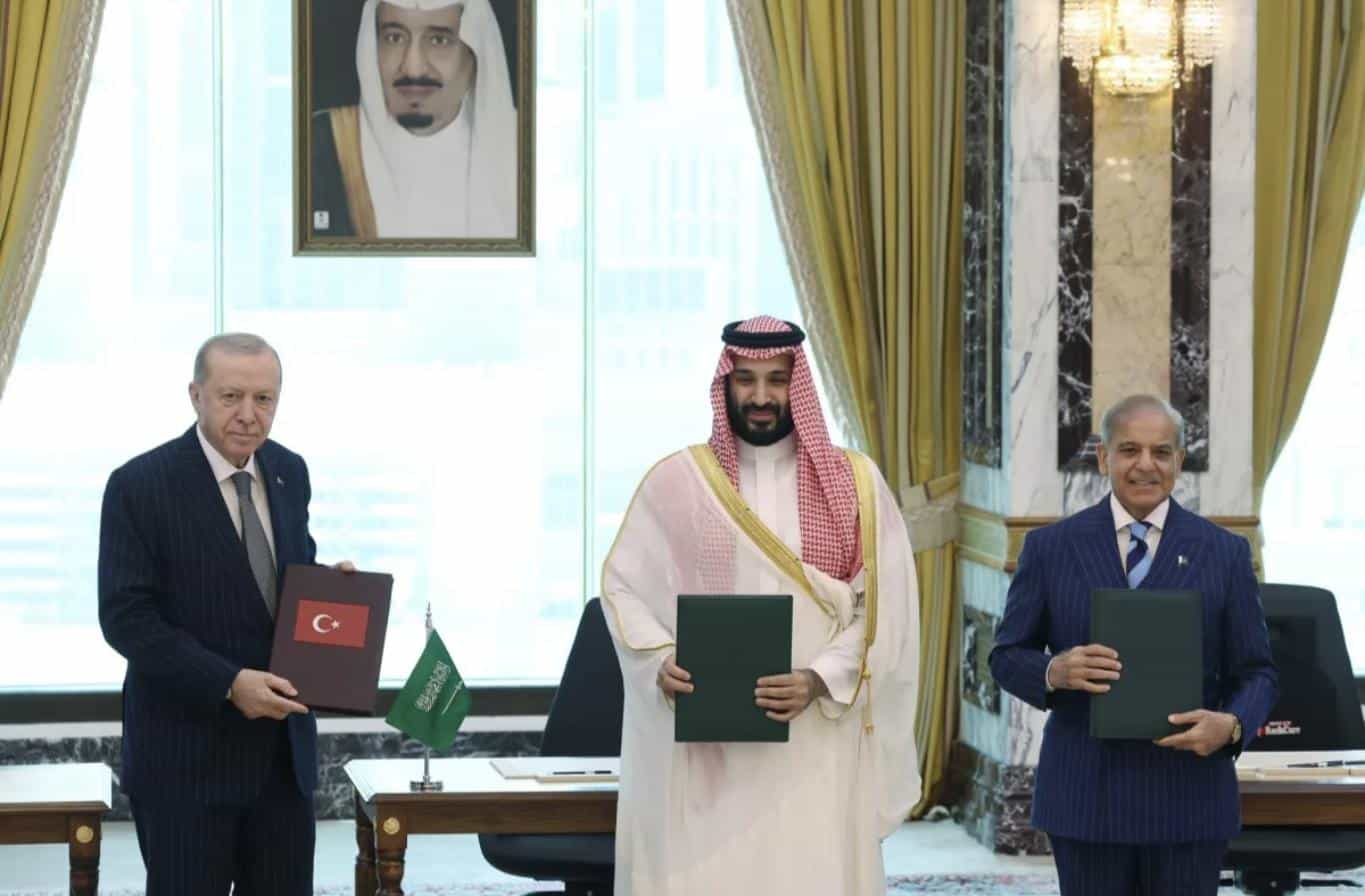
The pact was signed in the holy city by the Saudi crown prince and prime minister Mohammed bin Salman, Erdogan, and Pakistan’s prime minister Shehbaz Sharif. Its operative clause states that any armed attack against any one of the three states shall be regarded as an attack against them all, which is the language of the North Atlantic Treaty rather than of a memorandum of understanding. Beyond that guarantee, the Mecca Agreement provides for joint defence industry projects, counterterrorism cooperation and a general deepening of military and security ties.
Erdogan framed the terms carefully. “This agreement, based on the principle of collective deterrence, will contribute to cooperation in the fields of security and defense, joint projects in the defense industries, and the fight against terrorism,” he said, describing it as aimed at no particular country and “open to the participation of brotherly countries that share the goal of advancing peace, prosperity, and stability in our region.” Iranian officials answered within hours that an arrangement with Ankara and Islamabad would not defend the kingdom, which suggests Tehran reads the disclaimer as a courtesy rather than a description. The three governments have not published the full text, so what membership would require of a new entrant is still unclear.
Each signatory brings something the others lack. Turkiye fields the second largest army in the NATO alliance and a defence industry that has gone from importer to exporter inside a decade. Pakistan holds the only nuclear arsenal in a Muslim state along with a very large standing army. Saudi Arabia supplies the money and the political weight, and Riyadh is the party whose calculation changed, having spent decades under an American security umbrella that Iranian missiles and drones have repeatedly shown to be permeable. What the Mecca Agreement records is that three of the largest Muslim militaries have stopped believing Washington alone can guarantee them.
Who Is Arguing for the Mecca Agreement
The case for Somali membership is being made by people who used to run the security file rather than by the people running it now. Fahad Yasin, who also served as national security adviser, called the pact a historic step and a strategic decision protecting the interests of countries on both sides of the Red Sea and the Indian Ocean. “Somalia is among the countries that benefit from this agreement, since its national security draws strong support from its Arab and Islamic environment,” he wrote. Fahad Yasin ran Somali intelligence under the previous administration and has been outside government since.
His intervention carries the weight of expertise without the authority of office, and nothing he wrote commits Villa Somalia to anything. The federal government’s own contribution remains the defence ministry statement of Friday, which congratulated the three signatories, expressed confidence in the pact’s aims and described no Somali role in it.
Geography carries the rest of the argument. Somalia holds the longest coastline in mainland Africa, sits on the Gulf of Aden and reaches the southern approach to the Red Sea, and the Mecca Agreement names Bab al-Mandab and the Gulf explicitly among the waterways it exists to secure. A guarantee framework covering those chokepoints without the state that owns the southern shoreline would be an odd piece of architecture, and that is the strongest card Mogadishu holds. Whether anyone in the federal cabinet intends to play it remains unestablished.
The relationships are already dense. Turkiye trains Somali soldiers in their thousands at the TURKSOM base in Mogadishu, has moved well beyond training into maritime security, energy and long-term strategic cooperation, and in July its parliament extended the mandate of Turkish forces in Somalia to 2028. Somalia signed a defence memorandum with Pakistan in Islamabad on 4 August, and its defence minister met the Pakistani army chief two days later. Saudi Arabia signed a military cooperation memorandum with Somalia in Riyadh in February and leads the Red Sea coalition Somalia signed into at the end of July. All three already hold defence relationships with Mogadishu that predate the Mecca Agreement, which is what makes the omission from the treaty itself worth noticing.
What Somalia Would Bring to a Mutual Guarantee
A collective defence clause runs in both directions, and that is where the application becomes difficult. Membership of the Mecca Agreement would oblige Somalia to treat an attack on Saudi Arabia, Turkiye or Pakistan as an attack on itself, at a moment when its own army cannot hold district capitals against an insurgency. The brigade that lost Teedaan in the Hiran region at the start of this month had been without ammunition for weeks before the position fell, and al-Shabaab has retaken towns cleared twice over. The Mecca Agreement was drafted for states that can project force beyond their borders, and Somalia is contesting control inside its own.
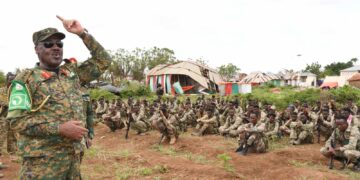
At sea the contribution would be thinner still. Somalia does not patrol its own waters, which is why the Red Sea coalition and foreign navies do it instead, and the coastline that makes the country strategically interesting is the asset it cannot currently defend. Air defence is nonexistent, and the Turkish drones flying from Mogadishu belong to Ankara. The most capable ground units, the Gorgor and Haramcad brigades, exist because Turkiye raised them, so a Somali deployment under the Mecca Agreement would in practice mean Turkish-trained Somali troops fighting alongside Turkiye. Ankara would be calling in a capability it built and still largely sustains.
Underneath all of it the money is running out. Washington told the African Union on 1 July that it would not support renewing the AUSSOM mandate in December, and the logistics package that fuels the mission goes with it, which is why the troop contributors’ approved offensive carries no funding behind it. A state that cannot resource the war it is already fighting is proposing to underwrite somebody else’s, and no clause drafted in Mecca changes that arithmetic. Alliances distribute risk among members who can each carry some of it, which is the test Somalia would be joining on credit.
Membership as a Substitute for Capacity
There is a serious case for joining anyway, and Somali officials make it. Guarantees are cheap for the weak party and expensive for the strong one, so a small state inside a structure backed by Turkish drones, Pakistani manpower and Saudi money gains far more than it gives. Alliance membership also confers standing, and standing is the commodity Villa Somalia is shortest of after a year in which the African Union questioned its transition, Washington conditioned its engagement and two member states signed security arrangements directly with the Americans. A seat at the Mecca Agreement would be the first thing in a year to arrive as recognition rather than as pressure, which is precisely why the silence from the cabinet is odd.
That is also the objection. Somalia has now welcomed or joined four separate security arrangements since the end of July, and none of them addresses the condition of the force underneath. Turkish trainers cannot pay a Somali soldier, a Saudi coalition cannot move ammunition to Hiran, and a mutual defence clause will not recover a compound in Mudug. The federal government has become fluent in the language of alliances precisely as it has lost the ability to command its own territory, and the Mecca Agreement is the newest sentence in that vocabulary. Puntland spent the same fortnight taking three compounds off federally aligned units and putting their crews back on its own payroll, which is what capacity looks like when a Somali administration actually has it.
Watch what the three signatories decide rather than what Mogadishu requests. Turkiye has an obvious interest in bringing its largest African client inside the tent, and the open door was drafted broadly enough to accommodate it. Riyadh and Islamabad have less reason to extend a nuclear-backed guarantee to a government whose writ stops at the edge of Banaadir, and their answer will say more about how the region rates Somali sovereignty than any communique issued from Villa Somalia. Admission to the Mecca Agreement would be a verdict, and so would silence. For now the only Somali voice pressing the case belongs to a former spymaster with no portfolio, and the government he once served has said nothing about wanting in.