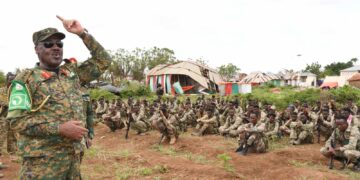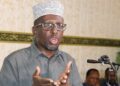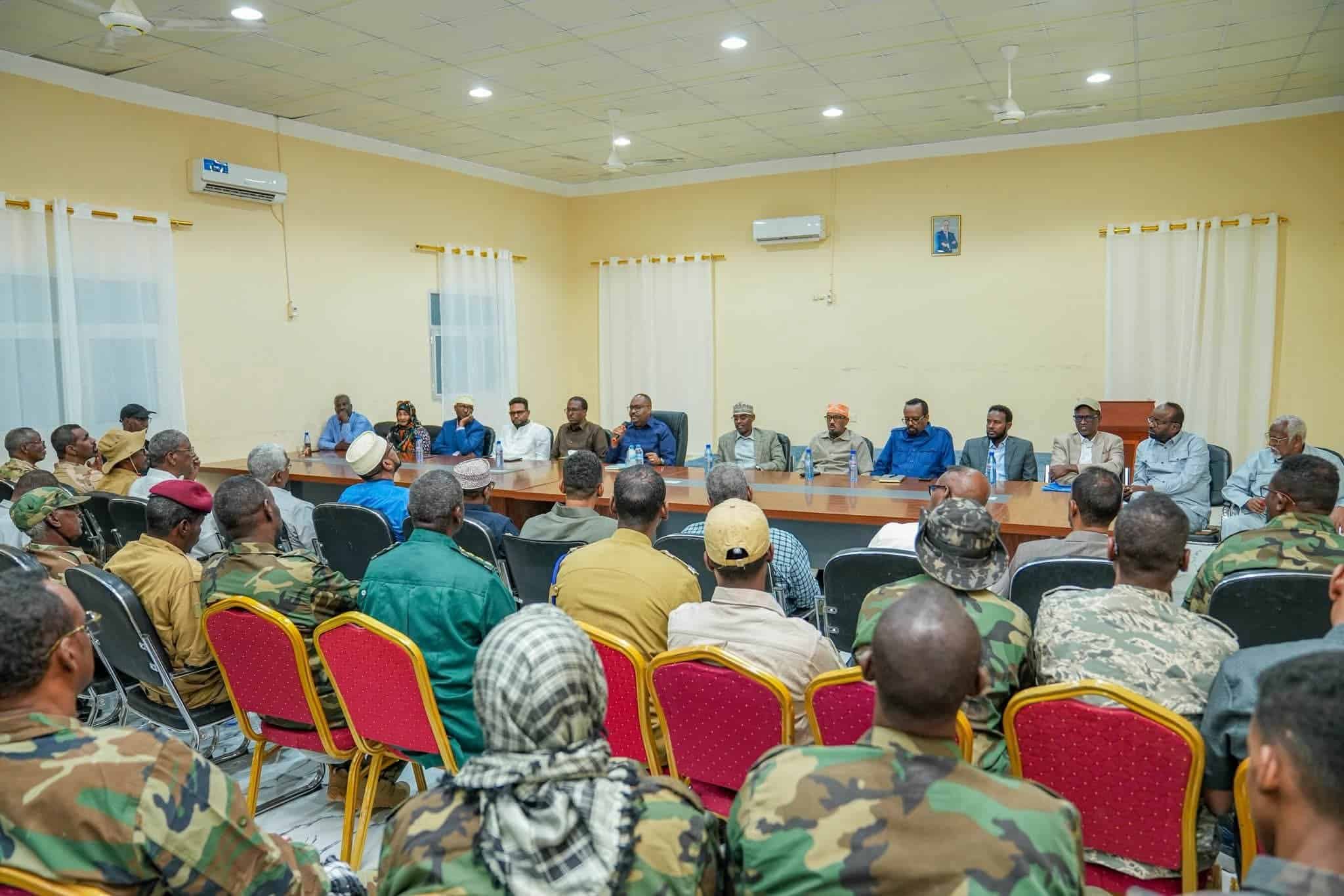
GALKAYO, SOMALIA – President Said Abdullahi Deni drove into Galkayo on Saturday and spent the day with the officers who had taken the city’s federally aligned base by force three days earlier. He convened the commanders of every Puntland formation stationed in Mudug, heard their account of the security position across the region, and told them to tighten cooperation, vigilance and the discharge of their duty to protect civilians. A president who has spent the year arguing that Villa Somalia was assembling a second army inside his territory has now gone to the city where that argument was settled by artillery, and he went while the last camps were still being negotiated and the Karkaar hinterland was reported restive.

Who Sat in the Room in Galkayo
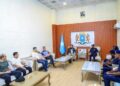
The meeting drew the whole of the state’s command structure rather than a garrison commander or two. General Aadan Cabdi Xaashi, who commands the Puntland Darawish forces, attended alongside General Muumin Cabdi Shire of the Puntland police and Major General Maxamuud Cabdulqaadir Xasan, who chairs the supreme court of the armed forces. Deputy commanders from the various formations filled the rest of the table, and members of the state’s councils travelled with the president. Assembling that group in Galkayo rather than summoning it to Garowe is itself a decision about where the state believes its centre of gravity currently sits.
The presence of the military supreme court’s chairman is the detail worth holding onto. Puntland’s cabinet ordered the prosecution of politicians and officers it accuses of undermining state security earlier in the week, and the fighters recovered from the federal programme are being processed through registration rather than through the courts wherever the elders’ terms hold. Both tracks run through that judge, so putting him in the room in Galkayo places the legal instrument alongside the military one at the point where the two meet. A fighter weighing registration against a court appearance now knows that the man who would try him was sitting with the president.
What the officers reported was a picture rather than a victory. The discussion covered the state of security across Mudug and Puntland more broadly, and the president’s instruction to his commanders was about sustaining what had been taken rather than about taking anything further. Consolidation is the harder half of an operation like this one, and it is the half that decides whether Galkayo stays quiet. The absorption of the federally aligned fighters is still being processed camp by camp, and every one of those transfers has to be paid for and policed afterwards.
Why Galkayo and Why Now
Galkayo is the one city in Puntland where a mistake becomes a war. The line running through it has divided north from south since the 1990s, Puntland holds one half and Galmudug the other, and the fighting on 5 August put mortar rounds into residential districts, killed a civilian, wounded two and pushed families out of their homes. A presidential visit three days later is a statement that the state intends to hold the ground it took without letting the city slide. Galkayo has burned before over less, and both administrations know how quickly the line can move.
The timing also carries a message south. Federal-aligned units at Barda-dheere north of Galkayo abandoned their camp in the middle of the week and crossed to positions on the Galmudug side, and those men are now in talks to come back on the same terms as everyone else. Deni arrived in Galkayo while that negotiation was live, which puts the president physically at the point where the last of the recovery is being settled. The equipment recovered from the base included police gear donated by China to the Somali Police Force, which is the evidence Garowe has been citing for a year.
Nothing about the file is closed. Tension has been reported in districts of the Karkaar region, the Carmo garrison that gave up its command on Saturday has said publicly that it does not recognise Puntland’s authority, and agreement on the remaining units in Bari and Mudug is described as near rather than complete. Those fighters who left Carmo have issued their own decision rejecting the state’s authority over them, which is the first organised refusal since the ultimatum expired. The command meeting was convened against that background, which is why the instruction was vigilance rather than celebration. Puntland has said the operations against remaining federally aligned units will continue.
The Argument Deni Has Been Making Since 2023
Puntland has accused the federal government since July of organising and supplying armed groups on its territory, and it has been making a version of that case for far longer. President Deni’s accusation that the presidency manufactures armed groups was treated in Mogadishu as rhetoric when he first made it, and the federal government spent two years dismissing it as the complaint of a state president looking for grievance. Five weeks after the prime minister announced from a public stage that the federal government would raise thirty thousand soldiers in Puntland regardless of consent, the equipment those recruits carried is in Garowe’s stores and the men are being registered into the Puntland Defence Forces. Few political predictions in Somalia are vindicated that quickly or that physically.
That sequence is what the president took to Galkayo. Standing in front of the commanders who executed it converts a political argument into an institutional fact, and it does so in the city where the federal programme had placed its largest concentration of men. Villa Somalia has said nothing about any of it, which leaves the field to whichever administration turns up in person. No federal minister has visited Galkayo since the fighting, and none is expected.
The wider Somali audience is watching the method as much as the outcome. Jubaland faced federal deployments in Gedo and at Ras Kamboni and outlasted them, Galmudug’s opposition has spent a year arguing that the same template was coming for it, and Hirshabelle’s politicians are watching their own succession being arranged over their heads. Jubaland’s president emerged from that campaign stronger than he entered it, and the lesson has not been lost on anyone. A member state that can recover its territory, absorb the opposing force and then parade the result through a presidential visit to Galkayo has demonstrated something the others have only argued.
What the Command Meeting Does Not Solve
The bill for all of this lands on Garowe. Several hundred returning fighters are being added to a payroll that has drawn complaints before, and Puntland is financing its campaign against the Islamic State faction in the Calmiskaad mountains largely from its own revenue, without the logistics package the African Union mission provides in the south. Vigilance costs money, and the president spent Saturday in Galkayo asking for more of both from officers whose men have been paid irregularly for years. The elders who negotiated the surrenders promised those entitlements on the state’s behalf, which means the credibility of the clan structures Puntland used is now tied to whether Garowe pays.
The integration problem is structural rather than budgetary. Officials have said the state will build a single unified command that removes power built on clan and on individual commanders, and the instrument used to recover the defectors was negotiation through the elders of the communities those men came from. Holding both of those commitments at once is the work of years, and the command meeting in Galkayo is where that work starts rather than where it finishes. Every recovered fighter arrives with a community behind him and an expectation attached.
Meanwhile the enemy the state cites as its justification has not moved an inch. The Islamic State faction remains in the mountains, al-Shabaab holds towns in Hiran and Middle Juba a few hundred kilometres south, and every week Puntland spends recovering camps from Somali soldiers is a week its forces are not spending on either. President Deni has won the argument he has been making since 2023, and the cost of winning it is a month of his army pointed at Mogadishu’s recruits instead. The commanders he addressed in Galkayo will spend the rest of the year absorbing that force, and the jihadists will spend it recruiting.