MOGADISHU, SOMALIA – The SNA brigade that collapsed at Teedaan was pleading for ammunition and running out of water and food when al-Shabaab overran it, senior Somali National Army commanders have told The Somali Digest. The soldiers fought on empty stomachs and emptier magazines, the commanders said. When the line broke, the brigade’s vehicles and weapons passed to the insurgents intact. In the same week, cargo planes were flying federal weapons north for a very different war.

What the commanders say happened at Teedaan
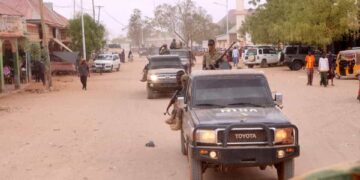
Al-Shabaab retook Teedaan in Hiiraan’s Mahas district on Sunday after two days of fighting that left dozens dead. The town anchored the defence line toward Beledweyne. Its fall was reported at the time as another withdrawal by federal troops and allied clan fighters. The commanders who spoke to The Somali Digest describe something worse: the abandonment of an SNA brigade in contact with the enemy.
The SNA brigade had been signalling for weeks that it could not hold, they said. Requests for ammunition went unanswered. Water and food ran low enough that units were rationing both when the assault began. Once the perimeter failed, the collapse consumed the entire force. Weapons, vehicles and stores that never reached the garrison reached al-Shabaab instead, free of charge, in the space of one morning.
Soldiers who are hungry, thirsty and counting rounds do not hold towns against a massed assault. The commanders reserve their anger for a chain of command that knew the state of the garrison and spent its logistics elsewhere. Teedaan, in their telling, was lost in Mogadishu, one unanswered supply request at a time.
The planes that flew past the front line
What makes the account cut deeper is what the federal government was supplying that same week. Puntland accused Mogadishu in June of smuggling weapons into its territory to incite civil war. In July it said aircraft carrying arms had landed in Galkayo. On Tuesday, a federal weapons shipment was seized in south Galkayo as it was offloaded for the besieged PSF unit, cargo reportedly including mortar rounds. The starving garrison in Hiiraan never saw a fraction of that effort.
The contrast is the story. One SNA brigade faced al-Shabaab with nothing while planeloads of federal weapons flew toward a confrontation with Puntland. That is the one administration in Somalia fighting both al-Shabaab and the Islamic State faction at once. Puntland’s forces have spent nineteen months fighting ISIS in the Cal Miskaad mountains while holding an al-Shabaab front. Now they face a third enemy: militias the commanders and the wider opposition say are organised and financed from Mogadishu. Critics say Hassan Sheikh Mohamud’s purpose is to remain in power as long as possible. Manufacturing chaos in peaceful areas justifies the stay.
A government’s budget is its honest manifesto. This one, in the commanders’ account, feeds a rebellion inside a stable state and starves its own men facing the country’s actual enemy. Al-Shabaab only needed to wait for Mogadishu to defeat the SNA brigade at Teedaan first.
The Danab order that came too late
The commanders added a detail from Wednesday’s fighting that has not been reported. As Puntland forces stormed the PSF camp outside Galkayo at dawn, Hassan Sheikh ordered the Danab commando brigade to join the battle, they said. The order achieved nothing. Puntland troops took the camp before Danab could react, and the last federal foothold in their half of the city was gone by mid-morning.
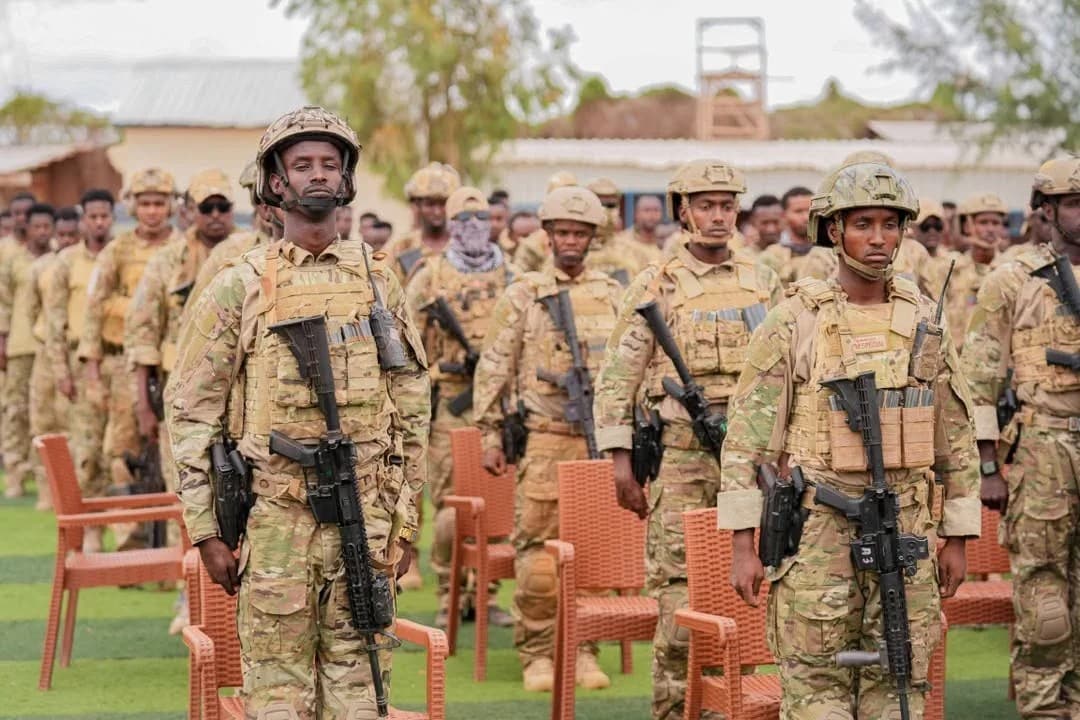
Danab is the SNA’s best infantry, built, trained and equipped by the United States for one purpose: fighting al-Shabaab. Washington invested years and hundreds of millions of dollars in it. The point was a force that does not collapse the way the SNA brigade at Teedaan did. Committing it against a fellow Somali administration, in a city fight already lost, is the clearest signal yet of the president’s priorities. No SNA brigade on the al-Shabaab front has ever received its orders that fast.
It also explains, better than any communique, why American patience has thinned. AFRICOM’s commander spent last week telling Mogadishu that political infighting now has a price. He conditioned future engagement on Somali forces leading their own fight against al-Shabaab. A US-trained commando brigade ordered into an intra-Somali battle is exactly the use its funders feared. The commanders who spoke to The Somali Digest drew the blunt conclusion: little wonder the Americans stepped back.
An army that knows what it is being used for
Serving senior officers of the army are describing their own institution, and the battlefield backs them. Fighting units sit under-supplied on the al-Shabaab fronts in Hiiraan, Galgaduud and Lower Shabelle. Meanwhile, the logistics system moves arms, uniforms and recruits toward Puntland and Galmudug for a political confrontation.
The morale cost compounds the material one. Soldiers who watched the Teedaan SNA brigade starve will not expect better when their own line is tested. Clan fighters who reinforced the army in Hiiraan have buried men for a government that would not send bullets. Al-Shabaab recruits on exactly this grievance. Every abandoned garrison writes its propaganda for it, and every captured armoury equips the next assault.
The war Somalia is actually fighting
Set the week’s events in one line and the picture is hard to dispute. Al-Shabaab took an SNA position and its hardware at Teedaan. Puntland took the PSF camp and its prisoners at Galkayo. The federal government lost both battles, one to the insurgency it is meant to fight and one to the state it chose to fight instead. One SNA brigade died short of ammunition while the commando brigade was ordered into a lost city fight; they are two ends of the same policy.
The commanders described that policy to The Somali Digest as a warning. An army used as a faction will fight like a faction. A country whose best units point at its own federal states has none to spare for the enemy taking its towns. Teedaan is what that arithmetic looks like when it lands on an SNA brigade that asked for bullets and was sent nothing at all.