
BAIDOA, SOMALIA – The African Union has authorised its Somalia mission to join federal military operations against al-Shabaab and against what it calls the group’s affiliated militias in South West State. The same memorandum, dated 21 August, orders the mission to remain politically neutral and to steer clear of political fighting. Everything in the document turns on whether the forces camped around Baidoa under former South West State President Abdiaziz Hassan Mohamed Laftagareen are al-Shabaab affiliates, as Villa Somalia assures its partners, or a political opposition wearing a label its government finds useful. Laftagareen answered in an interview published on Friday, calling the claim untrue, and his administration has asked the African Union to verify the intelligence before acting on it. A word that began in a ministry’s casualty count now carries targeting authority inside an African Union operational document.

What the African Union Has Authorised
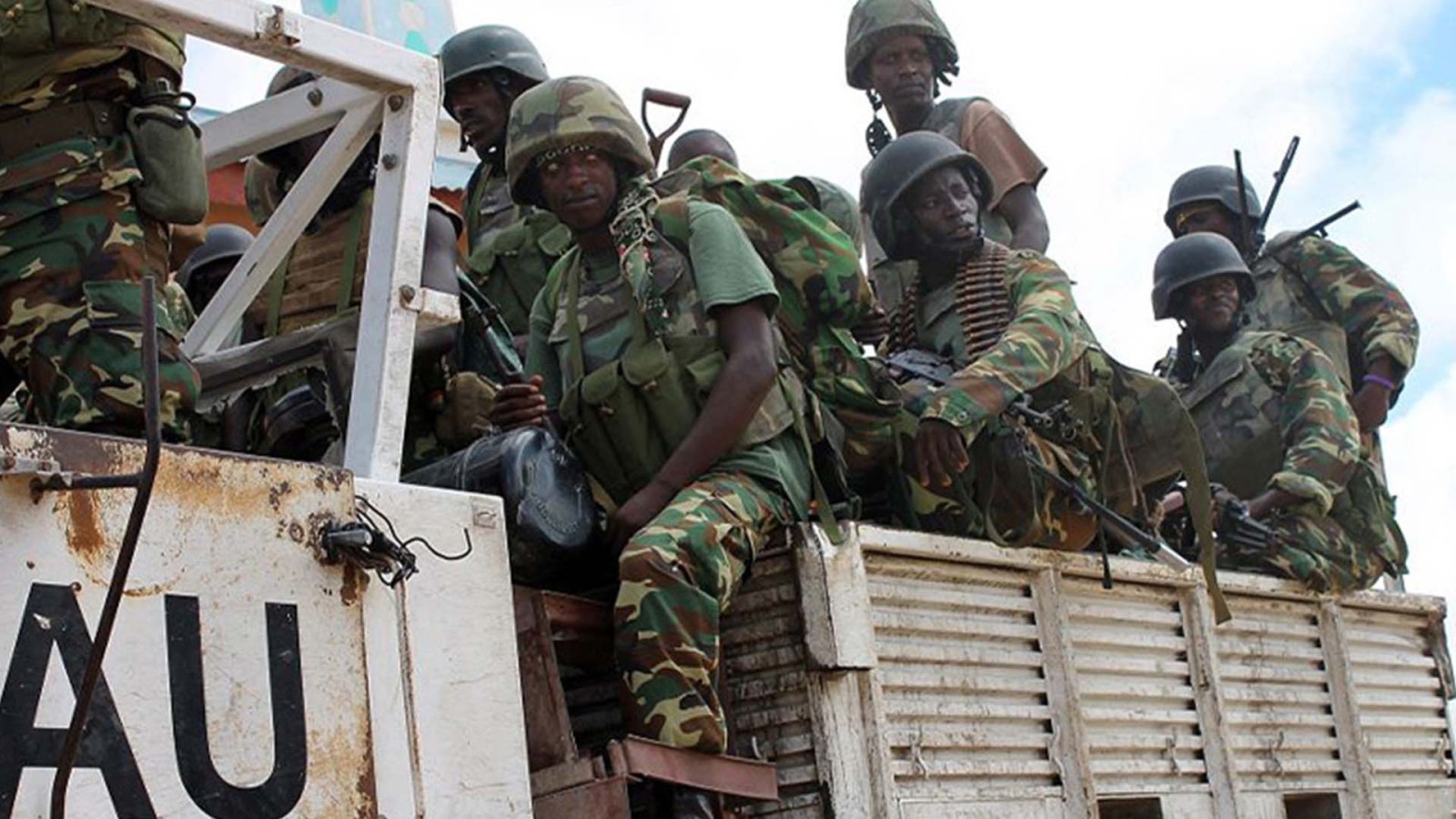
The memorandum, addressed to the head of the African Union Support and Stabilisation Mission in Somalia, records the AU Commission’s concern over what it describes as a growing alliance between local armed militias and al-Shabaab, including coordinated attacks on Somali military positions in and around Baidoa. On that basis it authorises AUSSOM to join Federal Government forces in operations against al-Shabaab and what it terms the group’s affiliated militias or armed groups in South West State. The restriction arrives in the same directive, which instructs the mission to maintain neutrality and impartiality and to “steer clear of any political fighting.”
The authorisation and the restriction describe the same men on the same ground. Furthermore, the document supplies no evidentiary test for affiliation, names no authority responsible for certifying it, and sets no procedure for revisiting the finding if the evidence fails. In practice the finding arrives from the federal government that removed Laftagareen in March and installed a successor through a managed vote, which means one party to the dispute also certifies who may be shot at in it. A genuine insurgency operates in South West State, and the memorandum’s core authorisation against al-Shabaab itself is unremarkable; the open question is who else has been entered in its column. Whoever controls the word affiliated controls where a counterterrorism mandate ends and an intervention begins.
The stakes were set on 17 August, when Laftagareen’s fighters entered Baidoa from two directions before dawn and fought federal troops for hours in the fiercest fighting the city has seen since March. The defence ministry filed roughly thirty dead attackers under Khawarij, its standing vocabulary for al-Shabaab, while a local elder counted ten bodies, four of them civilians. Neither count has been reconciled, and no casualty list has been published in the eleven days since. Under the memorandum’s terms, an African Union force could have joined that battle as a counterterrorism operation, on the strength of a designation the ministry issued about its own domestic opponents within hours of the first shots.
A Label With a Documented Career
The affiliation claim has a short and traceable history. The Khawarij designation surfaced within hours of the August battle, before any identification of the dead had been published and before the African Union had been asked for anything. In the days that followed, Mogadishu displayed bodies, detainees and captured vehicles while producing no names, no unit designations and no method of identification, and former Baidoa officials who examined the same images identified the dead and the captured as Darwish, the paramilitary force that served South West State until federal troops took the city, several of them known to those officials personally. No correction followed those identifications, and the ministry has never revised its count or published a method behind it.
The installed administration then adopted the language as policy. Returning from Mogadishu on 22 August, South West State President Sheikh Aden Madobe told his reception at Baidoa’s airport that he would target the camps of his predecessor’s forces on the city’s outskirts, and he compared those forces to al-Shabaab while offering no evidence of operational contact. His security minister had already asked Kenya through Interpol to arrest Laftagareen, and said fighters who surrendered would pass through the procedures reserved for al-Shabaab defectors. Within a single week the label travelled from a press statement into an extradition request and an amnesty procedure, and no institution along the way asked for the evidence behind it.
Each escalation in Baidoa has run through vocabulary before it ran through weapons, and the memorandum imports that vocabulary with its provenance attached. Notably, the African Union’s own neutrality clause reads as an acknowledgement that the affiliation finding is contested, because a mission confident of its target list would need no instruction to stay out of political fighting. A counterterrorism mandate is only as clean as the list of its targets, and the list in South West State is written in Mogadishu.
Laftagareen Answers With an Offer
Laftagareen’s account of the August battle is the mirror of the ministry’s. In the interview published on Friday he called the al-Shabaab allegation untrue and said the fighting began with forces deployed from Mogadishu that had stayed in the city, forces his men attacked in an attempt to remove what he called invaders and to restore the administration to his side. He said he left Baidoa in March with the capacity to fight and chose withdrawal to spare civilians, and that the grievances of residents had since compelled his return. Every element of that account is his own claim awaiting verification, and the federal government’s affiliation charge stands on the same unverified footing.
A written statement from his administration went further than the denial. It described the Darawish as legally established security units tasked with protecting civilians, institutions and constitutional order, called the al-Shabaab allegations baseless, and warned that unsupported claims endanger civilians and security personnel and undermine confidence in AUSSOM itself. It asked the African Union to verify security information independently before supporting any military action, cautioned against operations that could bring airstrikes or displacement to Baidoa and the surrounding districts, and said any operation should comply with international humanitarian law. The document paired those demands with praise for the African Union’s long record in helping secure Somalia, and it stopped short of any threat against the mission.
The statement closed with an offer to share security and political information and to participate in an independent investigation of the facts on the ground. Whatever its motives, the demand for verification asks the African Union to apply its own neutrality clause, since an instruction to stay out of political fighting means little if the mission accepts one side’s intelligence unexamined. A government confident of its evidence would gain from the investigation its opponent is requesting, and Villa Somalia has so far preferred assertion to documentation.
Turkiye Is Asked the Same Question
Villa Somalia is running the same argument in Ankara. Sources familiar with the discussions say the federal government has pressed Turkiye to help protect the administration now controlling Baidoa, and has told Turkish officials that Laftagareen’s forces established links with al-Shabaab. That claim carries no published evidence, Laftagareen has publicly denied it, and Ankara has made no statement suggesting it intends to enter the confrontation. Turkiye trains and equips the federal units at the centre of the fight, so the answer it gives will shape the balance around Baidoa more than any communique from Addis Ababa.
The request lands on a record. Turkish-backed federal units carried out the March operation that removed Laftagareen, part of a takeover of South West State that followed a script Villa Somalia has run elsewhere, and Turkish jets were reported over Mogadishu during the demolition campaign that cleared Tookiyo in the same fortnight as the Baidoa battle. In the days before the August fighting, villagers around Baidoa burned Turkish flags at protests against Mogadishu’s conduct of the takeover. Consequently, the affiliation question now sits in front of Ankara exactly as the memorandum sets it in front of the African Union, and both are being asked to accept it on Villa Somalia’s word.
The mission being handed that question is meanwhile dismantling itself. AUSSOM’s support structure is being wound down around it, with the funding line blocked past 31 December, American money withdrawn since July, the first layoffs under way and the mission’s equipment under auction. A force negotiating its own survival has no margin for a second war, and the African Union’s own restriction concedes as much. The memorandum answers every operational question except the one that decides the rest, which is who certifies affiliation, and until that is settled the difference between counterterrorism and intervention in Baidoa will be a word Mogadishu chooses.