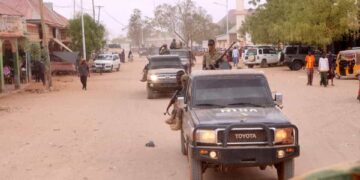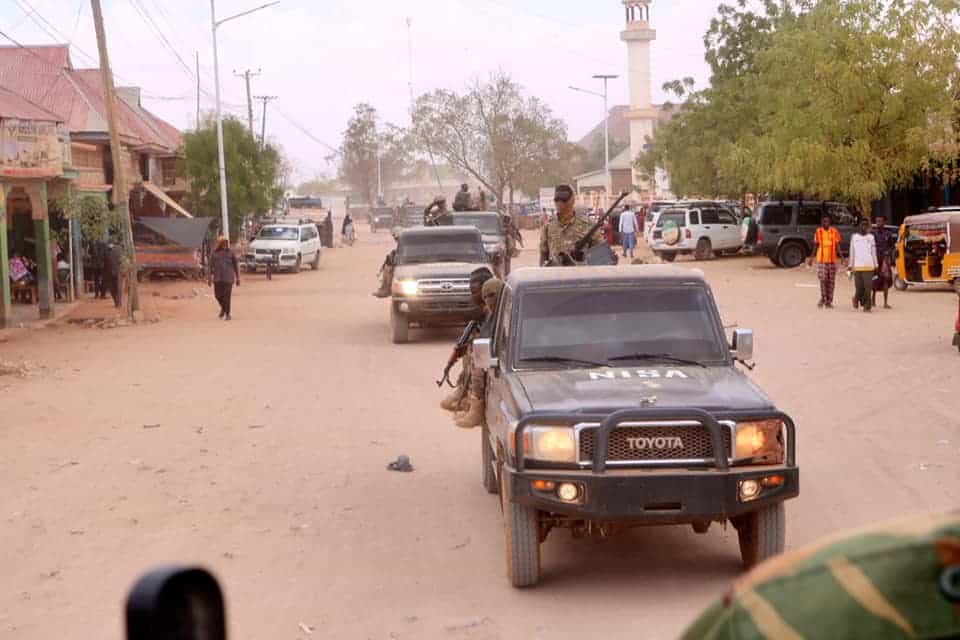
BELED HAWO, SOMALIA – The district commissioner of Beled Hawo, Abdiaziz Hareed Abdullahi, told reporters on Monday 5 October that a force led by officers taking orders from the federal government had set out from Luuq and Doolow toward the town and its army camps, and he blamed the government of President Hassan Sheikh Mohamud for the fresh tension on the Kenyan border. The commissioner serves the Jubaland administration of President Ahmed Madobe, which absorbed the federal garrison at Beled Hawo in August when Abdirashid Janan, Mogadishu’s own commander in Gedo, crossed over with his troops after months without pay. No reply from the internal security ministry or the army had appeared by Tuesday morning, and the Gedo file now holds a federal force, a Jubaland garrison that used to be federal, the fighters of a deposed South West president and an Ethiopian army preparing to leave.

Officers From Luuq and Doolow, by the Commissioner’s Account
Abdiaziz Hareed Abdullahi called a press conference in Beled Hawo and described what he called an offensive against the people of Beled Hawo and the army camps, carried by troops that had come from Doolow as far as Luuq under the command of officers. He said the reason for the movement was unknown to his administration, and he reminded the town that its leaders had warned some time ago that such a move was possible. Moreover, he described the chain of command himself, saying the officers take their orders from “the security minister and other men”, without naming the minister.
“We do not want conflict, we want peace, and we do not want two more young men to kill each other,” Abdiaziz Hareed Abdullahi said, addressing the commanders directly and asking them to stay away from anything that could reopen the fighting in Beled Hawo. He spoke to the people of the town as well, telling them that a new conflict had arrived from Doolow and Luuq and that the Somali government, still at odds with Jubaland, was behind it. The warning came weeks after Abdirashid Janan and Jubaland settled their own dispute through talks, a settlement that turned the federal camps around Beled Hawo into Jubaland’s camps.
Beled Hawo sits on the Kenyan border opposite Mandera, and its crossing carries much of the trade between the two countries in Gedo, so whoever holds its camps also holds a customs post. Nothing in the commissioner’s account gives the size of the force, the units involved or its position on the evening of 5 October, and no independent report from Luuq or Doolow has confirmed that troops left either town. Furthermore, by Tuesday 6 October no federal official had described the movement, confirmed it or denied it, and no second outlet had carried the commissioner’s account. The account therefore rests on one official of one side, speaking in a dispute that has produced competing claims every time the two administrations have faced each other in Gedo.
The Beled Hawo Garrison Janan Took to Jubaland
Abdirashid Janan, who had broken with President Ahmed Madobe and reached his own accord with the federal government in 2021, returned to Gedo in July 2025 as the region’s intelligence chief and head of federal stabilisation, appointed by a government that knew him as Jubaland’s former security minister and as the man who had escaped federal custody in Mogadishu in 2020. His arrival set off four clashes in ten days in Beled Hawo, with mortars falling on residential streets by Tuesday 29 July 2025. The internal security ministry called the fighting “a deliberate attempt to destabilize constitutional order and national sovereignty” and accused President Ahmed Madobe of orchestrating it.
On Tuesday 11 August 2026, thirteen months after that deployment, Abdirashid Janan assembled the federal forces under his command at a camp outside Beled Hawo and told them his dispute with Jubaland was over, while Kismayo agreed to pay the salaries and entitlements Mogadishu had left unpaid. In his parting statement he accused federal leaders of handling national affairs through personal and clan calculations.
Talks hosted in Nairobi the following week between Abdirashid Janan and President Ahmed Madobe’s administration were meant to formalise the arrangement, with Kenya facilitating because of its own border with Gedo. On Friday 18 September Abdirashid Janan, by then commander of Jubaland’s intelligence agency and head of its security apparatus, chaired a security meeting in Beled Hawo, said the Gedo settlement was close to complete and ordered his forces to prepare for a move toward Doolow, where federal troops were stationed after Mogadishu reached an agreement with the district’s administration.
The soldiers in the Beled Hawo camps include men the federal government once paid, and by the commissioner’s account the officers now sent toward them take their orders from the government whose internal security ministry condemned Jubaland’s defence of the town in 2025. In March 2020 a federal push on the same town displaced some 56,000 people according to the United Nations, most of them toward Doolow and Luuq, the two towns the commissioner now names as the starting points of the latest movement. In July 2025 residents fled the town again as mortars landed near the federal camp in the Waaberi neighbourhood, so Beled Hawo has been emptied by a federal-Jubaland contest under two federal presidents in five years.
Gorgor in Luuq and the Darawish in Gedo
Luuq received its federal reinforcements well before the Janan settlement. On 26 April 2026 the government airlifted a unit of the Turkish-trained Gorgor special forces into Luuq by military aircraft, with officials promising further deployments and presenting the operation as preparation for direct elections in Gedo. The same day a delegation of officers led by Colonel Osman Haji Ahmed, commander of the army’s 43rd Brigade, arrived in the town to carry out what was described only as the government’s plan. Federal troops were already stationed in Luuq when the airlift landed, and the town has since become the base the Beled Hawo commissioner names as one of the force’s two starting points.
Overnight into Friday 4 September an aircraft struck the Doolow compound of General Mahad Abdirahman Aden, the former Custodial Corps commander known as Taliye Shub, wounding him and his wife and killing at least three people around him. Mogadishu later said the blast came from inside the house, and no government has claimed an air strike. On Sunday 20 September the general said the Darawish loyal to former President Abdiaziz Laftagareen were present across Jubaland and particularly in Gedo, and he thanked President Ahmed Madobe for sheltering them.
General Mahad Abdirahman Aden’s account places the deposed South West administration’s fighters in the region where the commissioner now reports federal troops on the move. The commissioner did not say the force was looking for the Darawish, and no federal official has said so either. At dawn on Monday 28 September the Darawish struck the army’s 60th Division inside Baidoa, and on Wednesday 30 September the South West administration of President Aden Mohamed Nur Madobe barred non-essential movement in the city after sunset prayers. The Beled Hawo camps now belong to the administration that took in Mogadishu’s former garrison in August and, by General Mahad Abdirahman Aden’s account, sheltered the men Mogadishu fought at Baidoa on 28 September.
Al-Shabaab on the Doolow Road and Ethiopia on Its Way Out
Overnight from Saturday 1 August into Sunday 2 August al-Shabaab fighters attacked a Jubaland base on the outskirts of Doolow along the Doolow to Beled Hawo road, briefly took control of it, set its structures on fire and withdrew before dawn, after which Jubaland forces returned. No casualty figures were confirmed by either administration. Nine days later the federal garrison at Beled Hawo changed sides, and the road the commissioner says the new force is using is the same one al-Shabaab cut open in August.
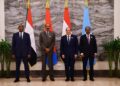
Ethiopia, meanwhile, is preparing to pull more than 3,000 soldiers out of Somalia to fight the rebellion in Tigray, a plan that surfaced on Wednesday 30 September and that a Somali defence ministry official said Addis Ababa had not discussed with Mogadishu. On Monday 5 October, the day the commissioner spoke, Ethiopia’s foreign ministry answered a declaration Somalia had signed with Egypt, Eritrea and Sudan at Alamein the day before, warning that “actions taken through proxies or acts of aggression will not change the facts on the ground”, and said it was ready to defend its sovereignty and core national interests.
Ethiopian units operate in Bay, Bakool, Gedo and Hiiraan, and during the 2025 fighting Jubaland’s vice president commanded its forces in Doolow with Ethiopian troops reported in support. A drawdown from Gedo would leave the border districts to the two Somali sides that have fought over Beled Hawo in 2020 and again in 2025, in the same week the commissioner says one of them is on the road.
On Sunday 4 October, the day before the commissioner spoke, President Hassan Sheikh Mohamud signed the Alamein declaration with Egypt, Eritrea and Sudan, which asked for adequate, sustainable and predictable funding for the African Union mission so that security can be handed to Somali forces. In Gedo those Somali forces are a federal brigade in Luuq, a Jubaland garrison of former federal soldiers in Beled Hawo and a deposed state president’s fighters sheltering between them, with al-Shabaab on the road that joins them.