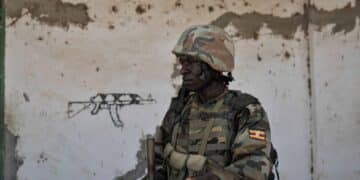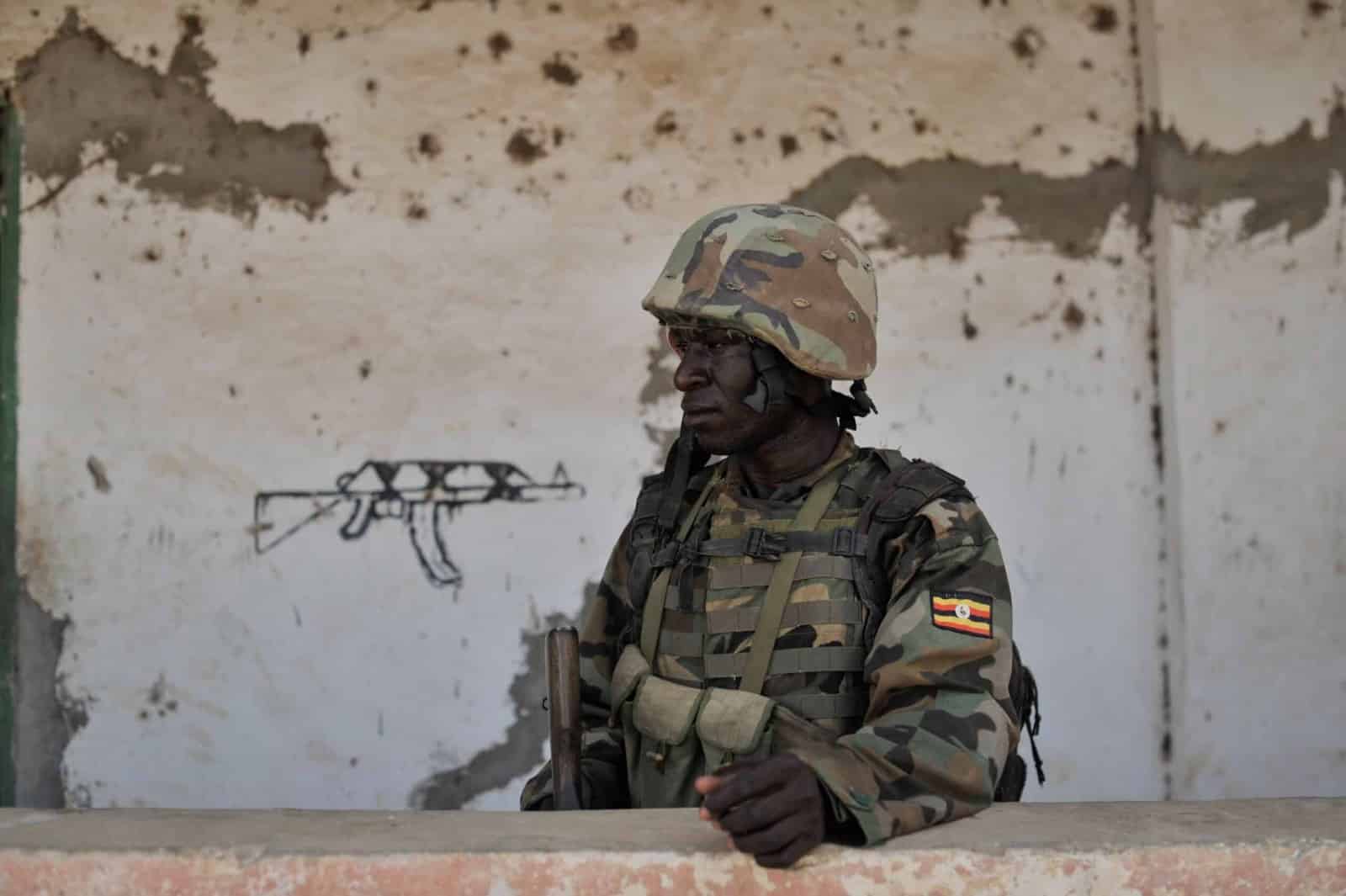
KAMPALA, UGANDA – General Muhoozi Kainerugaba, Uganda’s chief of defence forces and the son of President Yoweri Museveni, announced on Thursday 29 October that the Uganda People’s Defence Forces had started withdrawing from Somalia, three days after President Hassan Sheikh Mohamud sat with President Museveni at Entebbe and asked for Ugandan troops to stay longer. His post named no units, no towns and no timetable, while reports from Kampala and Mogadishu put Barawe, Bulo Marer, Qoryooley and Jannaale in Lower Shabelle among the positions affected, and African Union troops are expected to vacate four positions in the region next week. No federal response to the announcement had been reported by Friday, and the 2,000 soldiers Mogadishu moved out of Baledogle this month were sent toward former President Laftagareen’s forces at Buurhakaba and routed by al-Shabaab at Jameeco on the day of the Entebbe talks.

What General Muhoozi Kainerugaba Posted on Thursday
“As we promised, we have started withdrawing UPDF from Somalia,” General Muhoozi Kainerugaba wrote on Thursday, adding that “after 20 years of a lot of blood and sacrifice we are handing over security to our Somali brothers.” The post did not say how many soldiers were leaving, from which bases, in what order or by what date. Nor did it say whether the withdrawal covers the roughly 4,500 Ugandans serving in AUSSOM, the African Union mission, the 2,000 or so deployed under the bilateral pact Kampala signed with Mogadishu at the end of 2024, or both, and no Ugandan official had filled in those details by Friday.
On Friday 28 August General Muhoozi Kainerugaba had set 1 August 2027 as the date the last Ugandan soldier leaves, writing that the UPDF was “withdrawing completely from Somalia” and that there would be no UPDF in the country after that. Thirteen days before that announcement, on 15 August, Defence Minister Kiryowa Kiwanuka had said Ugandan forces would stay in Somalia under the bilateral pact even if the African Union mission wound down. Kampala has published no cabinet or parliamentary instrument formalising either position.
Battle Group 48, commanded by Colonel Michael Opio Ocuka, assumed frontline duties in the mission’s Sector One on Saturday 10 October, replacing Battle Group 45 after a sixteen-week pre-deployment course at Camp Singo. In a meeting reported on Monday 12 October, General Muhoozi Kainerugaba received the Somali army’s chief of defence forces, Brigadier General Ibrahim Mohamed Mahmoud, at the Special Forces Command headquarters, where the Somali officer appealed for more Ugandan training and briefed his host on security during the election season. The Ugandan army chief reaffirmed the UPDF’s commitment to the Somali National Army and the Somali people, and the two men agreed the relationship should extend to trade and investment. Seventeen days after that meeting was reported, he announced that the withdrawal had begun.
The Army Chief and the Quarrel With Ankara
General Muhoozi Kainerugaba has commanded the UPDF since March 2024 and announces much of Uganda’s military policy in posts on X. In April he demanded that Turkiye pay Uganda $1 billion for its years of fighting al-Shabaab, accusing Ankara of profiting from ports, airports and construction contracts in Mogadishu while Ugandan soldiers carried the war, and he threatened to close the Turkish embassy within thirty days.
On Saturday 19 September the UPDF suspended all defence and military cooperation with Turkiye, a day after supporters of a movement he chairs protested at the Turkish embassy in Kampala, and sources said at the time that Mogadishu itself wanted Ugandan troops out. Reports circulating in Somali media this week say Ankara’s position in Mogadishu weighed on Kampala’s decision and that the two presidents disagreed at Entebbe, and neither government has confirmed either claim. Turkiye trains and equips selected Somali army units, including the Gorgor commandos, and it supplied the Kirpi armoured vehicles that federal columns drive on the roads of Lower Shabelle and Bay.
On 29 July General Muhoozi Kainerugaba told the troop-contributing countries meeting in Kampala that UNSOS, the UN office that feeds, fuels and evacuates the African Union mission, had already cut its support by twenty-five percent. Washington had told the African Union in a note of 1 July that it would oppose renewing the mission with UN logistical backing, citing slow security sector reform and the failure of Somali forces to take over their own territory. President Museveni told the same summit on 31 July “if the international community wants to pull out, let them” and that “Somalia will not be abandoned”. The promise General Muhoozi Kainerugaba invoked on Thursday was made four weeks later, on the same day reports said President Museveni had privately warned President Hassan Sheikh Mohamud that Uganda would leave unless he reached a settlement with his political opponents within a year.
Barawe, Bulo Marer, Qoryooley and Jannaale
President Hassan Sheikh Mohamud’s request at Entebbe on Monday 26 October, as reported in Kampala from Somali accounts, concerned four Lower Shabelle positions held by Ugandan troops, Barawe, Bulo Marer, Qoryooley and Jannaale, which Somali forces were said to need more time to take over before General Muhoozi Kainerugaba’s soldiers left. The same report said some of the Somali troops previously stationed in those places had been redeployed elsewhere. President Museveni’s own account of the talks spoke of “the security situation in Somalia” and promised Ugandan coffee for the Somali market, and it recorded no new commitment on troops.
African Union peacekeepers are expected to leave four forward operating bases in Lower Shabelle next week, according to reports on Thursday, and the mission has not named them or said whether they are the four in President Hassan Sheikh Mohamud’s request. Al-Shabaab overran the Ugandan base at Bulo Marer on 26 May 2023, an attack in which President Museveni said 54 Ugandan soldiers died. On the night of Thursday 8 October fighters attacked the government base at Jannaale, according to local sources, and al-Shabaab claimed an attack on a Ugandan base in Qoryooley district the same night, three weeks before General Muhoozi Kainerugaba announced the withdrawal.
About 2,000 federal soldiers in more than 200 vehicles left Baledogle in October for Buurhakaba, which former President Laftagareen’s forces took in the middle of the month. Al-Shabaab ambushed the column at Jameeco on 26 October, the day of the Entebbe talks, and soldiers have described dozens of their comrades killed, while the defence ministry has published a count only of the militants it says died.
The head of the military court, Hassan Ali Nur Shute, and the commander of the ground forces, Sahal Abdullahi Omar, went to Baledogle this week to question the commanders, and officials warned that soldiers who abandoned the battlefield or their vehicles would be disciplined. Some soldiers said their own commanders had stayed well behind the line and withdrawn as soon as the fighting began. Al-Shabaab says it captured fifteen wounded Gorgor commandos at Jameeco who were later killed in a Turkish airstrike, a claim nobody has verified, and the government has denied that Turkish aircraft struck its troops.
General Muhoozi Kainerugaba’s Calendar and Villa Somalia’s
The electoral commission has set the federal vote for 15 May 2027, a date the opposition rejected, and Villa Somalia has invited its rivals to a consultative conference from 14 to 18 November. General Muhoozi Kainerugaba’s deadline of 1 August 2027 falls eleven weeks after that vote. The AUSSOM mandate that covers most of his soldiers expires on 31 December, and Washington has reportedly offered only a twelve-month drawdown of the UN logistics that sustain the mission after that date.
Ethiopia is reported to be considering the withdrawal of 3,000 to 4,500 troops it keeps outside the African Union mission in Bay, Bakool and Hiiraan, and neither Addis Ababa nor Mogadishu has confirmed the reports. Two sources said this week that American forces had left Baledogle airfield, where the United States had kept a presence since 2012, and one said the UPDF and the Somali army now hold it. Kenya, Djibouti and Egypt, which also contribute troops to the mission, had announced no change to their deployments by Friday, a day after General Muhoozi Kainerugaba’s post.
Ugandan soldiers became the first African Union troops in Mogadishu in March 2007, and al-Shabaab answered by bombing two venues in Kampala during the World Cup final on 11 July 2010, killing more than seventy people. The group left the capital in August 2011, and the mission has since been renamed twice, from AMISOM to ATMIS and then to AUSSOM. The army took Adan Yabaal in December 2022 and lost it again in April 2025, and this October it lost a column on the road to Buurhakaba that had been sent against the forces of a former South West president.
President Hassan Sheikh Mohamud asked President Museveni for more time on Monday 26 October, and the start of the withdrawal was announced on Thursday 29 October. By Friday the federal government had not said which of its units would take over at Barawe, Bulo Marer, Qoryooley and Jannaale, and the commanders of the force it assembled at Baledogle this month were being questioned there by a military court.