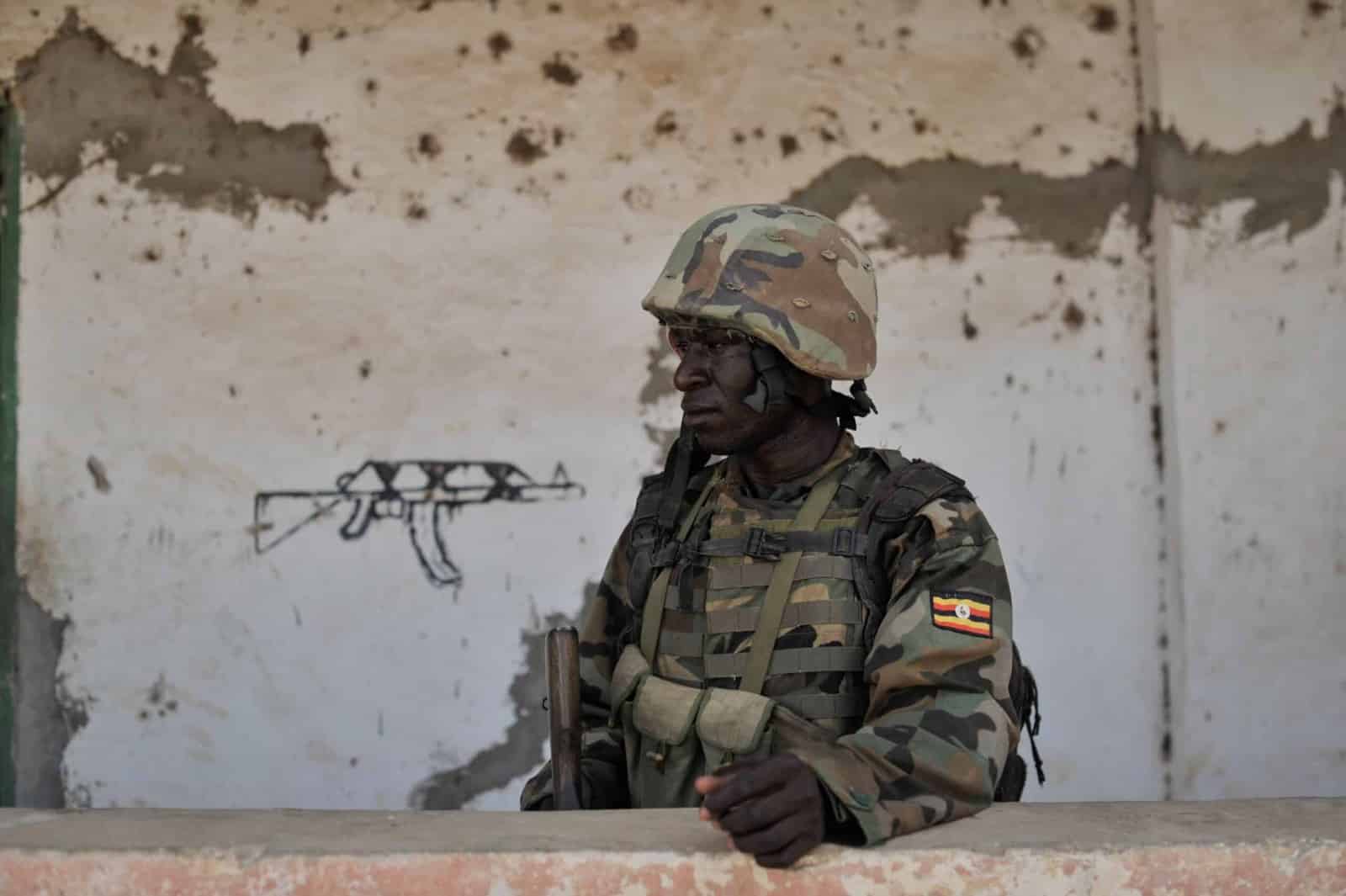
KAMPALA, UGANDA – The UPDF suspended all defence and military cooperation with Turkiye with immediate effect on Saturday 19 September, in a statement that gave no reason and set no date for resuming it. A day earlier, supporters of a movement chaired by Uganda’s army chief had protested at the Turkish embassy in Kampala to demand the extradition of a government critic who lives in Turkiye. Several sources familiar with the dispute say the critic is a pretext and the quarrel is about Somalia, where Mogadishu has reportedly asked Uganda to end a deployment of about 6,500 soldiers, citing brigades trained by Ankara. The sources value the deployment to Kampala at up to $72 million a year. Neither government has confirmed the request, and President Hassan Sheikh Mohamud, who addresses the UN General Assembly on Thursday, had not addressed it in public by Wednesday.

A Statement From Kampala That Named No Cause
Colonel Chris Magezi, the acting director of defence public information, issued the statement in Kampala on Saturday 19 September. It said the UPDF had suspended “all and any” defence and military cooperation with Turkiye and that the suspension would remain in force until outstanding issues between the two countries were resolved. It did not say what those issues were, which programmes were affected or when cooperation might resume, and Uganda’s state broadcaster carried it the same evening without further explanation. The two armies have worked under a military cooperation memorandum since 2016, covering training, equipment and the defence industry.
On Friday 18 September members of the Patriotic League of Uganda demonstrated outside the Turkish embassy. The league is chaired by General Muhoozi Kainerugaba, the chief of defence forces and the son of President Yoweri Museveni, and its supporters demanded that Ankara hand over Fred Lumbuye, a political commentator who has lived in Turkiye since 2013 and faces fifteen charges in Uganda, among them incitement to violence, spreading false information and computer misuse. Consequently, early reports tied the suspension to Lumbuye, although the UPDF statement itself never mentioned him or the protest.
On Monday 21 September Turkiye’s Center for Combating Disinformation said that a document circulating online as a Foreign Ministry reply to threats from General Muhoozi Kainerugaba, carrying the ministry’s logo and letterhead, had been fabricated. Ankara has issued no official response to the suspension itself, and the Turkish embassy in Kampala confirmed that no such statement existed. Several outlets had already published the forged text as genuine before correcting their reports. Meanwhile, Uganda could cancel a $3 billion railway contract held by the Turkish builder Yapi Merkezi and expel Turkish nationals, according to reports over the weekend, and sources familiar with the dispute said Ankara was looking for a settlement because it feared for the Turkish companies running Ugandan infrastructure and transport projects.
Sources Place the Quarrel in Mogadishu
Several sources familiar with the matter said on Monday 21 September that the extradition row was cover for a wider disagreement over Uganda’s military presence in Somalia and Turkiye’s growing role in the Somali security sector. One of them called the Lumbuye case a smoke screen and said the crisis had nothing to do with his presence in Turkiye, where he has lived since 2013. “The whole episode is connected to Ugandan army’s presence in Somalia, which has close security ties with Ankara,” the source said.
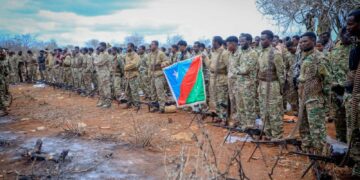
According to the same sources, Somalia asked Uganda to end its military deployment and cited the growing strength of Somali brigades trained by Turkiye. Ankara has trained nearly 25,000 Somali soldiers in Mogadishu and at least 10,000 commandos on Turkish soil. Uganda has about 4,500 troops inside AUSSOM, the African Union mission, and roughly 2,000 more under a bilateral agreement with the federal government, which puts the UPDF at about 6,500 soldiers in Somalia. Neither Mogadishu nor Kampala has confirmed that the request was made, and the federal government has published no statement on the suspension or on the reporting that followed it.
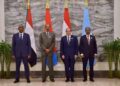
On Sunday 20 September, the day after the UPDF announcement, defence minister Ahmed Moalim Fiqi received the commander of the TURKSOM training academy, Major General Sabahattin Kalkan, in Mogadishu. The ministry said the two men discussed defence cooperation, training and the capability of the Somali National Army, and Fiqi thanked Turkiye for its continued support in rebuilding the army. Earlier this month the same minister declared Somalia ready to take over its own security as funding for the African Union mission ran down. In April, General Muhoozi Kainerugaba had posted a demand that Turkiye pay Uganda $1 billion for its years of fighting al-Shabaab, accusing Ankara of profiting from port, airport and infrastructure projects in Mogadishu while Uganda bore the burden of the war, and threatened to close the Turkish embassy within thirty days.
What a Ugandan Soldier in Somalia Is Worth to Kampala
Uganda receives at least $1,000 a month for each soldier deployed in Somalia, according to the sources. One of them estimated that Kampala stands to lose between $5 million and $6 million a month, or $60 million to $72 million a year, if the mission ends and the UPDF withdraws completely. Tunc Demirtas, a researcher at the Ankara-based Seta think tank, said the Somali government was now able to secure its capital and the surrounding regions and needed less support from abroad. “There is a war economy in Somalia and of course it was also contributing to Uganda,” he said.
The money behind the African Union mission was already running out before the Kampala statement. Washington told the African Union in July that it would stop paying for UNSOS, the UN office that feeds, fuels and moves the mission’s troops, at the end of the year, and in September it allowed a further twelve months for the office to wind down. The European Union and Britain, the mission’s main remaining backers, gave it about $90 million between them in 2025. Kampala hosted the troop contributors in July, when they endorsed an eighteen to twenty-four month plan of uninterrupted support that Washington has since ruled out. On 18 September Crisis Group judged that President Yoweri Museveni regards the deployment as part of his legacy and likely hopes Mogadishu will find a donor to pay for the Ugandan units stationed around the capital.
On Friday 28 August General Muhoozi Kainerugaba said the UPDF would leave Somalia completely by 1 August 2027, and President Yoweri Museveni was reported to have told President Hassan Sheikh Mohamud that Uganda would withdraw unless he reached a settlement with his political opponents within a year. No Ugandan cabinet decision has formalised that date. Accordingly, the reported request from Mogadishu would bring forward a departure that Kampala itself had tied to the conduct of Somali politics.
The Ground the UPDF Still Holds Around Mogadishu
Ugandan soldiers were the first African Union troops into Mogadishu in March 2007, and they were still holding the capital’s approaches when the mission took its third name, AUSSOM, in January 2025. The UPDF’s bilateral contingent of about 2,000 is stationed in and around Mogadishu, and Uganda maintains more than a dozen bases in Lower Shabelle, which Crisis Group expects to be difficult to hold once UN logistics end, when it also expects Uganda to concentrate on protecting Mogadishu and its environs. It names Qoryoley as a town that could fall to al-Shabaab when the African Union pulls out. At the end of August the army was still fighting over Basra, thirty kilometres from Villa Somalia, and the defence ministry’s statement on that operation named no unit and gave no casualty figure.
On 9 September President Hassan Sheikh Mohamud ordered the Somali National Army to reinforce Baidoa and prepare an operation into the Bay region against the forces of former President Abdiaziz Laftagareen, whom his government removed from the South West presidency in March. On Monday 21 September Puntland police stopped two federal army trucks carrying about 130 recruits through north Galkayo on their way to the Xananbuure training camp. Crisis Group also recorded that federal and state forces sometimes turn their guns on each other during political crises, and that the dispute with Puntland and Jubaland has prevented a unified national army from emerging.
President Hassan Sheikh Mohamud arrived in New York on Monday 22 September and is due to address the General Assembly on Thursday. His government has neither confirmed nor denied asking Kampala to withdraw the UPDF. In August he said the time had come to give the foreign forces in Somalia “beautiful flowers” and thank them, and on Sunday his defence minister thanked a Turkish general for rebuilding the army. In Kampala, the argument over who guards the Somali capital is being conducted through an embassy protest, an extradition demand and a $3 billion railway contract.