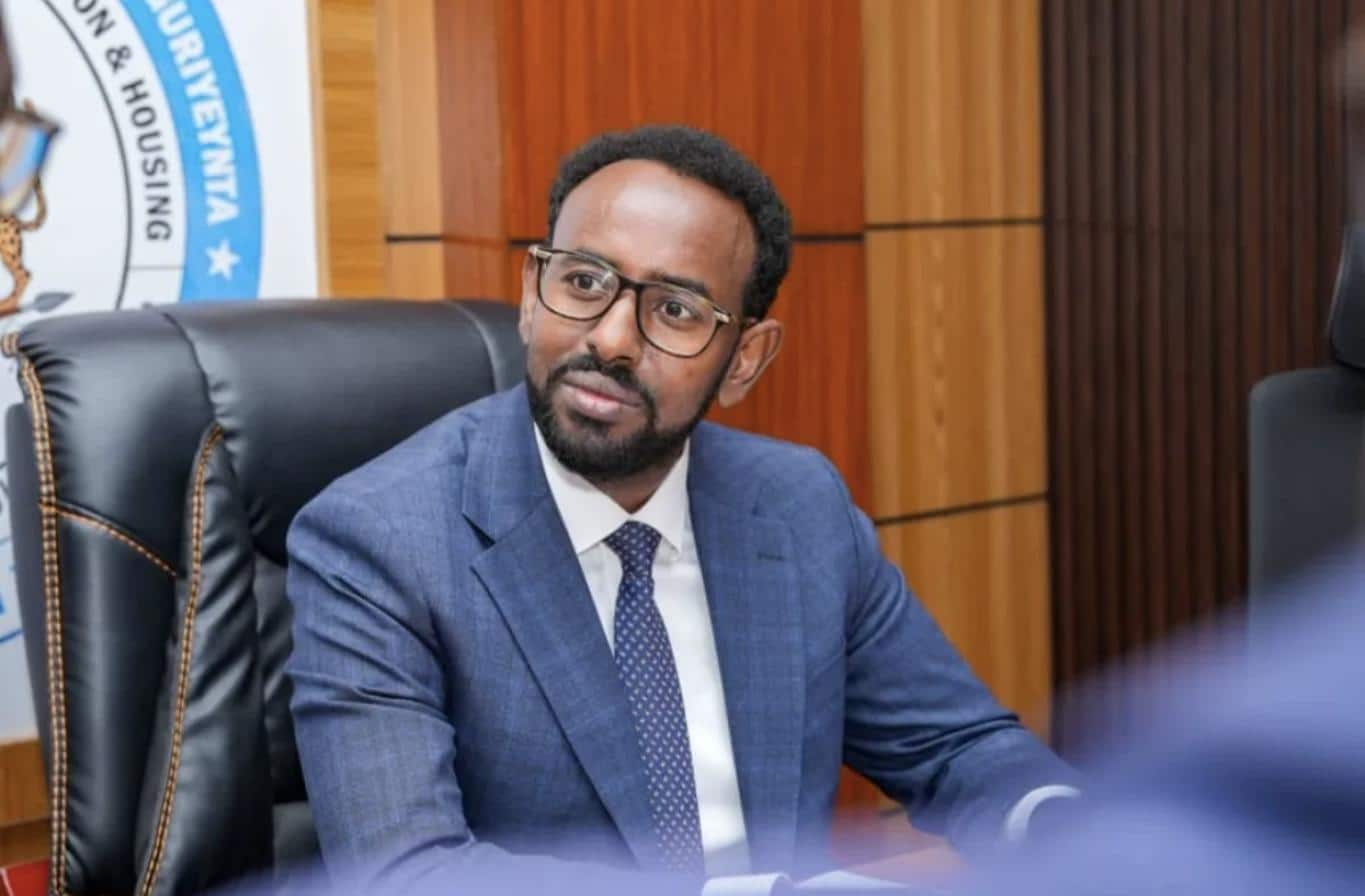
MOGADISHU, SOMALIA – The federal ministry of public works has begun contracting the design and feasibility studies for a road and bridge scheme in Hargeisa, the capital of the territory that has spent thirty five years refusing to be governed from Mogadishu. Minister Ayuub Ismaaciil Yuusuf said the first phase covers 23 kilometres of road out of a planned 45, along with a major bridge, at a cost of roughly 20 million dollars drawn from a World Bank-supported programme. Villa Somalia announced the project in the same week Puntland forces took two federally aligned compounds by force, the electoral timetable stayed unwritten and the mission that holds ground in the south moved closer to losing its funding. The federal government is laying tarmac in a city where its writ does not run and losing camps in one where it insists it does.

What the Ministry Announced for Hargeisa
The scheme sits inside the Nagaad project, a public works programme the ministry runs across Somalia with World Bank money and other international support. Ayuub said the department currently has some 89 kilometres of road under implementation spread across Jubaland, Southwest, Galmudug, Hirshabelle, Puntland and Somaliland, presented as part of a national plan to connect the country’s road network. Listing Somaliland alongside five federal member states is itself a statement of the federal position, since Hargeisa has declined that description since 1991 and every donor working there knows it. The Hargeisa phase carries the bridge, which the ministry treated as the technically demanding component of the first stage.
No construction timetable was given, and the announcement covered the contracting of design and study work rather than the start of building. Federal ministries have a long record of schemes that reach feasibility and then wait years for a construction budget. The 20 million dollar figure is modest against Somalia’s infrastructure deficit and substantial against what the federal government actually disburses in a year outside Mogadishu and Banaadir, where most capital spending has stayed since 2012. Design contracts also travel well in a press release and commit the treasury to very little.
Hargeisa’s own administration was not mentioned in the announcement. Somaliland runs its own public works ministry, collects its own customs revenue at Berbera and has built its roads for three decades without reference to the federal budget. Any road laid inside the city requires land, permits, security and local labour arranged through institutions the federal ministry does not recognise as a government, which is the first practical question the design study will have to answer. Somaliland has previously blocked federal projects it regarded as political theatre and expelled officials who arrived without its permission, and Hargeisa municipality controls every metre of ground the survey teams would need to walk.
Money That Moves North While the South Burns
Set the announcement against the same ministry’s week. Al-Shabaab holds Teedaan in Hiran and towns in Middle Juba that federal forces have cleared more than once, the brigade that lost Teedaan had gone weeks without ammunition, and the bridges and roads of Lower Shabelle that carry the army’s supply to its forward positions have been contested or destroyed for years. Reconstruction money exists in the federal system, and the ministry has chosen to route a share of it to Hargeisa. Roads determine who resupplies whom in this war, which is why al-Shabaab spends so much effort destroying bridges and taxing the crossings it leaves standing.
The choice is defensible on paper. A federal government that claims Somaliland as part of Somalia has an argument for spending money there, and delivering visible infrastructure is one of the few instruments available to a state whose claim rests on paper and whose soldiers will never enter the city. The World Bank framing helps, since a donor-funded regional programme covering six administrations is easier to defend than a bilateral gesture, and it lets the ministry present the spending as technical rather than political. Hargeisa’s residents would use the road, and roads outlast the governments that build them.
What the argument does not survive is the comparison. Villa Somalia spent July telling Puntland it would recruit thirty thousand soldiers on its territory whether Garowe consented or not, and August watching those recruits surrender their Chinese-supplied equipment to Puntland forces. The federal government applies force to the member states that accept its constitution and development money to the territory that rejects it, and the incentive that creates is the opposite of the one a unionist government should want. Puntland accepted the federal settlement in 2012 and has been fought over it ever since, while Hargeisa rejected it outright and is being offered a bridge.
The Recognition Argument Hargeisa Will Make
Somaliland’s government will read the announcement as leverage rather than largesse, and its president has spent the past week making exactly that case. Abdirahman Mohamed Abdullahi Irro received the commander of American special operations forces in Africa in Hargeisa on 1 August and told him that partners seeking maritime cooperation should engage Somaliland directly, and he repeated the argument to foreign diplomats in Nairobi six days later, asking them to treat Somaliland as a sovereign state rather than an extension of Somalia. Hargeisa has run that campaign continuously since the Ethiopian port memorandum of January 2024, and the past year has given it more material than the previous decade combined.
A federal road project inside the city complicates that pitch not at all. Somaliland has taken donor-funded infrastructure for years without conceding anything on status, treating the money as an entitlement owed to a territory the world declines to recognise rather than a favour from Mogadishu, and it will take this on the same terms. The entity the federal government insists is a region of Somalia meanwhile hosts American generals, opened an embassy in Jerusalem, and negotiates its own coastal security with foreign navies. The federal answer to all of that has been a bridge and a survey team.
Every internal crisis Villa Somalia manufactures ends up serving the recognition campaign, because the case Hargeisa makes abroad is that Somalia cannot govern itself. The past fortnight supplied more evidence for that case than any Somaliland delegation could have assembled on its own, running from the international rebuff of the term extension through two lost camps in Mudug to an electoral process nobody can date. Somaliland does not have to argue the point any more, since it can simply cite the week’s headlines and let its interlocutors draw the conclusion for themselves. That is a cheaper form of diplomacy than anything Villa Somalia can afford to counter it with.
What the Federal Government Is Choosing Not to Build
The 89 kilometres under implementation across six administrations is a small number for a country of Somalia’s size, and the way it is distributed says more than the total. Roads in the states that fight al-Shabaab determine whether a garrison can be resupplied, whether a district can be reinforced, and whether a farmer can move a crop past a checkpoint the insurgency controls. Hiran, Middle Shabelle and Bakool have absorbed the worst of the reversals of the past year, and they are where road access decides military outcomes rather than commuting times. None of them is getting a bridge on the scale of the one drawn up for Hargeisa.
Money follows politics rather than need in Mogadishu, which is why the federal budget’s largest transfers go to the states most amenable to Villa Somalia and why Puntland has financed its campaign against the Islamic State faction largely from its own revenue. A ministry that can find 20 million dollars for a design study in Hargeisa is a ministry making choices, and those choices are being made while the African Union mission plans an offensive it cannot pay for past December. The same government that cannot resupply a brigade in Hiran has found a line item for a survey in Hargeisa, and both decisions were taken in the same building.
The road may never be built, since design contracts are not construction contracts and the ministry gave no schedule. What has already been achieved is the announcement, timed for a week when the federal government needed something to point at other than the compounds it lost in Mudug and the ballot it cannot schedule. Somalia’s opposition spent that week warning of civil war, and the government’s reply was a feasibility study for a road in Hargeisa, a city where no federal official can travel without Somaliland’s permission and no federal soldier can travel at all.