Mogadishu, SOMALIA – Somaliland President Abdirahman Mohamed Abdullahi landed in Jerusalem on June 14 in the first-ever state visit by a Somaliland leader to Israel. He was there to open an embassy and formalize a relationship that is rapidly evolving from diplomatic courtesy into a security partnership. Behind the ceremony lies a far more consequential development. Israel has established an intelligence base in Somaliland and is negotiating a full Israel Somaliland military base near the Red Sea, according to investigative outlet Drop Site News.

The reports confirm what many in Mogadishu have long feared. Israel’s recognition of Somaliland in December 2025 was never about supporting the breakaway region’s 35-year quest for international recognition. It was about the Bab al-Mandab Strait. The narrow waterway connecting the Red Sea to the Gulf of Aden is one of the most critical maritime chokepoints on earth. Yemen’s Houthi movement has already closed it to Israeli-linked shipping. An Israel Somaliland military base would give Tel Aviv a forward operating position to counter that threat directly.
Berbera and the Red Sea Chessboard
The proposed site for expanded Israeli presence is Berbera International Airport. The UAE has maintained military infrastructure there since 2017, originally linked to its operations during Yemen’s civil war. Analysts now describe an emerging alignment between Somaliland, Israel, and the United Arab Emirates. Djibouti’s President Ismail Omar Guelleh has already raised the alarm. He described the UAE as “Israel’s vanguard” and said its intentions in the region were “anything but peaceful.” The Israel Somaliland military base plans fit neatly into this strategic architecture.
Hassan Sheikh Mohamud has been equally blunt. In a televised interview, the Somali president called Israel’s recognition of Somaliland a “trap.” He described it as one of the darkest days in Somalia’s history. He said Israel had previously approached Mogadishu seeking diplomatic relations. Somalia declined. Hassan Sheikh said the timing was not right and that Somalia’s opposition was rooted in religious, humanitarian, and political considerations.
Israel then turned to Somaliland. According to Hassan Sheikh, Tel Aviv concluded that Hargeisa’s leadership would be more willing to cooperate. The recognition followed. The Israel Somaliland military base discussions came next. The president warned that Somalia could find itself drawn into a war that is neither its own nor in its national interest.
Infiltration From Within
That warning is not hypothetical. Former Information Minister Zakaria Mahmoud Hajji has alleged that Israel has deeply infiltrated Somalia’s federal institutions. He pointed to Ethiopia as Israel’s primary vehicle for influence. Hajji, who fought against the Ethiopian occupation of Somalia between 2007 and 2011, described a convergence of Israeli and Ethiopian interests aimed at fragmenting the Somali state. The prospect of an Israel Somaliland military base lends weight to those concerns.
TSD has previously reported on how Hassan Sheikh’s constitutional gambit has weakened Somalia’s federal structure from within, making it more vulnerable to external maneuvering. The country has also raised alarm about Israel’s recognition of Somaliland as a direct threat to its sovereignty. And with the ATMIS withdrawal creating security gaps, the addition of a foreign military footprint in the north adds yet another layer of risk.
A Region Pushes Back
The broader regional reaction has been severe. In May 2026, foreign ministers from Saudi Arabia, Egypt, Qatar, Turkey, Pakistan, and other Muslim-majority nations condemned Somaliland’s planned Jerusalem embassy as a “flagrant violation of international law.” They declared any steps aimed at altering the legal status of Jerusalem null and void. The Israel Somaliland military base revelations have only intensified the backlash.
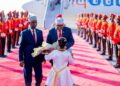
None of this has slowed Hargeisa. President Irro was greeted at the Israeli President’s Residence by Isaac Herzog. His itinerary includes meetings with Israel’s defense, finance, and economy ministers, as well as a visit to Yad Vashem. Framework agreements on maritime security and intelligence sharing are expected.
The question is what Israel expects in return. The answer appears to be Berbera. An Israel Somaliland military base on the Red Sea would represent a significant expansion of Israeli power projection. It would place Israeli intelligence assets within striking distance of Houthi positions in Yemen. It would give Israel a military presence on the African continent that no other Western-aligned power currently maintains at that scale. And it would do all of this on territory that Mogadishu considers sovereign Somali land.
The domestic politics within Somaliland are also fractured. Former President Muse Bihi has strongly opposed aspects of President Irro’s approach to Israel. Religious leaders and segments of the public have protested. Somaliland authorities have moved to suppress dissent, citing national security. The crackdown suggests the government understands the Israel Somaliland military base issue is politically volatile even among its own people.
For Mogadishu, this crisis arrives at the worst possible moment. Hassan Sheikh’s government is already battling opposition in the capital, facing international rebuff of his governance approach, and navigating a stalled Turkish mediation effort. His term has expired. His authority is contested on every front. The Israel Somaliland military base adds a foreign dimension to an already intractable domestic crisis.
Somalia has historically resisted entanglement in the Middle East’s wars. That restraint is now being tested. If Israel establishes a permanent military presence in Berbera, Somalia’s coastline effectively becomes part of the Red Sea conflict zone. The Houthis have demonstrated their willingness to strike far from their borders. An Israel Somaliland military base would make the entire Somali seaboard a potential target. Hassan Sheikh called Israel’s recognition of Somaliland a trap. The Israel Somaliland military base would spring it, and every Somali citizen from Mogadishu to Berbera would live with the consequences.
The file has stayed open. Somaliland went on to establish a purported mission in Jerusalem, Egypt condemned the move in talks with Somali officials in late July, and a reported Israeli military shipment reached Somalia under a United Nations designation in the same month. Washington has meanwhile cited rising Red Sea attacks as grounds for deeper engagement in the Horn, which widens the set of outside powers with a stake in who controls the northern coast.