GAROWE, SOMALIA – On Tuesday 21 July Puntland moved troops off the Cal Miskaad front and sent them down to the Bosaso highway to intercept a column of the Puntland Security Force. The same soldiers who had spent nineteen months clearing caves of Islamic State fighters spent that day disarming men who draw salaries from Mogadishu. Puntland sovereignty rests on a single proposition, that no armed body operates inside the state without the state’s authority, and Garowe applies it to a federal payroll and a jihadist banner in the same terms.

One Standard for Every Armed Group
Puntland has spent a quarter of a century assembling the ordinary machinery of government: courts, a treasury, a police force, an electoral calendar. Every one of those institutions depends on the same premise, that the administration alone decides who may carry weapons in its territory, and a state still building those institutions cannot grade rebellions on a sliding scale. Groups that reject the premise are in the same legal position whatever they call themselves, whether they answer to the Islamic State, to al-Shabaab, to the local coinage of Al-Sheydaan, or to a federal ministry in Mogadishu.
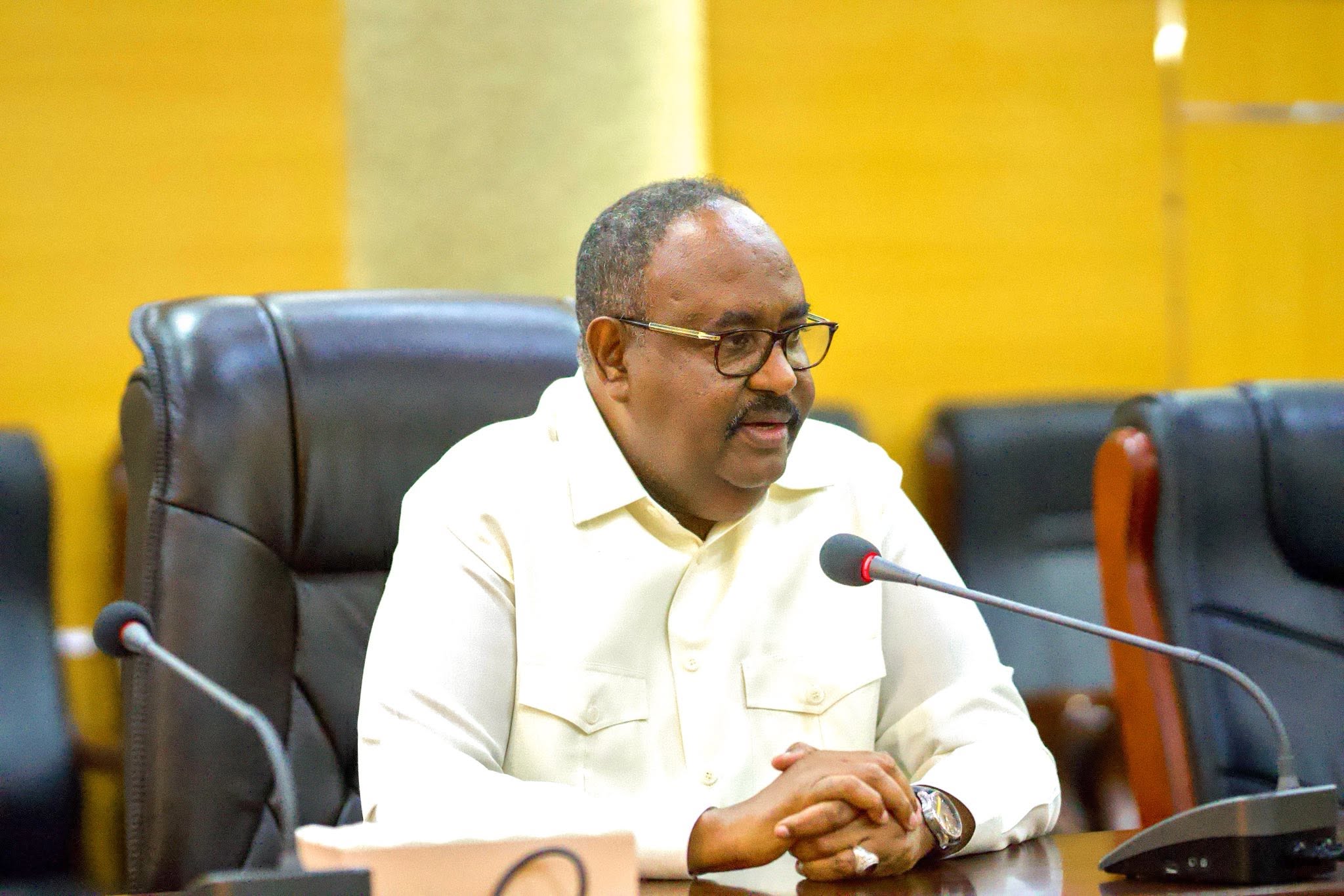
President Said Abdullahi Deni’s standing directive says as much in plain administrative language. Heavily armed forces may not move through towns and populated areas without authorisation, and in the week before the Laag operation he warned again that Puntland would not tolerate armed groups operating outside the authority of the regional administration, promising decisive action against any force that tried to establish a military presence without its approval. The order names no ideology, since movement without sanction is itself the offence, and the state applies that rule to a jihadist column in the Bari highlands and to a technical convoy on the Laag road in identical terms.
Puntland’s foreign partners sort Somali armed actors into terrorists worth funding operations against and political factions worth mediating with, and that habit suits Washington and Ankara. In Garowe a mortar fired by a man with a federal payslip lands exactly as hard as one fired by a man who swore an oath to Abdulqadir Mumin. Puntland sovereignty is measured by conduct toward the state’s authority, and the state grades its enemies the same way, whatever vocabulary their propaganda uses. On 24 June the Ministry of Security banned all non-local security forces from Puntland and barred officials appointed by the federal government from entering its territory, which put that standard into law.
What ISIS Actually Costs Puntland Sovereignty
The war in the mountains has been the costliest fight Puntland has ever waged on its own account, and Garowe has fought it in the name of Puntland sovereignty. Operation Hilaac opened in December 2024 and ground through the caves and wells of the Cal Miskaad range. It took dozens of Islamic State positions with support from US Africa Command and Emirati airpower, at a price counted in dead Darwish soldiers, few of whom appeared in any press release. Puntland forces have taken wells and cave systems the group used as launch points, captured foreign fighters, and pushed the survivors into the folds of the Baallade drainage. In October 2025 they seized the Dharint and Buticiso wells along the Baallade River, which the group had used as bases for attacks across Bari.
Mogadishu sent no troops to Bari while the offensive was at its height, leaving Puntland to fight that campaign essentially alone, and it later insisted that the federal government commands forces inside Puntland, a claim made about a territory where its army had taken no part in the fighting. The group had consolidated its hold on Al Miskaad years before the offensive began, and it lost its fixed positions only when Emirati airstrikes broke them, with Puntland’s ground forces holding what the strikes opened.
The Islamic State in Somalia governs no district in Puntland, runs no parallel administration, collects no customs at a port, and commands the loyalty of no clan constituency capable of contesting an election. Its numbers run to the low hundreds, heavy with foreigners who cannot recruit locally without protection from a small circle around Mumin. It can kill soldiers, extort businesses and hold ground that nobody else wants, and it has no way to present itself as the lawful authority in a single Puntland town. That capability is what a threat to Puntland sovereignty requires, and the group in the caves, lethal and expensive as it is, has never held it.
The Rebellion That Comes With a Payroll
Washington built the PSF as a counter-terrorism unit, trained and financed it through the Central Intelligence Agency, and left it headquartered in Bosaso with a command culture that answered to its foreign sponsors first. The rupture came after the 2019 presidential election, when President Said Abdullahi Deni defeated General Asad Osman Abdullahi, known as Asad Diyano, and then dismissed the PSF commander Mahamud Osman Diyano, the general’s brother, who refused to go. In December 2021 the disagreement became a battle in Bosaso, after which Puntland dissolved the force and stood up the Puntland Intelligence and Security Agency in its place.
What turned a mutiny into a constitutional confrontation was Mogadishu’s decision to adopt it. The federal government appointed Asad Diyano chief of the Somali Police Force. On 22 June this year President Hassan Sheikh Mohamud signed decrees creating a Bosaso-based 17th unit of the Somali National Army under Lieutenant Colonel Abdullahi Osman Abdullahi, known as Diyano, and federal leaders then said the PSF had been absorbed into it, with federal salaries and federal logistics attached. Defence Minister Ahmed Moalim Fiqi has restated that the PSF forms part of federal government forces. Puntland rejected the arrangement outright, arguing that the federal government holds no constitutional power to recognise or deploy armed forces inside the state without the state’s consent.
A group of fighters lost a domestic political contest, refused a lawful dismissal and took up arms, and Mogadishu then handed them a federal uniform and a federal wage, which the Islamic State can never obtain. That combination contests who holds legitimate authority in Bosaso. Puntland sovereignty can outlast a hundred fighters in a cave, and the proposition that a rival government may license armed factions on its territory and call them a national army goes to the foundation of the state. Neither the federal government nor General Asad Diyano had answered Puntland’s account of the Laag operation publicly in the days after the column was disarmed.
Two Fronts and One Army
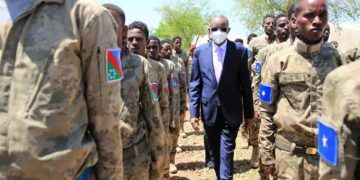
The practical cost of that proposition showed on the Laag road. Puntland said intelligence showed PSF units moving from Bosaso toward the coastal district of Haafuun, and it pulled forces out of the Almiskaad mountains to secure the Bosaso to Garowe highway. Darwish troops ambushed the convoy and surrounded it, and the PSF withdrew overnight on foot through the hills, abandoning its technical vehicles. Puntland captured personnel and seized the vehicles, then told any remaining federal-aligned units to surrender or face the same treatment. It said the whole operation was carried out under President Said Abdullahi Deni’s directive on armed movements.
Every soldier on that highway came off the mountain front, and the Islamic State reads redeployment as opportunity. Analysts writing in mid-July argued that the group had stepped up operations from Al Miskaad while Puntland’s attention turned elsewhere, which is the arithmetic of fighting two rebellions with one army and the clearest cost the second front imposes on Puntland sovereignty. Since late May Puntland had also kept large numbers of troops on the outskirts of Garowe, where elders mediated a preliminary agreement in the same week. The federal government has not explained why it wants a second front open in Bari while the first war remains unfinished.
Around that operation sits a wider set of measures that show how thoroughly Garowe now treats federal deployments as hostile. Puntland has barred federal officials from entering the region, prohibited federal military recruitment and imposed checkpoints on the movement of federal forces between towns. General Jimaale Takar, Mogadishu’s newly appointed commander for the northern regions, found himself blocked from returning. Garowe has separately accused the federal government of smuggling weapons to provoke civil war, an allegation Mogadishu has not answered. Since Bosaso the same pattern has extended to Galkayo, where Puntland warned that federal military movements risk a direct confrontation.
Where Puntland Sovereignty Is Decided
The federal case for the PSF rests on a legal fiction that collapses under its own logic. If Mogadishu may absorb any armed faction that quarrels with a member state, issue it a unit number and declare the matter settled, then every defeated candidate in every regional election holds a standing option to convert his militia into national forces. Somali federalism would then consist of the right of the centre to arm the losers. The method is the same one that undermined Jubaland’s elections, applied now with heavier weapons, and it follows the federal appointment in mid-June of a new commander for the army’s 54th Division in Garowe, which Puntland rejected on 18 June. Garowe has since refused the appointments made for its territory and stopped attending federal security meetings.
Puntland fights the men in the caves and disarms the men on the highway, using the same forces, the same commanders and the same legal justification. It has offered no amnesty to the Islamic State on grounds of religion, and none to the PSF on grounds of citizenship. In both cases the offence is identical, the refusal to accept the authority of the administration that governs the territory, and on 18 June Garowe said it would operate separately from the federal government until the two sides reached a comprehensive settlement.
The war in Cal Miskaad will end the way such wars end, slowly, with the last fighters starved out of the high ground. The question of the PSF stays open in Mogadishu, where the federal government has yet to say whether Somali federalism means a partnership among governments or a licence for the centre to raise armed clients inside its member states. Until Mogadishu answers, Puntland sovereignty will be defended against both rebellions at once, and the Islamic State will remain the smaller of the two threats to it.