
BAIDOA, SOMALIA – Ugaas Hassan Abdi Mohamed has reportedly returned to the South West State information portfolio in a cabinet attributed to former South West State President Abdiaziz Hassan Mohamed Laftagareen on Friday 18 September. Two reports publish the same list of fifteen ministers, state ministers and deputies, placing a former spokesman at its centre while President Aden Mohamed Nur Madobe’s administration holds the ministries, assembly and presidential compound in Baidoa. No decree, signed roster, oath record or official announcement venue has surfaced. The available evidence establishes a reported list and the political claim carried by it, while the legal instrument and administrative machinery behind the appointments remain unpublished.
Ugaas Hassan Abdi Mohamed Returns to Information
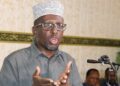
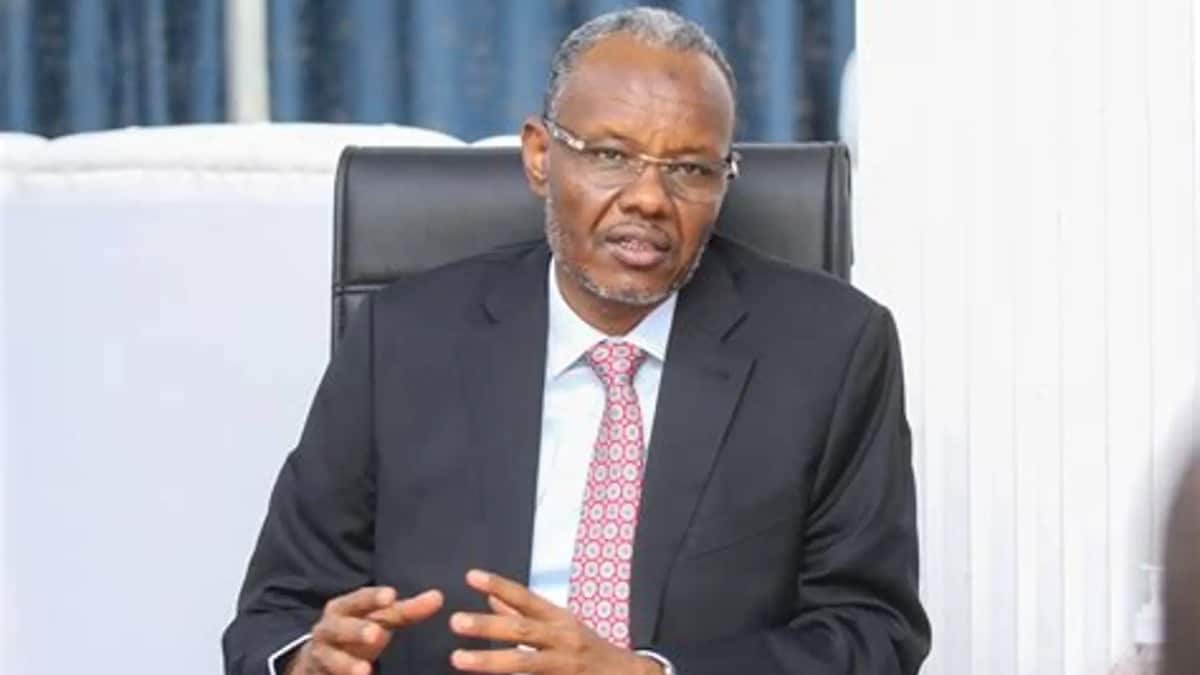
Ugaas Hassan Abdi Mohamed is named information minister in the first report carrying the full cabinet list. He held the Information and Public Awareness portfolio before leaving office in 2020 and has recently spoken for former President Laftagareen during the armed confrontation around Baidoa. The current roster shortens that former title to information minister. The reported return gives the cabinet a public voice already recognised by supporters, opponents and the press. It also places a veteran of the former administration in charge of explaining a government whose offices, broadcasters and civil servants remain under the authority operating in the capital.
Former President Laftagareen reportedly named Ibrahim Ali Adan Najah for justice, Hassan Abdulkadir Mohamed for internal security, Nasro Aweys Sheikh Hussein for women and human rights, Mustaf Mohamed Iidow for education and Isaaq Ali Subad for agriculture. The second report reproduces the same appointments, including Ali Sheikh Abdullahi for ports, Mohamed Isaaq Ali Ibrahim for minerals, Said Ahmed Ali Omar for constitutional affairs, Abdifatah Mohamed Ali Abaroone for fisheries, Diini Abdinuur Mohamed for environment and Nur Siidow Baaba for religious affairs. The roster assigns titles without dates for assuming office.
Ugaas Hassan Abdi Mohamed appears alongside Mohamed Ibrahim Nur as state minister for the presidency and three deputy ministers: Mohamed Hussein Hassan for transport, Mohamed Qeys Hassan for youth and sports, and Omar Daud Khalif for minerals. The matching order and wording indicate that both reports drew from the same roster or announcement, but neither supplies the underlying document. No report says where the appointments were signed, whether the appointees took an oath, where a cabinet would meet, which treasury would fund it or who holds the unlisted portfolios. Ugaas Hassan Abdi Mohamed therefore has a reported office and a named set of colleagues, with no primary record yet available to authenticate their commissions.
The Cabinet Is Reported Beyond the Capital
Former President Laftagareen has remained outside Baidoa since federal troops took the city on 30 March and his administration collapsed there. His disputed re-election had taken place on 28 March, two days before the federal entry, and he announced his resignation as the military balance shifted inside the capital. President Aden Mohamed Nur Madobe later entered the state presidency through a process organised under federal protection, while former President Laftagareen continued to claim the mandate produced by his March election. The succession now rests on two disputed selections, one rejected by Mogadishu and one built by it. A reported cabinet supplies former President Laftagareen’s side with ministerial titles across the departments now controlled by his rival.
Baidoa’s ministries, assembly, presidential compound and security headquarters give President Aden Madobe’s administration the physical chain needed to maintain registries, payrolls, police commands and service counters. Former President Laftagareen’s camp operates through political figures and Darwish units outside the city, where repeated assaults have failed to dislodge the garrison. Federal officials have also prepared asset freezes and travel restrictions against his circle. The reported ministers enter an organisation facing armed containment around Baidoa and prospective financial containment through Mogadishu. Neither cabinet report identifies an office outside the capital from which any listed department is already functioning.
Ugaas Hassan Abdi Mohamed links the political list to the armed movement because he has served as spokesman for the forces and administration aligned with former President Laftagareen. During the 3 September assault, Ugaas Hassan Abdi Mohamed described the fighting as a planned South West operation, urged residents to remain indoors and rejected the federal accusation that the attackers fought with al-Shabaab. The contemporaneous account identified him as the former president’s spokesman. His reported appointment moves the same voice from battlefield briefings into a ministerial title, while the force behind those briefings remains outside the capital.
Ugaas Hassan Abdi Mohamed Holds the Public File
Ugaas Hassan Abdi Mohamed has already carried the central claims the information ministry would be asked to defend. He says former President Laftagareen remains the legitimate president, identifies the armed units outside Baidoa as South West Darwish, rejects federal descriptions of them as al-Shabaab affiliates and presents their attacks as operations to recover the state. President Aden Madobe’s administration gives the same men a different legal identity. It has classified them with al-Shabaab, sought action against their leaders and supported an African Union authorisation whose targeting language includes affiliated militias.
The information portfolio is unusually consequential inside that dispute because each administration is trying to determine the name applied to the other side’s force. On 3 September, the federal defence ministry described fighters loyal to former President Laftagareen as militias operating alongside al-Shabaab. Ugaas Hassan Abdi Mohamed acknowledged that his side launched the attack and denied any alliance with the insurgency. Independent reporting could verify neither the battlefield claims nor the alleged cooperation. The reported cabinet leaves him responsible for an official narrative whose most important assertions concern an armed campaign in which he has already acted as spokesman.
Ugaas Hassan Abdi Mohamed also provides continuity where the reported roster offers little institutional detail. His previous service in the information ministry gives him experience with its personnel and public routines, but the ministry he is said to lead is physically held by another administration. Any press office outside Baidoa would depend on its own communications channels, access to former officials and the authority former President Laftagareen can exercise over appointees dispersed beyond the capital. No published decree defines that structure, and neither report identifies a cabinet secretariat, meeting place or implementation date.
The first verifiable act of the reported cabinet may be its production of the document that created it. A signed decree would establish the appointing authority, date and exact portfolios; an oath or meeting record would show that the named officials accepted office; a budget instruction would identify an administrative chain. The public record presently stops at two matching articles and a fifteen-name list. Ugaas Hassan Abdi Mohamed is reported at the head of its information function, but the cabinet he would explain has yet to publish its own founding instrument.