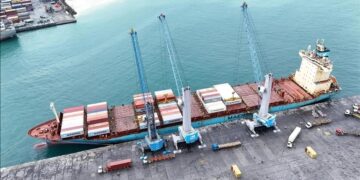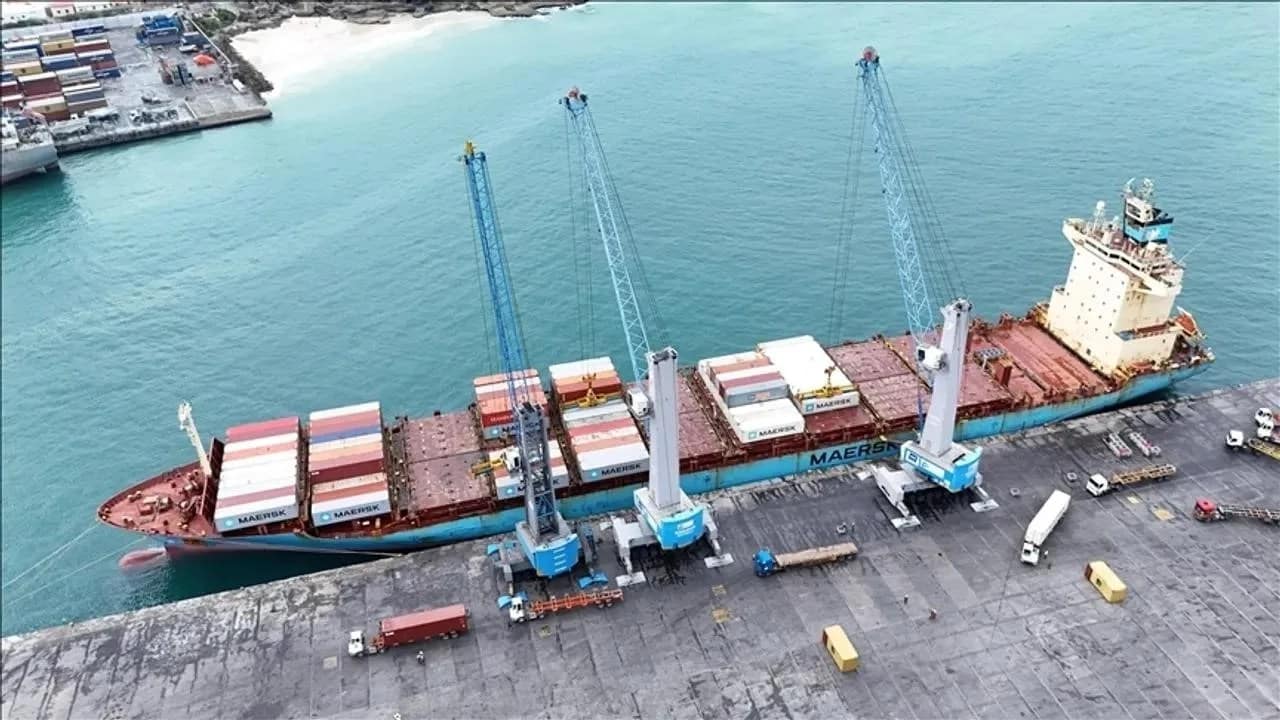
MOGADISHU, SOMALIA – The US Coast Guard added Somalia to its Port Security Advisory on Tuesday 27 October, ruling in a notice published in the Federal Register that the country “is not maintaining effective antiterrorism measures in its ports” and imposing conditions of entry on vessels that reach the United States after calling at a Somali harbour. The notice covers “the ports of Somalia”, names none of them and exempts no terminal, and Washington recognises a single Somali state, so Berbera, which Somaliland runs with DP World, and Bosaso, where Puntland began enlisting about a hundred soldiers for American training on Monday 2 November, carry the same finding as the harbour the federal government holds in Mogadishu. By Tuesday 3 November no response from the federal government had been reported.

What the US Coast Guard Notice Requires
Vice Admiral Nathan A. Moore, the deputy commandant for operations, signed the one-page notice, which was filed for public inspection on Monday 26 October and took effect on the day it appeared. Somalia joins 23 other countries on the advisory, among them Iran, Iraq, Libya, Sudan, Syria, Yemen, Venezuela and North Korea, along with the Comoros, Madagascar and the Seychelles from the western Indian Ocean. The notice gives no date for the assessment behind the decision, lists none of the deficiencies the US Coast Guard found and identifies no port or terminal, either as the source of the failure or as an exception to it.
Ships that have called at a listed country within their last five port calls must, according to the requirements reported alongside the notice, apply measures equivalent to Security Level 2 of the International Ship and Port Facility Security Code while in that country’s ports, guard every access point and keep the hull under watch from the shore and the water. Masters must also attempt a Declaration of Security with the port facility, log the measures taken and report them to the Captain of the Port before entering American waters. The US Coast Guard may board and examine any such vessel, and one that cannot show compliance can be delayed or refused entry, while armed guards at access points may be demanded in a US port, a requirement normally waived when the records are in order.
Nigeria came off the advisory on 19 August, after a fresh US Coast Guard assessment found that its ports had taken effective antiterrorism measures, and Haiti went on it in June. The way off the list therefore runs through a new assessment of the ports themselves. Most of Somalia’s seaborne trade passes through four harbours, at Mogadishu, Kismayo, Bosaso and Berbera, and they sit under four different administrations, only one of which takes its orders from Villa Somalia.
Villa Somalia Claims Every Harbour
The Council of Ministers met in emergency session on Monday 12 January 2026 and nullified every agreement Somalia held with the United Arab Emirates, naming in its statement the operational arrangements at the ports of Berbera, Bosaso and Kismayo. None of the three is administered from Mogadishu, since DP World operates the Berbera terminal under Somaliland’s authority, P&O Ports holds a thirty-year concession at Bosaso signed with Puntland in 2017, and Jubaland runs Kismayo, while the Turkish Albayrak Group has managed the port of Mogadishu since 2014. Puntland answered in January that the decision would have no effect on its relations with Abu Dhabi, and the Emirati aircraft at Bosaso airport stayed where they were.
President Hassan Sheikh Mohamud’s letter of 16 March 2025 to President Donald Trump had already offered the United States “exclusive operational control” over the port and air base at Berbera and the port and air base at Bosaso. The letter described them as “strategically positioned assets” and promised American forces “uninterrupted military and logistical access”, although Mogadishu controlled neither site then and controls neither now. Somaliland rejected the offer within days, and nineteen months later the US Coast Guard has put both harbours under the same finding as Mogadishu’s own.
On Saturday 3 October 2026 the same president said Somalia was ready to let Ethiopia use two or three Somali ports for its imports and exports, four days after meeting Prime Minister Abiy Ahmed in Addis Ababa. Ethiopia’s search for the sea had set off the crisis of January 2024, when Addis Ababa signed a memorandum of understanding with Somaliland for naval and commercial access near Berbera, and the Ankara talks of December 2024 closed that quarrel with a promise of commercial access through Somali territory. The US Coast Guard’s notice follows the same map as Villa Somalia’s offers, assessing “the ports of Somalia” as a single set, and it records every one of them as failing.
Washington Works in Bosaso and Berbera
Puntland authorities began enlisting nearly a hundred soldiers from several security units on Monday 2 November for training by the United States at a military base in Bosaso, six days after the US Coast Guard published its finding, under a recent agreement that covers the training, equipping and payment of salaries for Puntland’s forces. The programme is expected to concentrate on counterterrorism, and Puntland’s forces have carried the Calmiskaad campaign against the Islamic State in the mountains of Bari for nearly two years. The length of the course and the units taking part have not been disclosed.
Monday’s enlistment follows the agreement President Said Abdullahi Deni signed in Bosaso on Sunday 2 August with Major General Claude K. Tudor Jr, who runs American special operations across Africa, and which lets the United States expand its footprint in the city. A delegation from US Africa Command led by Colonel James Rose was back in Bosaso on Monday 31 August. Washington has spent the past year conducting its heaviest Somali business in Bosaso, Nairobi and Hargeisa, and President Abdirahman Mohamed Abdullahi of Somaliland reached Washington on 5 September for a two-week visit, during which he gave a keynote at the Hudson Institute on 14 September presenting Somaliland as a strategic partner in the Horn of Africa.
General Dagvin Anderson, the commander of US Africa Command, travelled to Berbera in late November 2025 and reviewed the port’s operational capacity, and held talks with President Abdirahman Mohamed Abdullahi, the chief of Somaliland’s armed forces, Brigadier General Niman Yusuf Osman, and its coast guard commander, Admiral Ahmed Hurre Hariye. By the time the notice appeared, American officers had inspected the port of Berbera in person and Washington had agreed to train, equip and pay Puntland’s forces at Bosaso. The US Coast Guard’s assessment, published eleven months after the visit to Berbera, made no distinction between either harbour and the port in Mogadishu, and its conditions will meet a ship leaving Bosaso or Berbera exactly as they meet one leaving the capital.
Mogadishu Changes Its Naval Command in Silence
Colonel Mohamed Abdulkadir Sharif Bocorrey took command of Somalia’s Navy and Coast Guard in Mogadishu on Sunday 1 November, five days after the notice took effect, succeeding Brigadier General Abdiwahab Abdullahi Omar at a handover chaired by Major General Mohamud Sheikh Ali, known as Dable Baylood. The account of the ceremony spoke of enhancing maritime security and protecting the coastline, and it made no mention of the American finding. No comment on the listing from the federal ministry of ports, the defence ministry or Villa Somalia had been reported by Tuesday 3 November, a week after it appeared in the Federal Register. The notice cites section 70110 of the Maritime Transportation Security Act, which authorises the US Coast Guard to impose conditions of entry on vessels arriving in American waters, and names Edward Munoz, chief of the International Port Security Assessments division, as the official answering questions about it.
The conditions fall on the ships and, through them, on the importers who pay for each voyage. Somalia relies heavily on imported food, fuel, construction materials and machinery, and shipping lines whose vessels call at Mogadishu, Berbera or Bosaso and then head for American waters now carry extra security obligations and the risk of delay at the end of the route. Shipping operators, insurers and investors may weigh that risk when they price a call at any Somali harbour, whichever administration controls the quay.
Nigeria left the advisory after the US Coast Guard reassessed its ports and judged the measures effective. For Somalia the same reassessment would take in a harbour at Bosaso where American instructors are about to train Puntland’s soldiers and a harbour at Berbera whose capacity the commander of US Africa Command reviewed in person, on behalf of a federal government that revoked the operating arrangements at both in January and offered both to President Donald Trump the year before.