

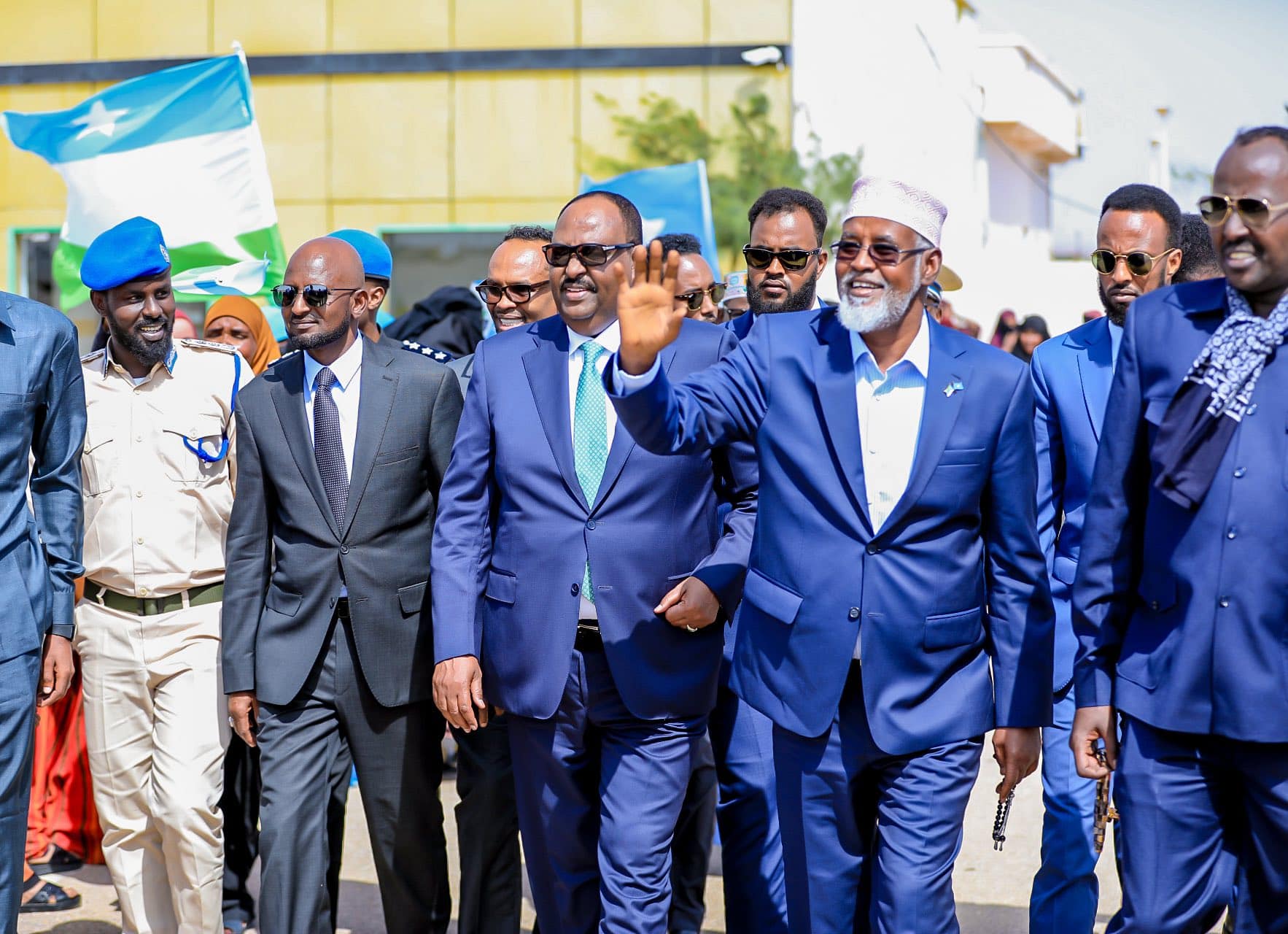
MOGADISHU, SOMALIA – Somalia’s split is no longer just a local fight. A Gulf rivalry now runs through it. Qatar backs the federal government. The United Arab Emirates backs Puntland and Jubaland. Each side brings money, arms, and ports. So the Gulf rivalry does not simply track Somalia’s fracture. It deepens it, and it pays for it.

The January Break
The turn came in January. Mogadishu annulled all its deals with the UAE, citing sovereignty breaches, as Al Jazeera reported. It scrapped port concessions and defense pacts in one stroke. Then it leaned hard into Qatar. Doha signed a defense deal and cast itself as the government’s indispensable ally.
For Hassan Sheikh, the switch served a goal. Qatar’s support props up his “One Somalia” doctrine. It strengthens his claim to be the sole authority over defense. So the Gulf rivalry feeds his drive to pull power back to the center.
Qatar’s role is not new, but it has grown. Doha has stepped into the gap the Emiratis left. It now casts itself as the indispensable partner. Analysts at Horn Review call the Qatari deal a political tool for recentralization, not just a security pact.
The States Push Back
Puntland and Jubaland refused to follow. They called the UAE cut null and void. They argued the provisional constitution does not let Mogadishu cancel regional port and security deals on its own. The stakes are large. The UAE has poured nearly 800 million dollars into the ports of Bosaso in Puntland and Berbera in Somaliland. That money makes the Gulf rivalry impossible for the states to ignore.
The Emirati stake is also military. Abu Dhabi has trained and paid forces in Puntland. The Washington Institute credits that support with real gains against Islamic State fighters. So when Mogadishu cut the UAE loose, it also cut a lifeline the states still rely on. Puntland felt the loss first, since Bosaso’s port and security run on Emirati money.
This is the heart of the danger. One country now hosts two rival security systems. Each draws cash and arms from a different Gulf capital. The Gulf rivalry has turned a budget dispute into an armed divide.
So the states kept their own ties with Abu Dhabi. They reaffirmed independent security deals. The result is two armies under one flag. A Doha-aligned federal force now faces Abu Dhabi-backed regional forces. The Gulf rivalry has helped build parallel militaries inside a single state.
This maps onto a fight For months. Villa Somalia ran a takeover in Southwest State, pressed Galmudug, and tried to plant forces in Puntland. Foreign money now sharpens each of those battles.
A Wider Board
The rivalry reaches the sea. The UAE, Israel, Somaliland, and Puntland are drawing closer around the Berbera axis. That shift came into view when Israel recognized Somaliland. On the other side stand the federal government, Qatar, Egypt, Saudi Arabia, and Turkiye. So the Gulf rivalry is one strand of a larger contest for the Red Sea and the Gulf of Aden. The International Crisis Group warned that Gulf tensions are spilling straight into Somali politics. Analysts at Critical Threats see a possible standoff brewing in the north.
The pattern is about whose model of the Somali state wins, as much as about ports and bases. Abu Dhabi backs strong regions. Doha backs a strong center. So the Gulf rivalry mirrors the very question tearing Somalia apart, namely who should hold power.
For ordinary Somalis, the cost is real. Outside patrons reward division. Every faction can now find a foreign sponsor. So leaders have less reason to compromise and more reason to hold out. Deni has even accused Mogadishu of fueling chaos on the coast rather than calming it.
The insurgents gain from all of it. While patrons arm rival camps, al-Shabaab works the seams. A state divided by foreign money fights itself while the militants wait. So the Gulf rivalry does not just split the government. It weakens the war.
No Easy Exit
The danger is plain. A Gulf rivalry layered on top of a domestic split is hard to undo. Money hardens positions that talks might have softened. Somalia needs a united front against al-Shabaab and a credible path to elections. Instead, outside patrons keep pulling it in two directions.
A way out exists, but it is narrow. Mogadishu could share power instead of hoarding it. The Gulf states could back talks instead of camps. So far, neither looks likely. Each patron wants its own side to win, and the country’s recovery ranks below that. So the money keeps flowing, and the lines keep hardening. The fracture is Somali. The fuel, more and more, is foreign. Somalis are left to pay a bill that two Gulf capitals keep running up, with little say in the wager.
Both patrons have kept spending since. Emirati aircraft and trainers stayed with Puntland through the Cal Miskaad campaign against the Islamic State, while Turkiye, working alongside Qatar’s political weight, took over the mediation between Villa Somalia and the opposition and watched it collapse on 27 July without a joint statement. The African Union troop contributors meeting in Kampala on 31 July will decide the mission’s future with the same rival capitals lobbying from outside the room.