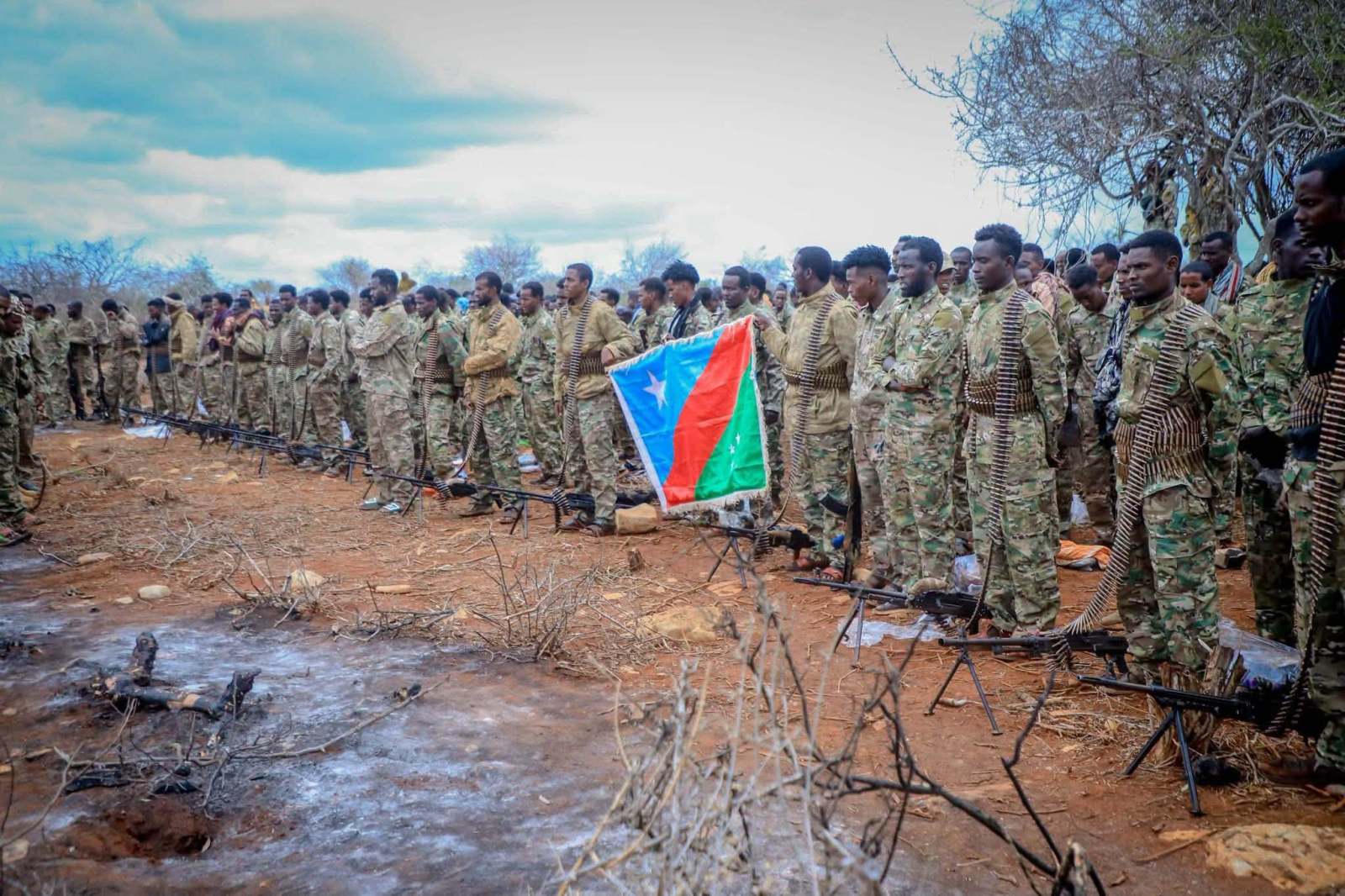
BAIDOA, SOMALIA – Former President Abdiaziz Hassan Mohamed Laftagareen’s faction said on Wednesday 23 September that no ceasefire had been agreed with anyone, a day after the South West Peace Council told reporters in Nairobi that a ceasefire around Baidoa was the most critical issue in the mediation it had spent four weeks building. The council had met President Aden Mohamed Nur Madobe in Baidoa from 29 August to 7 September and Laftagareen in Nairobi on 18 and 19 September. Federal and South West forces were moving reinforcements into Baidoa the same week, and a food security analysis released on 23 September found that about 26,000 displaced people in the city could face famine before the end of the year.

What the South West Peace Council Took to Nairobi
The South West Peace Council, which calls itself the South West State Council for Peace, Unity and Development, introduced itself in Nairobi on Tuesday 22 September as a body aligned with neither side. Its members are religious scholars, business leaders, women, young people and other figures from South West society, and they said they had consulted civil society groups inside South West State and held talks with members of the diaspora in Nairobi before approaching either principal. “The most critical issue we are focusing on is the ceasefire,” one member told the press conference, and the council described a halt to the fighting as the first step toward a dialogue built on a legal framework both camps could accept.
Members of the South West Peace Council also acknowledged at the press conference that their mediation faces significant challenges. Council member Mohamed Abdi Nur said the South West Peace Council would maintain its outreach and keep meeting stakeholders on both sides, and the council named no date for a further round with either man. Its Baidoa round with President Aden Mohamed Nur Madobe was still under way when fighting reached the city’s northern neighbourhoods on 3 September, and its Nairobi meetings with Laftagareen began on 18 September, the day he named a cabinet of his own from the Kenyan capital.
On Monday 21 September, a day before the press conference, twenty-nine South West intellectuals called for a ceasefire and for an independent dialogue commission to finish its work by 15 December 2026. “Political disagreements must not be allowed to divide communities or deepen the suffering of the people of South West State,” their statement said. The South West Peace Council and the intellectuals asked for the same first step within twenty-four hours of each other, and both addressed the two men whose forces have fought over Baidoa since March.
Laftagareen’s Camp Answers the South West Peace Council
Ugaas Hassan Abdi Mohamed, the information minister in the cabinet Laftagareen named from Nairobi on 18 September, posted the faction’s answer on Facebook on Wednesday 23 September. “There are no talks or decisions regarding a ceasefire reached between individuals and the President of the South West State of Somalia, Honorable Abdiasis Hassan Mohamed Laftagareen,” the statement said, adding that “the struggle and liberation of the South West State territories will continue until they are liberated, and our people regain their sovereignty and dignity.” It did not name the South West Peace Council, and it gave Laftagareen the title federal forces removed him from in March. Somali-language outlets reported the post as the faction refusing to halt the fighting around Baidoa, and no member of the South West Peace Council had answered it publicly by Friday.
Federal troops took Baidoa on 30 March, Laftagareen resigned and left for Nairobi, and President Aden Mohamed Nur Madobe was declared the winner on 10 June with 88 of 90 votes, a result Laftagareen’s camp has never accepted. His forces have attacked the city repeatedly since, with fighting in June and July, a pre-dawn assault on Monday 17 August and a raid on Thursday 3 September in which they seized two federal army positions on the outskirts. Laftagareen’s Darawish, regrouped in Jubaland, thanked their hosts and said they were coming back for Baidoa.
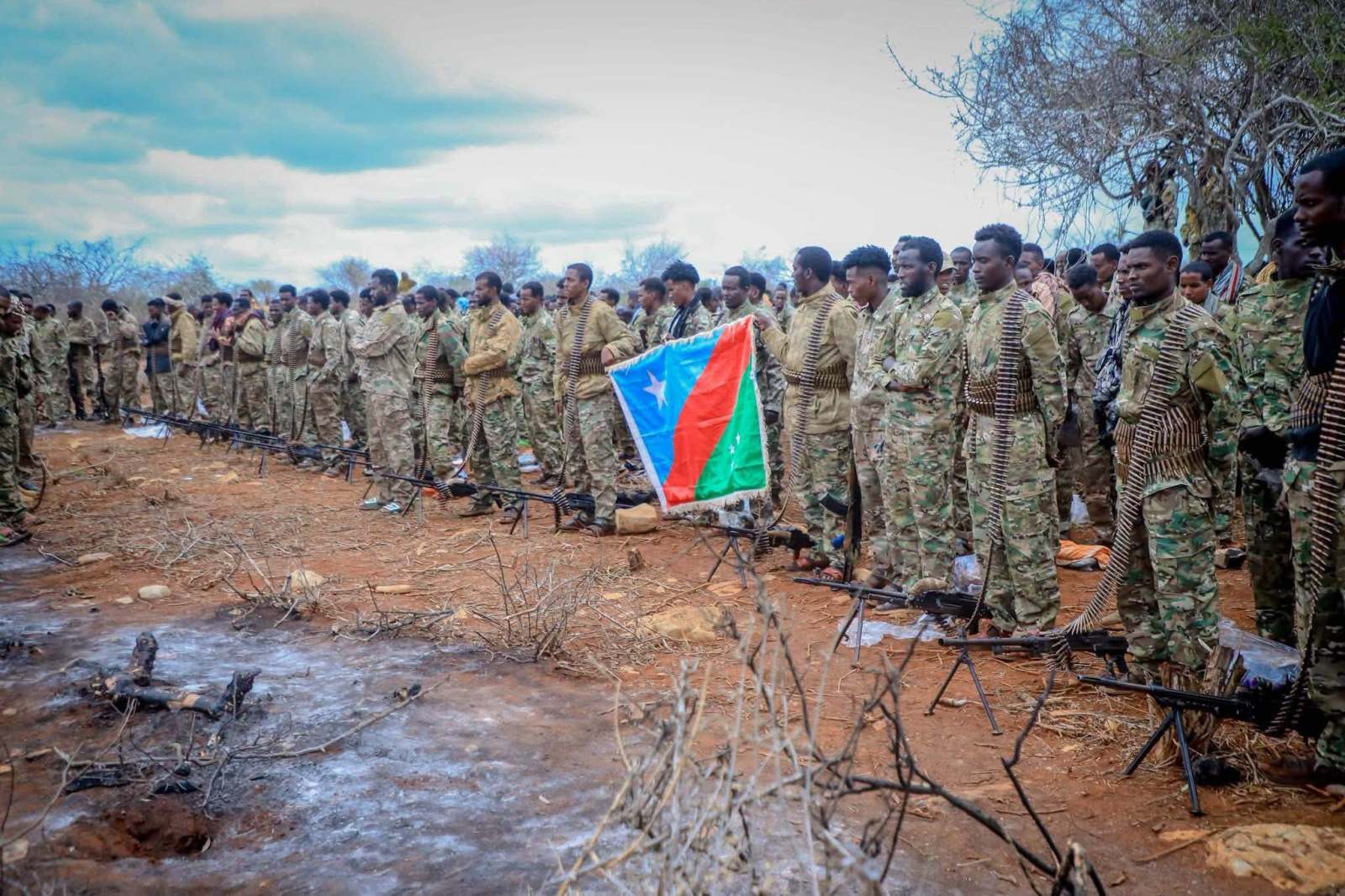
The 3 September fighting reached the Al-Faras and Al-Axmaar neighbourhoods, where Bashir Mohamed Abdullahi of Arlaadi Media Network was shot twice in the back while reporting; he died on 7 September, the second Somali journalist killed this year. The same night an explosion hit the Doolow compound of General Mahad Abdirahman Aden, Laftagareen’s father-in-law and closest military ally, who later named a Turkish F-16 in his account of the strike. On 12 September South West State’s government told civilians to leave areas held by Laftagareen’s forces or al-Shabaab and announced airstrikes.
Reinforcements and a Famine Warning Around Baidoa
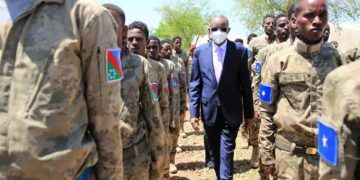
Federal and South West forces deployed additional troops to Baidoa this week, while Laftagareen’s fighters hold camps outside the city. President Hassan Sheikh Mohamud’s government had said nothing publicly about the South West Peace Council by Friday 25 September, and President Aden Mohamed Nur Madobe’s administration had made no public comment on the council’s work or on the faction’s statement. Of the two camps the council met, only Laftagareen’s has said anything in public about a ceasefire since. A 19 August editorial published in Puntland held President Hassan Sheikh Mohamud responsible for choosing force over dialogue in South West State, quoting the analyst Samira Gaid’s warning that using the army to settle a political contest would create conditions terrorist groups can exploit.
The Integrated Food Security Phase Classification analysis released on Wednesday 23 September found that about 26,000 displaced people in Baidoa could face famine, the most severe phase on its scale, between October and December, and it came out the day after the South West Peace Council’s press conference. More than 50,000 people fled the city on 31 March alone, the day after federal forces took it, according to a displacement monitor. In July a Médecins Sans Frontières survey of 888 households across fourteen displacement sites in Baidoa found half of the children it screened acutely malnourished and a quarter severely malnourished. Save the Children, publishing on 24 September, listed climate shocks, conflict, displacement, economic pressure and food prices among the causes, and named Baidoa and, earlier in the year, Burhakaba as the areas at risk of famine.
The South West Peace Council has said it will keep meeting both camps. Laftagareen’s faction disowned the ceasefire it named as its first aim within a day, federal reinforcements were arriving in Baidoa as its members spoke in Nairobi, and the famine projection for the city’s displacement sites covers the three months from October to December.