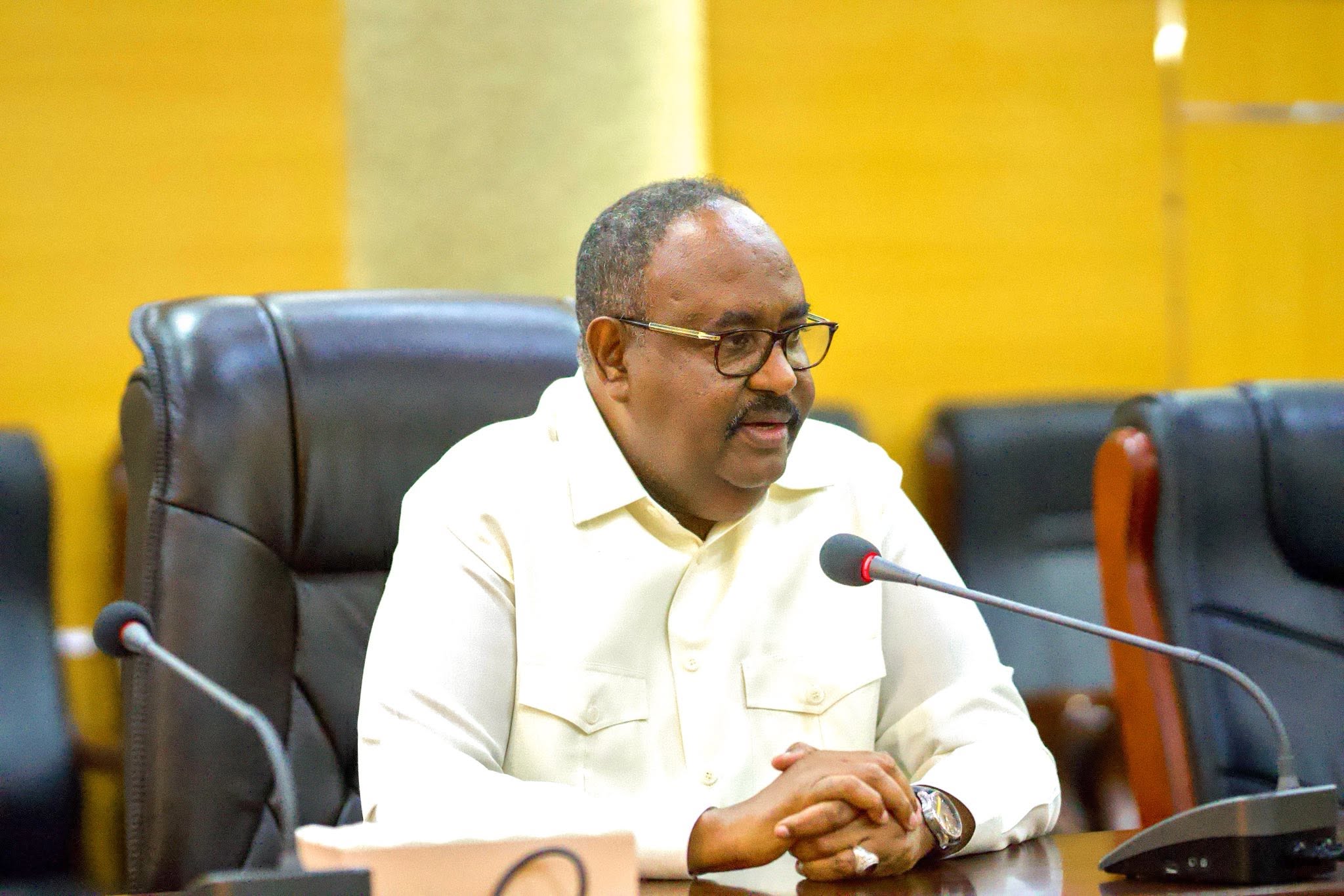
GAROWE, SOMALIA – President Said Abdullahi Deni has warned the clan militias taking shape inside Puntland, and he named the people he believes are paying for them. Speaking in Garowe, he tied the growth of these clan militias to the federal government in Mogadishu and to opposition figures based inside Puntland and abroad. His tone was harder than usual. He also rejected the idea that Puntland is a collection of clans rather than a state.

“We want to defend our cause and our statehood,” Deni said. “Some people say Puntland is clans. That is false. Puntland is a state. The clans came together and they built a state.”
What Deni said about the clan militias
The president went further than a defence of Puntland’s institutions. He issued a direct warning to sub-clans claiming their own forces and to individuals he said still refuse to accept the result of the January 2024 election. Anyone hoping to play a clan card, he said, would not be allowed to do so.
“Whoever wants to scratch a clan card will not be permitted,” Deni said. “Some have long spoken this way, saying by clan that we have troops, that we own such and such a garrison. I will take the road on which Puntland was raised. Those who still cannot accept the election have now emerged.”
Two claims sit inside that passage. The first is that armed groups in Puntland are organising along sub-clan lines and boasting about barracks they control. The second is that these groups are an extension of a political dispute that never closed after the vote. Deni is arguing that both things are one thing.
An election that never settled
Puntland held its indirect presidential vote on 8 January 2024, and Deni won a second term. His rivals disputed the process and several never accepted the outcome. That grievance has now been running for two and a half years, which is long enough for it to become a structure rather than a mood.
Losing candidates in Puntland have historically retired, waited and returned. This cycle broke that pattern. Some rivals kept their networks intact, moved between Mogadishu and the diaspora, and kept arguing that Deni holds power he did not earn. Deni’s answer is that they are now recruiting rather than campaigning.
The charge is serious because Puntland’s stability has always rested on a bargain. Clans supply legitimacy and manpower, and the state supplies command and pay. Standing clan militias break that bargain. They give each sub-clan a veto backed by rifles, and they give outsiders a cheap way to rent influence.
Where these forces lead
Puntland has spent two years accusing Mogadishu of exactly this. Garowe says federal officials have moved weapons into its territory to provoke a civil war, a claim the federal government has never formally answered. Puntland has also warned against federal recruitment drives on its soil. Deni’s latest remarks fold the clan militias into that same story.
The pattern is familiar from the Puntland Security Force dispute, where a unit trained and paid by foreign partners drifted out of Garowe’s chain of command. Clan militias that answer to a paymaster rather than a state hand that paymaster a lever. Puntland argues that Villa Somalia has learned this and is using it. Mogadishu denies destabilising Puntland and says it is building national forces.
Washington appears to share part of Puntland’s concern. When the AFRICOM commander met Hassan Sheikh Mohamud in Mogadishu this week, American officials objected to how arms are being distributed and to federal interference in member states. They did not name the clan militias in Puntland. They did not need to.
Garowe tightens its own house
Deni is not only talking. Puntland’s House of Representatives approved a constitutional amendment proposal on Thursday, passing it 41 votes to none with four abstentions. The vote used Article 139. The special committee behind the text said the changes centre on elections and on Puntland’s democratisation. Deni’s critics will read that timing as convenient. His supporters will call it the opposite of the improvisation they see in Mogadishu.
Puntland’s security ministry has also ordered laser lights and tinted windows stripped from vehicles, following a cabinet resolution. The measure sounds small. It is not. Tinted glass is how gunmen move through Bosaso and Garowe unseen, and the order tells you what the security services expect next.
Deni spent Thursday evening at the Garowe launch of Baadigoobkii Nabadda Geeska Afrika, the memoir by veteran diplomat Mohamed Abdi Afey, praising the book as important for Somalis and the wider region. The contrast was hard to miss. A president talking about peace in the Horn one night and about clan militias the next morning is a president managing two audiences at once.
Why the clan militias matter now
Puntland has built its case on being the federal member state that still works. It fights ISIS in the Cal-Miskaad mountains, runs its own elections and stands with Jubaland against Villa Somalia. That case collapses if armed clan militias grow inside its own borders. Deni knows it, and his warning is aimed as much at donors and neighbours as at the men holding the rifles.
The timing is also political. Western governments are pressing for a national deal before Somalia’s security transition goes further, and they are weighing whether the current federal framework survives at all. In that argument, Puntland trades on order. Every new militia costs it leverage.
Deni offered no amnesty and set no deadline. He simply drew a line and dared people to cross it. Whether Puntland’s security forces can enforce that line is the open question. A state that says it will not tolerate clan militias must first prove it can disarm them. The next few weeks in Bosaso and Mudug will answer that faster than any speech.