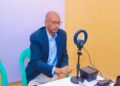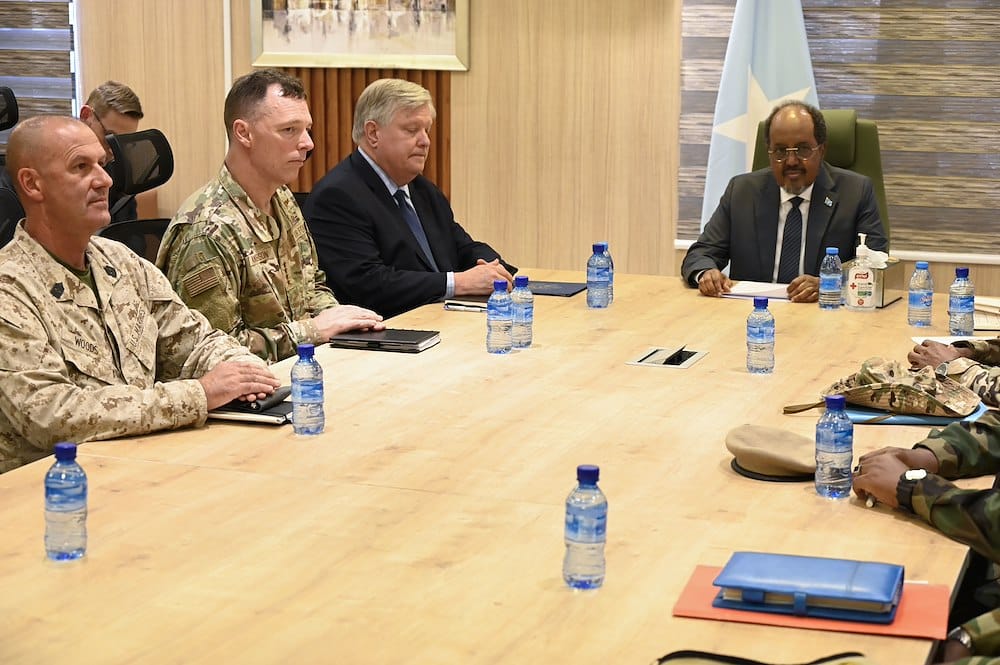
MOGADISHU, SOMALIA – The commander of United States Africa Command has put a condition on American engagement in Somalia, and he said it on Somali state television rather than behind a closed door. If the political infighting continues, General Dagvin R.M. Anderson told Somali National Television, it will be very hard for the United States to stay involved. That is the plainest warning an American commander has given Villa Somalia in years, and the political infighting he described is not a side issue. It is the thing he says could end the partnership.

The interview matters because it removes the deniability. Sources had already said the same message was delivered privately when Anderson met Hassan Sheikh Mohamud at Halane this week. Now it is on the record, in Somali living rooms, from the officer who signs off on the airstrikes.
The condition AFRICOM set out loud
Anderson did not lead with the threat. He began with credit, saying the United States had not turned its back on Somalia and had been committed for several years. He praised the counterterrorism force his command helped build. Then he described the mood in Washington. Officials there ask when Somalia will take charge. They also point to the many other security problems competing for attention.
His conclusion was conditional. If Somalia and its government step up and lead, he said, the United States will continue to be there, because the interest is mutual. If the political infighting continues, staying engaged becomes very hard. Read together, those two sentences are a bargain rather than a promise.
Somali officials have heard warnings before. What is different here is who is speaking and where. A combatant commander does not usually name domestic politics as the obstacle on state television. Anderson did.
The same ground taken twice
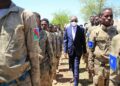
The sharpest passage was historical. Anderson served with special operations in Somalia from 2019 to 2021. He worked with the national army and the Danab brigade to push down the Lower Shabelle river as far as Mubaraq. He returned as AFRICOM commander to find those same towns on the target list again.
The explanation came in one line. The territory was lost, he said, because somewhere the focus on terrorism was not there and it was elsewhere. He did not say where elsewhere was. He did not have to. Somali forces spent much of the past two years deployed against political rivals in the federal member states rather than against al-Shabaab. Puntland and Jubaland have made that complaint since 2024. This is political infighting expressed in troop movements, and it costs towns.
Anderson also drew the line between taking ground and keeping it. Holding territory requires governance, justice and stability, and those are Somali responsibilities. The military can deliver the security piece. It cannot deliver the rest, and political infighting stops the rest from arriving.
Danab is built, and the bill has moved
On Danab he was blunt in a different way. The United States helped build one of the most capable forces on the continent, he said, and that work is finished. Sustaining the brigade, keeping it effective and using it for counterterrorism is now Somalia’s job.
He tied his own resources to the same test. He can justify keeping American assets in Africa while they are used against al-Qaeda and ISIS. If they are used elsewhere for other things rather than the fight against terrorists, he said, he will have a hard time justifying keeping them. Political infighting is the clearest example of those other things. Given the demands on American forces in other theatres, the point is not abstract.
The timing sharpens it further. American funding for United Nations logistical support to the African Union mission stops after December, and troop contributors met in Kampala this week without a replacement. Somalia cannot cover the shortfall, because its budget already depends on foreign grants for most of its resources. Every partner is now asking the same question at once.
What he ruled out
Anderson closed two open files. There are no plans to build an American base in Somaliland, he said, and United States policy remains the sovereignty and territorial integrity of the Federal Republic of Somalia. That will disappoint Hargeisa and reassure Mogadishu. It also takes one recurring rumour off the table without touching the political infighting behind everything else he said.
On operations he reported limited progress. Al-Shabaab has been pushed back from Mogadishu but remains resilient. Work with local forces in the Golis mountains has kept ISIS isolated, an assessment that credits Puntland’s campaign without naming it. On civilian casualties he said credible allegations are investigated. He acknowledged that mistakes have been made and that reparations have been paid. Al-Shabaab, he argued, kills far more civilians and manufactures false claims.
Why the political infighting is the whole story
Every strand of this interview leads back to the same place. Anderson’s message is that American patience is a function of Somali politics, not Somali battlefields. Uganda’s defence minister said something similar at the Kampala summit, telling troop contributors that military operations alone cannot deliver peace and that federal and state governments must talk.
Villa Somalia now faces the same demand from three directions at once. Its own troop contributors, its largest security partner and its domestic rivals are all saying the political infighting has to stop before anything else improves. Puntland has gone further and accused Mogadishu of arming clan militias inside its borders, which is the infighting at its most literal.
Anderson ended with a formula that will be quoted back at Somali leaders for months. The United States, he said, has helped and will continue to help those who are willing to help themselves. That sentence contains its own opposite. Mogadishu has been told what happens if the political infighting outlasts Washington’s patience, and the clock on the funding was already running.