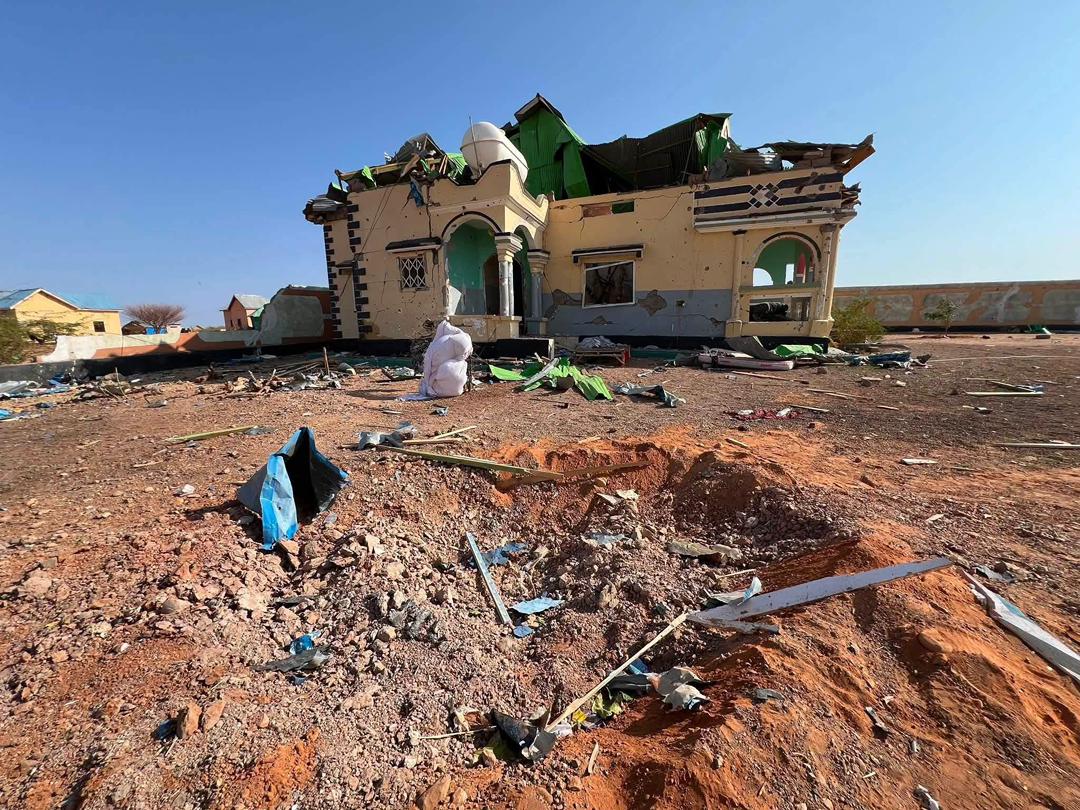
DOOLOW, SOMALIA – An aircraft struck the compound of General Mahad Abdirahman Aden, the former commander of the Somali Custodial Corps known as Taliye Shub, in the Gedo border town of Doolow overnight into Friday 4 September, wounding him and his wife, killing at least three of those around him and bringing down much of the building. Southwest State, the administration of former state president Abdiaziz Hassan Mohamed Laftagareen, named a Turkish fighter aircraft within hours, and by Friday morning neither Villa Somalia nor Ankara had said whose aircraft flew over Doolow or who ordered the mission. A commander who has spent the summer massing fighters outside Baidoa was found from the air in a third region, by an air force that no Somali institution commands and no Somali official will name, which puts a foreign air arm inside the fight between Villa Somalia and its domestic opponents.

A Night Strike on a House in Doolow
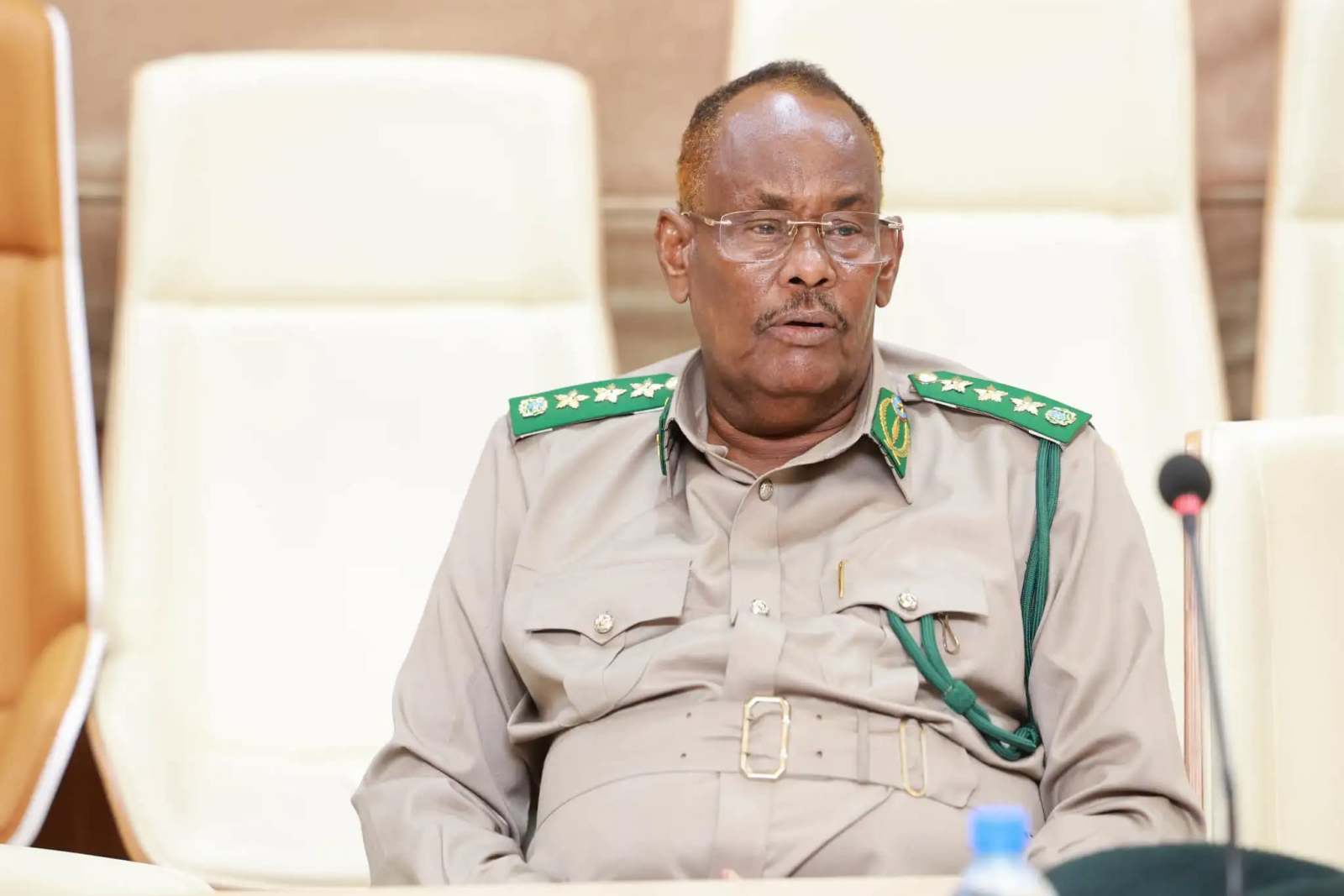
General Mahad was outside the house when the strike landed, resting on a bed in the yard of the compound where he had been staying in Doolow, a position that spared him the worst of the blast. He was cut by shrapnel and falling masonry, his injuries were described in the first accounts from the town as light, and he was carried to the general hospital in Doolow, where his condition was reported as stable. Witnesses said large sections of the residence collapsed under a single heavy explosion, and neighbours in the surrounding streets spent what remained of the night pulling people out of the rubble.
At least three people were killed, identified in reporting from the town as two men close to the general and an Ethiopian woman working in the house, while a separate account carries the Ethiopian woman among the dead and three further people wounded inside the compound. None of those figures has been independently confirmed, and no Somali authority has published a casualty count for Doolow or announced an investigation into what happened there. Ethiopian troops stationed in the town moved in afterwards and secured the perimeter of the wrecked property, and the general remained under their protection through Friday morning. The Southwest account puts the strike at about five o’clock on Friday morning and says the house of the Doolow district commissioner and a residence used by state officials were hit in the same attack.
Doolow lies on the Ethiopian border opposite Dolo Ado, holds thousands of displaced people and the compounds of a dozen relief agencies, and has changed hands before between Jubaland forces and federal troops. The worst of those days came in December 2024, when four people were killed as newly deployed federal units fought their way into the centre of Doolow and lost it again before nightfall. No armed group has claimed the strike, and none of the parties flying over southern Somalia has denied it either. Southwest State named a Turkish fighter aircraft in its statement, the defence ministry in Mogadishu has said nothing about Doolow, and the presidency has said nothing since the news broke overnight.
How a Sacking Put Him in a Target Set
The Council of Ministers stripped General Mahad of the Custodial Corps command in March 2026 and appointed Major General Mohamed Sheikh Hassan Hamud in his place, after which police units were stationed outside his Mogadishu home and his personal protection detail withdrawn. He spent about a week confined there, with officers deciding who entered the house and what food came through the gate, and he said afterwards that the president had turned the machinery of the state on his own household. He is the father-in-law of Laftagareen, who left Baidoa at the end of March as militias backed by the federal government took the city, an operation that Southwest officials said at the time was made possible by Turkish air support.
General Mahad went to Nairobi, came back in the summer, kept the house in Doolow that was hit this week and appeared on the northern edge of Baidoa on 18 July with officers, technicals and a substantial body of fighters, there to organise the campaign to take the city back. Federal statements have counted the men in that campaign as al-Shabaab since the spring, a formulation that moved them into the same column as the insurgency. It has since reached the mouth of Sheikh Aden Mohamed Nur, the Southwest president known as Aden Madobe, whose cabinet designated the forces loyal to his predecessor a terrorist group on 30 August. The defence ministry said on Thursday that its troops were answering an attack mounted by fighters loyal to Laftagareen and by al-Shabaab, placing the two in a single sentence and publishing nothing that connects them.
The Baidoa fighting of Thursday 3 September ran through most of the day, killed at least twelve people by local counts and cost Aden Madobe his head of security, Dahir Moallin Hassan, in street battles across Towfiiq, Bukriye, Baalyaale, Alfaras, Boonkaay and Al-Ahmar. Aircraft were seen over the city while the fighting was underway, with no confirmation of who was flying them, and the airport closed to passenger traffic before the day was out. The method by which the government of Southwest State gets chosen has produced an armed opponent in every cycle since 2018, and that Thursday it produced a target three hundred kilometres to the west in Doolow.
The Aircraft Over Somalia and the Silence Under Them
Somali airspace has carried a run of unclaimed strikes since the middle of August. Aircraft hit the Nugaal coast at Garmaal and Jiifle on 18 and 20 August, killing fishermen whom the first reports called pirates, and Puntland later named Turkish aircraft and said it would hold Ankara accountable for the dead and for the destroyed dhows. Turkish F-16s then flew over the corridor thirty kilometres from Villa Somalia on 31 August, in support of an operation at Basra that the defence ministry announced and never accounted for.
Ankara does not discuss its individual missions in Somalia. Asked about the coastal strikes, its foreign ministry said it had no information indicating that Turkish aircraft were involved. That sentence describes the ministry’s state of knowledge, and two Somali outlets read it as a flat denial while others read it as something well short of one. Turkiye maintains a base and a training pipeline in Mogadishu, flies armed drones from the capital, shares a joint command with the federal government and has never claimed a single strike in the country by name. Somali officials have grown accustomed to the arrangement, and the silence after each mission has become part of what the federal government pays for the air support that keeps its offensives moving.
The target set has moved through three categories in three weeks, from fishermen on the Nugaal coast, to an al-Shabaab position inside the corridor that feeds the capital, to the compound of a dismissed Somali general in Doolow. Every one of those missions was flown in the name of the campaign against al-Shabaab, and every one has ended with a Somali government that will not say what it requested and a foreign air force that will not say what it did. That kind of deniability serves Villa Somalia for about as long as it takes the next state president to work out that the aircraft over Doolow can be sent to Garowe or to Kismayo.
Ankara Becomes a Party to a Somali Political Fight
Somali reporting from Doolow marked the precedent first: this was the first air strike aimed at a senior officer of the federal forces whose quarrel with President Hassan Sheikh Mohamud is political. Air power here has been pointed at al-Shabaab and at Islamic State positions for a decade, and every government that used it said so out loud. A general removed by cabinet decree, held under guard in his own house and never charged has now joined the category of people who can be killed in their compound at night.
Abdalle Ahmed Mumin, secretary-general of the Somali Journalists Syndicate, wrote that a town as far from any front line as Doolow being hit for political reasons leaves civilians, journalists and opponents exposed everywhere in the country. Every armed man currently in an argument with Villa Somalia has watched the same thing happen, and each of them will draw the conclusion that the argument is now conducted from the air.
Ankara built the training pipeline at its Mogadishu base, equips the units that hold the capital, flies the armed drones and shares a joint command with the federal government under an arrangement presented to Somalis as counter-terrorism assistance. Aircraft operating within that arrangement have in three weeks hit fishermen on the Nugaal coast, an al-Shabaab position at Basra and the Doolow household of a state president’s father-in-law. A government that supplies the aircraft, the crews, the intelligence and the command structure in a quarrel between Somali factions is a participant in it, whatever the agreement says.
Puntland has told Ankara it will be held responsible for the fishermen it buried, Jubaland administers the region where this week’s strike landed, and Southwest has now twice accused Turkish aircraft of settling a Somali political dispute by force. Turkish personnel and installations acquire a target value they lacked last month, regional forces acquire an argument for buying whatever can bring an aircraft down, and the mediation the international partners are running loses its premise, since the guarantees President Said Abdullahi Deni and Ahmed Madobe are demanding are guarantees against exactly this. Al-Shabaab, which has said for fifteen years that the government fights Somalis with foreign aeroplanes, has been handed the week’s best recruitment argument.
A State That Can Reach Doolow and Cannot Pay Its Jailers
Around five hundred soldiers of the Custodial Corps blocked the road at the Central Prison in Mogadishu on the same Thursday, in the second such protest by that force, saying they had worked two years without a salary. “We are the ones standing for security, and for two years we have worked for the government without our rights,” one of the soldiers said. Another told reporters that every promise made to them had been broken, and that if their pay did not arrive they would take themselves to the opposition or somewhere else. No ministry answered them that day, and the men were still holding the road when the news from Doolow came through.
The force those men serve in is the one General Mahad commanded until March, and the sequence of the year runs through it. The government removed the commander in the spring, left the soldiers unpaid through the summer, and found the commander from the air in Doolow in September. Salaries are a domestic obligation while the aircraft are a foreign contribution, and the second has been easier for this administration to obtain than the first for as long as it has been in office. Soldiers have mutinied over pay in Mogadishu twice in a matter of weeks, and on each occasion the government has let the protest exhaust itself without answering the claim behind it.
President Hassan Sheikh Mohamud told his own camp this week that talks on the federal election can begin once Hirshabelle and Galmudug have voted on 30 September. President Said Abdullahi Deni and Ahmed Madobe are refusing to travel to Mogadishu until international partners are written into any settlement as guarantors of it, which has stalled the effort to assemble the leaders in one room. Those are the terms of a negotiation that both sides say they want, conducted between men who each command soldiers. Doolow is the same argument settled at night from the air, and every federal member state president who looks at the rubble in that town now has both a price for disagreeing with Villa Somalia and a reason to prepare for the sky.