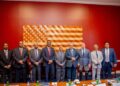

WASHINGTON, UNITED STATES – China warned President Irro on Wednesday 16 September that crossing its line on Taiwan would bring “serious consequences,” while the Somaliland president used a Washington visit to offer American investors access to Berbera, minerals and other facilities and left expanded military access open to negotiation. President Irro said Somaliland would keep Taiwan’s representative office in Hargeisa and welcome Chinese investment only without political conditions. Beijing said Somaliland remains part of Somalia and affirmed the federal government’s territorial claim. The exchange places President Irro’s recognition campaign inside a direct contest between Washington and Beijing, with Hargeisa offering geography and resources to one power while refusing the condition the other sets for engagement.

President Irro Puts Somaliland’s Facilities on the Table
President Irro described the American approach as a reciprocal political exchange. “We are not giving anything for free,” he said in a Washington interview published on Wednesday, adding that Somaliland can offer its facilities and minerals while expecting comparable opportunities from a partner. He identified recognition as the principal objective and said economic cooperation could move alongside it. The proposition covers the port and free zone at Berbera, an 850-kilometre coastline, fisheries and prospective oil, gas and mineral deposits. President Irro did not announce a base agreement, lease, concession or investment contract with the United States.
President Irro kept the military part of the offer negotiable. He said American and Israeli access would be a matter for talks and declined to rule out a future arrangement. The United States already conducts training and security cooperation with Somaliland, while American officers have visited Hargeisa and Berbera without establishing a permanent base. The Washington prospectus was assembled before his arrival, when Hargeisa’s advance delegation promoted the same coastline, mineral inventory and position beside the Bab el-Mandeb. Mogadishu responded with a rival delegation and the claim that agreements covering Somali territory require federal consent.
President Irro has also offered political and military commodities that Somaliland has never exported. He said this month that as many as two thousand Somaliland soldiers could join an American-led force for Gaza if Washington or Israel made a formal request, an undertaking that remains contingent and unfunded. His Washington programme now joins the soldier offer to port access, minerals and maritime cooperation. Israel’s recognition in December 2025 raised Somaliland’s diplomatic standing without producing a second recognising state, leaving Washington as the government President Irro now treats as decisive. Each item can be discussed before recognition, giving American officials several relationships short of the sovereign decision Hargeisa wants.
China Answers President Irro Through Somalia
The Chinese embassy in Mogadishu issued its response after President Irro said Somaliland stands with Taiwan, Israel and the United States against terrorism and coercion. The statement dated 16 September accused the Somaliland authorities of violating the one-China principle and infringing Chinese sovereignty. It warned that crossing the line on Taiwan would carry serious consequences, without specifying diplomatic, commercial or other measures. Beijing then joined the Taiwan dispute to Somalia’s territorial claim, declaring Somaliland an inalienable part of Somali territory and supporting the federal government against separation.
President Irro answered the underlying condition before the warning was issued. Taiwan’s representative office will remain in Hargeisa, he said, because the relationship preceded his administration and Somaliland had decided to keep it. China would still be welcome to invest if it came without conditions. That formula asks Beijing to separate commerce from the political demand at the centre of Chinese foreign policy. Somaliland and Taiwan established reciprocal representative offices in 2020 and have since expanded cooperation across health, agriculture, technology and training, giving President Irro a working relationship that has produced visible programmes, resident officials and ministerial contacts without formal United Nations recognition.
China’s reply supplies Mogadishu with an unusually explicit external diplomatic endorsement during President Irro’s current Washington visit. The federal government objects to President Irro offering Berbera and Somaliland’s resources because it regards both as national property; Beijing objects because Hargeisa maintains relations with Taipei. Their positions meet on the assertion that Somaliland has no sovereign authority to choose those relationships. President Irro is using the same Taiwan tie as evidence that Hargeisa can sustain relations with a government Beijing seeks to isolate. The diplomatic asset that helps his American argument therefore carries a defined Chinese cost, and the 16 September statement is the first public invoice presented during this Washington visit.
President Irro Takes the Offer to Congress
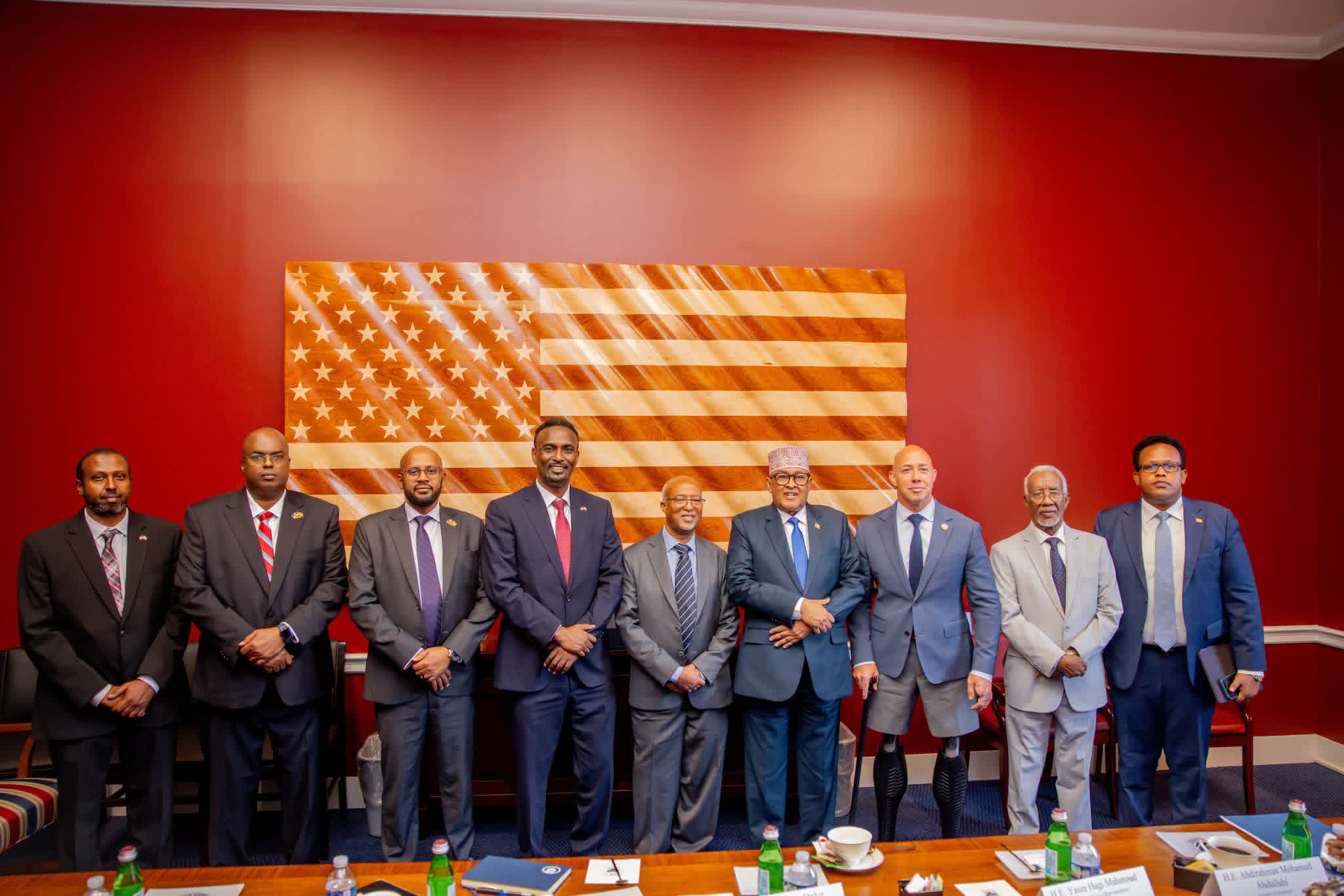
President Irro spent the second day of his Capitol Hill programme in separate meetings with Representative Brian Mast, chairman of the House Foreign Affairs Committee, and Senator Mike Rounds. The announced agenda covered maritime security, the Red Sea, trade and investment. Rounds joined a 2022 bill requiring reports on assistance to Somaliland and a study of a security partnership without recognising independence. Mast introduced a broader State Department bill last year containing provisions for a representative office in Hargeisa and separate travel advice for Somaliland.
The text before the House illustrates the space available below recognition. Section 305 of House bill 5300 asks the secretary of state to consider a Hargeisa office and to distinguish travel warnings for Somalia and Somaliland. The Foreign Affairs Committee reported the bill to the House in September 2025, but its Somaliland provisions have not become executive policy. Neither step settles sovereignty, yet both would give American officials an administrative relationship with Hargeisa that no longer runs entirely through Mogadishu. President Irro can therefore leave Washington with changes in access, finance or official contact even if the White House declines the recognition request. His offer has been structured to produce smaller agreements from the same package.
Washington nominated Devin Kennington as ambassador to Somalia on 14 September, the day President Irro addressed an American policy audience, leaving the next envoy facing relationships already conducted through Hargeisa and Bosaso. China has now made the Somaliland side of that file part of its own contest with the United States. President Irro has offered facilities and resources, maintained Taiwan and asked Congress for deeper ties in the same week. No American agreement has been signed, and Beijing has not named its consequences. Those positions are now public before any bargain has been concluded, with President Irro’s Washington hosts aware that Beijing has attached a cost to the Taiwan relationship.