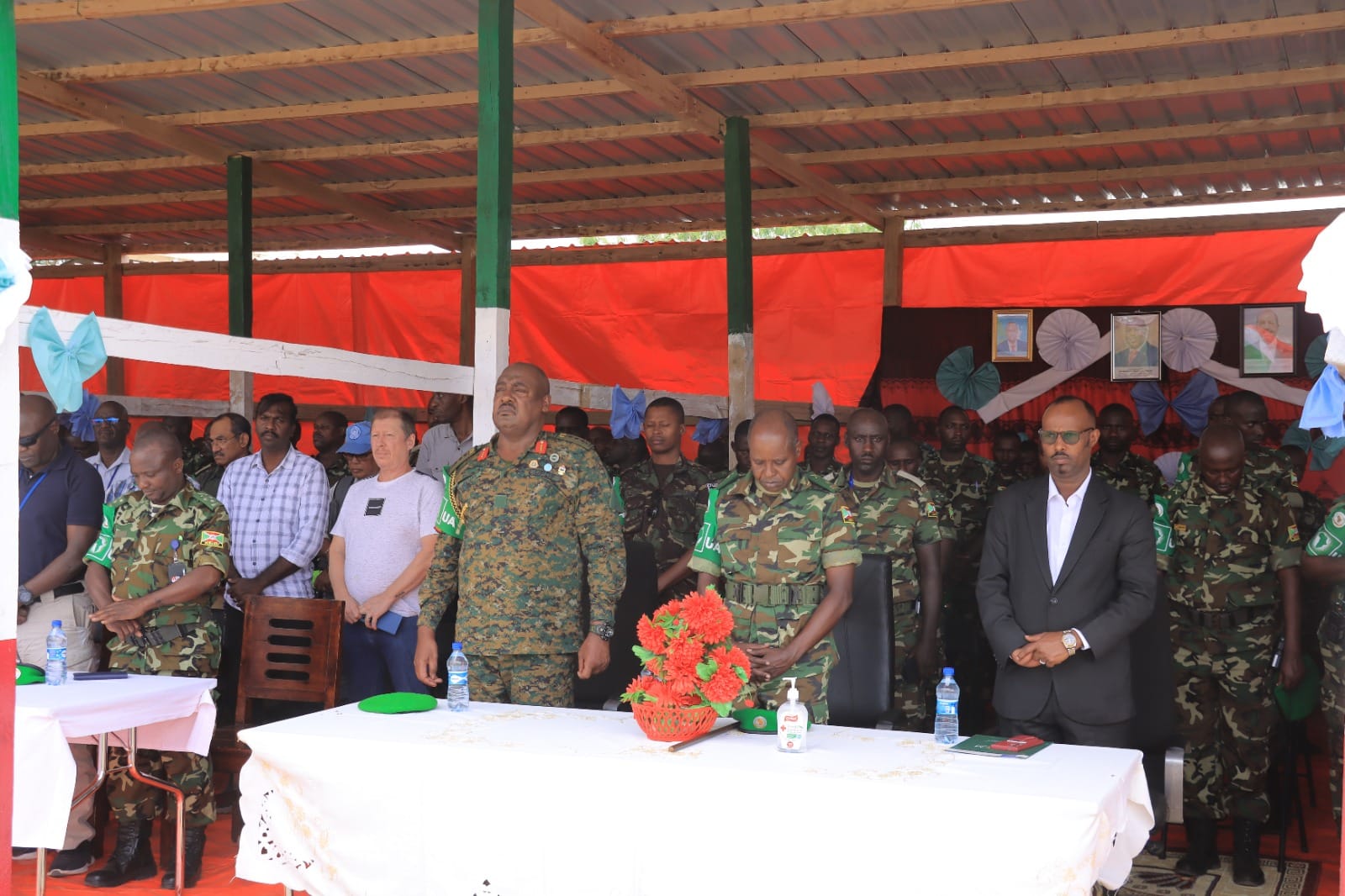
MOGADISHU, SOMALIA – Burundi is making urgent efforts to bring its troops home from Somalia before the African Union mission’s mandate expires on 31 December, according to a report carried on Thursday 12 November, and the contingent it would withdraw has its headquarters in Jowhar and its positions in Middle Shabelle, the corridor north of the capital where Egypt is reported to be preparing a base under a bilateral deal. The report gave no numbers, timetable or bases, and neither the federal government nor the mission had answered it publicly by Friday. It arrived ten days after Uganda declared the withdrawal of its bilateral force “effective immediately”, two days after Africa Command confirmed it had left Baledogle, and as the Future Council refused the talks President Hassan Sheikh Mohamud had called for Saturday 14 November, after sending his army and intelligence chiefs to call on his rivals.

A Contingent Kept On Until Egypt Arrived
Burundi has had soldiers in Somalia since 2007, when they followed Uganda into Mogadishu under AMISOM, and they stayed through the mission’s two renamings into ATMIS and then AUSSOM. The present quarrel began in late 2024, when Mogadishu allotted Burundi roughly a thousand places in the new force; Bujumbura asked for at least two thousand and said a smaller contingent would leave its soldiers exposed to al-Shabaab in Middle Shabelle. Talks broke down in February 2025, and Egypt, allotted 1,091 troops, was expected to take Burundi’s place. Under the same plan every contributor was cut back, with Uganda set at 4,500 soldiers, Ethiopia at 2,500, Djibouti at 1,520 and Kenya at 1,410.
The African Union extended the Burundian presence in January 2025 and again in July 2025, when the Peace and Security Council cited “gaps” in deployments caused by delays from other contributors, particularly Egypt. By the turn of the year the Council had asked the AU Commission to pause the repatriation of Burundian troops altogether until Cairo’s contingent landed, to avoid what it called a security vacuum, and about 1,900 Burundian soldiers were still in the country. On 12 February 2026 the Council, meeting at ministerial level, asked the United Nations to facilitate the repatriation of Burundi troops “coinciding with the deployment of Egypt’s contingents”.
Security Council resolution 2809 of December 2025 extended the mission to 31 December 2026 with a ceiling of 11,826 military and police personnel, and the African Union was still appealing in February for the sustainable, predictable and multi-year financing it has never secured for the mission. Burundi’s soldiers depend on the UN support office for rations, fuel, transport and medical care, and the report of 12 November says they will need the same office to carry them out of the country. Notably, the American money behind that office now runs on a twelve-month drawdown agreed in September, so Burundi is planning its exit while the support office plans its own.
Burundi’s Ground Between Jowhar and Mogadishu
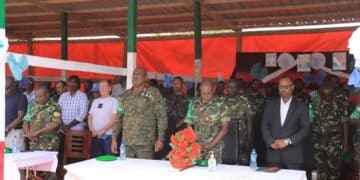
The Burundian contingent is commanded from Jowhar, the Hirshabelle capital, where Brigadier General Michel Ndenzako marked his country’s independence day with the force commander, Lieutenant General Sam Kavuma, on 1 July and thanked the leaders of the federal government and Hirshabelle for their support. Its soldiers have operated along the stretch of Middle Shabelle that carries the road and the river north from Mogadishu, and in 2025 President Hassan Sheikh Mohamud said Egyptian forces would deploy in that same area, between Balcad and Mahaday. Burundian troops gave the forward base at Bio Cadale to Somali forces in September 2023, and al-Shabaab later took it.
In February 2025 al-Shabaab’s counteroffensive retook Biyo Adde and Mirtaqwo, briefly entered Balcad, about thirty kilometres from the capital, and on 16 April 2025 took Adan Yabaal, which the army had captured in December 2022. Reinforcements for that front were drawn from Hiiraan, Galgaduud and Mudug, and local reporting at the time described the army’s withdrawal from several of those towns as a disorganised retreat. The Somali National Army is the force that would inherit Burundi’s positions if no foreign contingent takes them.
On 25 October regional reporting said Cairo now plans to deploy first under its bilateral agreement with Mogadishu and move about a thousand personnel into the AU mission later, with a tactical headquarters at Ceelcade near the old Cisiley airfield, in an area Burundian troops currently hold. The same reporting said the Burundians had not been formally told of the arrangement, would not operate under a bilateral command structure, and were ready to leave once replaced, while the AU had not said how a bilateral Egyptian force would coordinate with its own mission. Neither Cairo nor Mogadishu has confirmed the Ceelcade site. Egyptian officers had met Somali commanders in Mogadishu on 15 September, and a delegation called on Defence Minister Ahmed Moallim Fiqi on 20 September.
Three Exits in Two Weeks
On Friday 30 October the first 109 Ugandan soldiers flew out of Mogadishu, and on Monday 2 November the Uganda People’s Defence Forces said the withdrawal of the troops they keep in Somalia under a bilateral arrangement was effective immediately, with the AU battalions to follow by the end of 2027. Somalia’s state minister for foreign affairs, Ali Omar, said that day that “things are not dire now, but it could create problems if their troops suddenly pull out”, and the federal government has not named the units that will take over.
The AU mission had already moved its own troops to cover part of the Ugandan gap. In a letter dated 31 October it told the UN support office that its Sector 1 troops were leaving the Barawe sub-sector to take over four Lower Shabelle positions the Ugandan bilateral force was vacating, which it called “very critical to Mogadishu security”, and asked for Barawe to be recorded as a non-mission position. The letter tied the move to the rotation of Ugandan Battle Groups 45 and 48 in November. Meanwhile, on 10 November Lieutenant General John Brennan of Africa Command confirmed that American forces had left Baledogle airfield, the Danab training base, and called the decision economic.
On 1 July Washington reportedly told the African Union it would stop funding the UN support office, whose budget runs to roughly half a billion dollars a year, after the end of 2026, and in September it reportedly agreed instead to a twelve-month UNSOS drawdown beginning in January 2027. The office opened an auction of its vehicles and heavy equipment on 6 August, and Uganda’s army chief has said its support has already fallen by a quarter. The office feeds, fuels, moves and treats every AU soldier in the country, Burundi’s included. Burundi, by the account of 12 November, needs that office to get its soldiers home at all. The African Union is consulting the remaining troop contributors on a roadmap and on long-term funding for the mission after December, and it has not published either.
Generals Sent to the Opposition
President Hassan Sheikh Mohamud spent Monday 9 November in Jowhar, the town that houses Burundi’s headquarters, opening new buildings for the Hirshabelle parliament and the regional security ministry and urging lawmakers to protect unity. In Hiiraan, the state’s other region, Hawadle fighters seized government facilities in Beledweyne on 30 October, groups of Hawadle soldiers have left federal ranks since, and on 8 November President Hassan Sheikh Mohamud offered to move the Hirshabelle capital to Hiiraan, an offer Abdullahi Sanbalolshe rejected. On Thursday 12 November the Hawadle invited every clan in Hiiraan to a consultative forum on the region’s future.
The army commander, General Ibrahim Mohamed Mohamud, and the NISA director, Mahad Mohamed Salad, sat with Somali Future Council politicians at the residence of former Prime Minister Mohamed Hussein Roble ahead of the forum Villa Somalia called for 14 to 18 November, and the Nabad iyo Nolol party said on 12 November that the armed forces commanders had also called on former President Mohamed Abdullahi Farmaajo at his home, carrying the president’s message about the conference. On Saturday 14 November the Future Council said it would not attend talks at Villa Somalia and asked for international mediation, while Nabad iyo Nolol and the National Unity Coalition of former Prime Minister Omar Abdirashid Ali Sharmarke agreed in principle to take part.
In the past fortnight the national security adviser, Awes Hagi Yusuf, has said only that the Ugandan departure is limited to the bilateral force, and the federal government has said nothing about who will hold its positions, nothing about the Baledogle departure and nothing about the report on Burundi, while sending its two most senior security officers to negotiate the political calendar. Al-Shabaab is reported to be watching the dispute between the government, the opposition and the member states for openings, and its last campaign in Middle Shabelle reached Balcad. The Burundian commanders, by the regional reporting of late October, had not been formally told of the Egyptian arrangement at all. On Monday President Hassan Sheikh Mohamud opened a parliament building in Jowhar, a town whose African Union garrison belongs to a government now looking for the way home, and Burundi has not said when that garrison will leave.