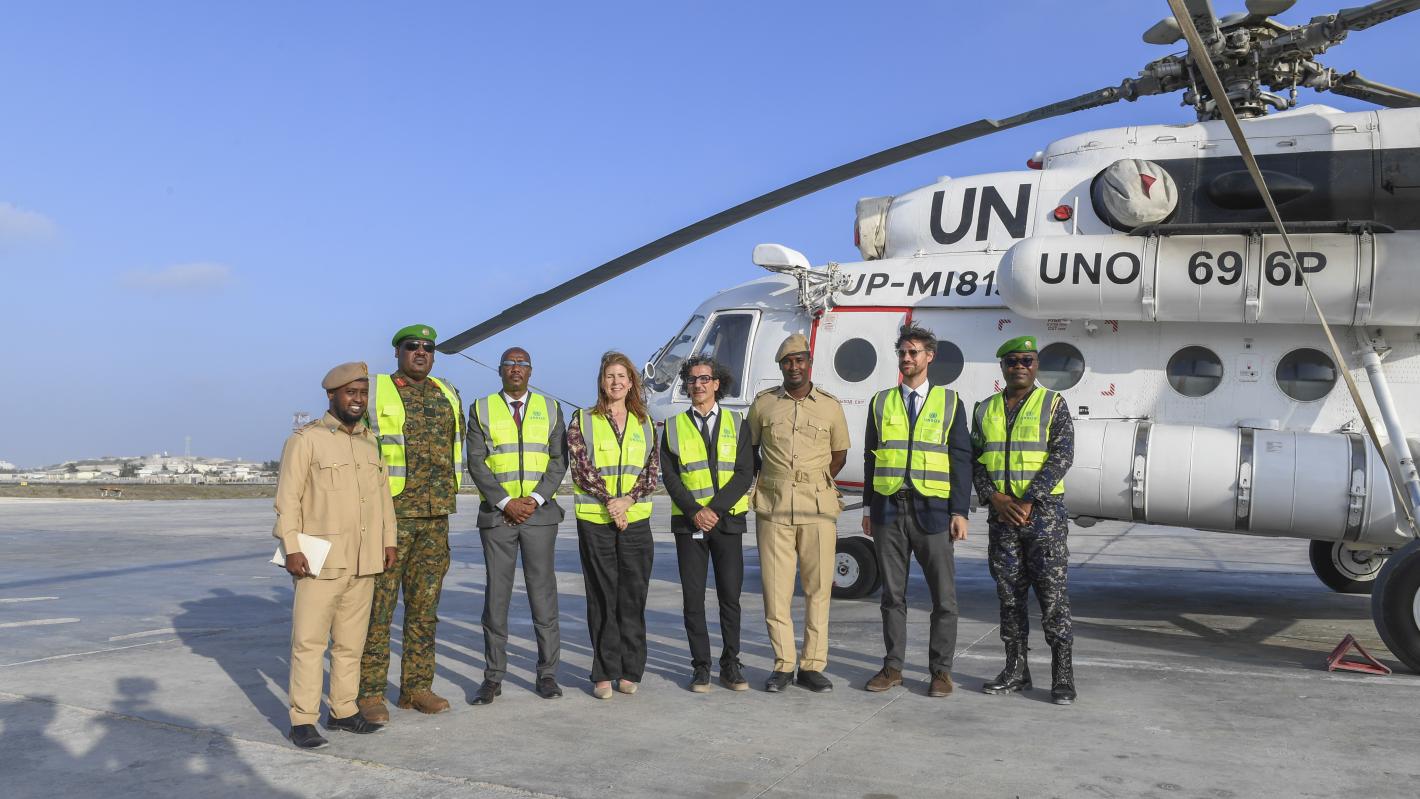
MOGADISHU, SOMALIA – The United States has reportedly offered a twelve-month UNSOS drawdown after the current authorisation expires on 31 December 2026, cutting in half the longer transition sought by the African governments whose soldiers depend on the office. The reported non-paper would keep UNSOS open through December 2027 and then move directly into liquidation, without committing Washington to a final position. Ten staff contracts reportedly ended on 10 September, an auction of vehicles and heavy equipment opened on 6 August, and Uganda’s army chief says support has already fallen by a quarter. A year has entered the negotiation after personnel and equipment were put on a timetable to leave.

The UNSOS Drawdown Started Before the Offer
Washington reportedly notified the African Union on 1 July that American support for the mission’s logistical structure would end on 31 December. Ten civilian members of the joint African Union and United Nations information team were subsequently told that their contracts would finish on 10 September, with further reductions expected. Vehicles, generators, medical equipment, prefabricated accommodation and heavy machinery had already entered an auction process opened on 6 August. The UNSOS drawdown reached AUSSOM first through contracts and procurement, more than a month before the reported twelve-month concession appeared. Staff who have left and equipment already sold will be missing from any transition agreed in New York.
General Muhoozi Kainerugaba told the troop contributors in Kampala on 29 July that UNSOS support had already been reduced by twenty-five percent. The office is authorised to sustain 11,862 AUSSOM personnel, including 680 police, up to 85 civilians and as many as 20,900 Somali soldiers and police engaged in coordinated operations. Its package covers food, water, fuel, medical infrastructure, casualty evacuation, transport, engineering, communications and equipment repair. When those services contract, ammunition moves less reliably, damaged vehicles remain idle and casualties spend longer waiting for evacuation. General Muhoozi’s figure described reductions already made to the operations supporting the mission’s largest contingent in Somalia.
President Hassan Sheikh Mohamud told graduates at Xananbuure on 16 August that Somalia was ready to carry its security and that African soldiers should receive flowers before leaving. Defence Minister Ahmed Moalim Fiqi later dismissed comparisons with Afghanistan, while the national security adviser told the same conference that AUSSOM would remain. The readiness claim was issued as the support system was cutting contracts and selling equipment, and Puntland and Jubaland did not attend the conference that made it. No Somali budget, African Union contractor or bilateral arrangement has been announced to replace the services disappearing during the UNSOS drawdown.
Twelve Months Against the Eighteen to Twenty-Four
Burundi, Djibouti, Egypt, Ethiopia, Kenya and Uganda met with Somalia in Kampala from 29 to 31 July and asked the Security Council for eighteen to twenty-four months of uninterrupted support. Their UNSOS drawdown request tied withdrawal to milestones, stronger Somali institutions and an orderly transfer of responsibility. The reported American paper offers twelve months beginning after the current authorisation expires, followed immediately by liquidation, and reportedly rules out the longer period. Britain, the Security Council penholder on Somalia, will have to draft a mandate acceptable to the government paying the decisive share of the bill and to the governments supplying the soldiers who use it.
Uganda deploys about 4,500 personnel inside AUSSOM and roughly 2,000 more under a bilateral arrangement, giving it the largest foreign military presence in Somalia. General Muhoozi has said every Ugandan soldier will leave by 1 August 2027, although no cabinet or parliamentary instrument has formalised his announcement. If the reported US calendar survives negotiations, the UNSOS drawdown would continue for five months after Uganda’s deadline, serving a mission whose largest contingent may already have departed. The Ugandan announcement placed an end date on a deployment begun in March 2007; the reported American paper gives the logistics supporting that deployment another date of its own.
Egypt entered the mission this year, while Burundi had already disputed the size and location of the contingent offered to it. Ethiopia and Kenya hold sectors connected directly to their border security, and Djibouti has carried positions in Hiiraan through repeated al-Shabaab offensives. Aircraft, warehouses, medical contracts and maintenance systems could be transferred during the reported UNSOS drawdown, but the paper names no replacement provider. No transfer budget has been agreed, and no African logistics command currently delivers the full UNSOS package across Somalia. The calendar gives negotiators twelve months to identify an operator, budget and command structure for assets already being dismantled.
A Budget Approved for an Office Being Closed
The United Nations General Assembly has approved $481 million for UNSOS for the financial year ending 30 June 2027. The reported UNSOS drawdown would begin on 1 January and finish at the end of December, leaving the existing appropriation to cover only its first six months. That budget pays for aviation, medical evacuation, rations, fuel, engineering and other support delivered to AUSSOM and designated Somali forces. The reported paper contains no appropriation for July through December 2027. A second budget decision would therefore fall halfway through the transition, when aircraft contracts, warehouses and equipment would already be moving toward liquidation or an operator that has yet to be named.
AUSSOM’s separate annual requirement has been estimated at about $190 million, while pledges have previously fallen near $120 million. The $481 million appropriation covers logistics, leaving the troop reimbursement gap under a separate funding arrangement. The Security Council has authorised both AUSSOM and UNSOS support only until 31 December 2026. According to the account of the American paper, Washington wants resources redirected toward security priorities with more immediate US relevance. The reported UNSOS drawdown would give Somalia another year to dismantle the support office while the mission it serves continues searching for the money required to keep soldiers in the field.
Basra, about thirty kilometres from Villa Somalia, has changed hands between government forces and al-Shabaab more than a dozen times since 2011. The latest federal operation followed six days of fighting there, while additional federal units have been deployed around Baidoa in the confrontation with the removed South West leadership. Both fronts draw on the fuel, transport and evacuation services now being reduced. The reported twelve-month UNSOS drawdown would keep part of that system operating through 2027, but it supplies no decision on whether the forces using it will be assigned to al-Shabaab or to Somalia’s internal political war.