EYL, SOMALIA – The MV Lutuf and its ten crew have been released after a payment of two and a half million dollars, according to officers in the Puntland security forces with knowledge of the negotiation, ending a seizure that began off Eyl on 17 August. The federal government announced the same release on Saturday as a military success, crediting Turkish naval forces working with the Somali army, and its account mentions no money. The men who boarded the Cameroon-flagged freighter had asked for two million, and the figure that moved it exceeds that demand by half a million after eleven days in which drones killed thirteen people along the Eyl and Nugaal shoreline. Puntland’s own government warned five days ago that ransom payments would hand pirate groups the money and the motive to keep going, and the cash reached that coast anyway.

What the Payment Bought Off Eyl
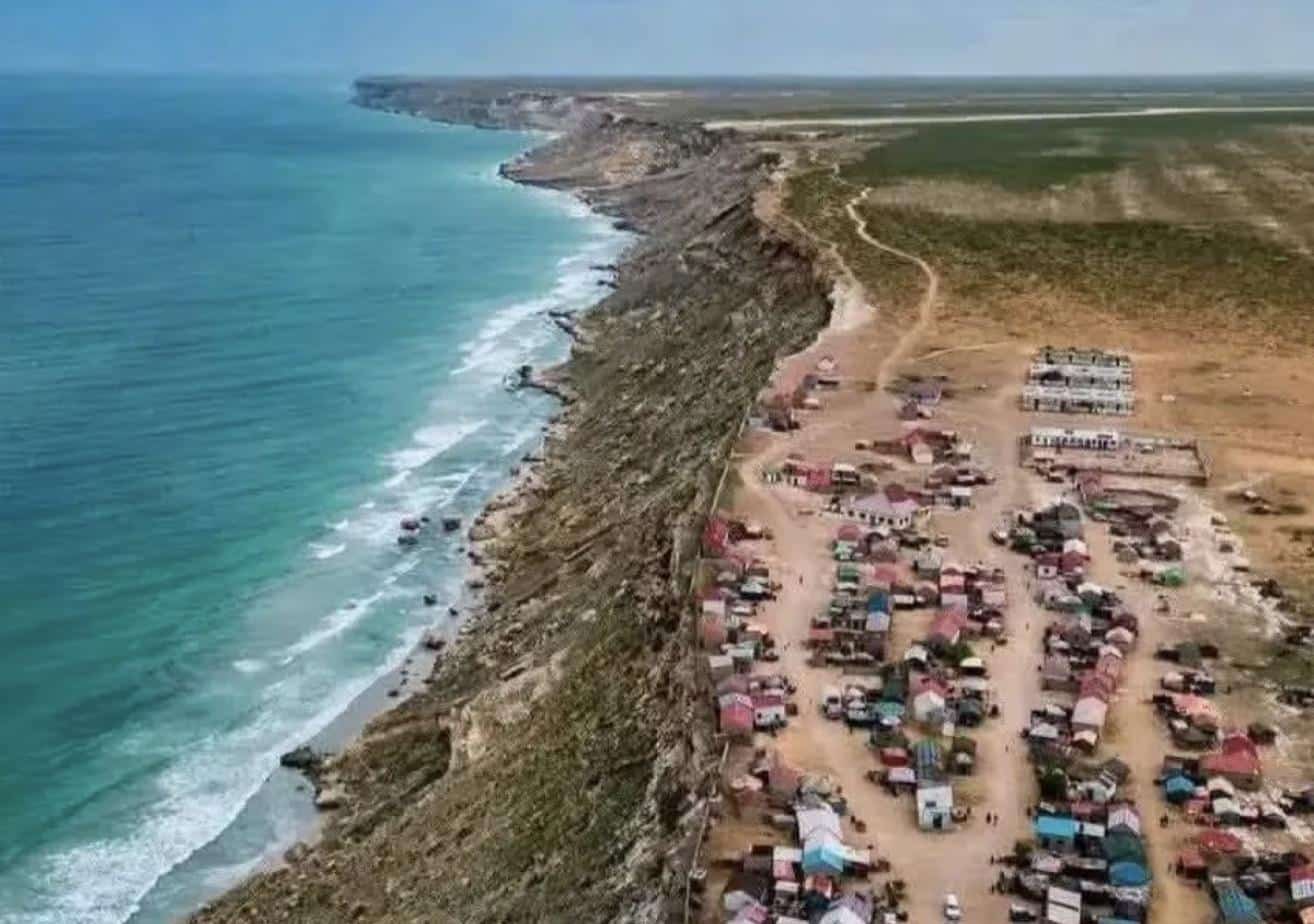
The account from the Puntland security forces is precise on the essentials and silent on the mechanics. The vessel and all ten crew came out intact, among them six Indian nationals, one Turkish national, one Georgian and two Serbian security guards who had been aboard since the ship left Tekirdag on 23 July for Dar es Salaam. The freighter had been boarded roughly three and a half nautical miles off Marraya, in Eyl district, by eight armed men, then walked north along the coast and anchored off Jiifle while the talking went on ashore. Officers describe the settlement as concluded and the payment as delivered. Mogadishu’s version of the same morning credits a Turkish naval operation carried out with the Somali army, carries no figure and no intermediary, and the owner has said nothing in public about either account.
The cargo explains the pace of the whole affair. The Lutuf was carrying Turkish weapons along with communications and satellite equipment consigned to the training command Turkiye runs in Mogadishu, which made the seizure a matter for a foreign government within hours and made the ship worth considerably more to its captors than the tonnage on the manifest. Ankara demanded its release almost immediately. Consequently the negotiation ran under a clock that none of the parties could ignore, and the price moved accordingly, because a shipment of arms sitting at anchor off the Eyl coast is a diplomatic problem, and diplomatic problems in this market are billed at a premium.
The half million between the demand and the settlement runs against the pattern. Ransom talks off this coast have historically closed below the two million dollars first demanded in cases like this one, since owners and insurers hold time and the hijackers hold a wasting asset. Eleven days of strikes left the men on the deck holding a stronger hand, and the final price is the measure of it. Whatever the drones were meant to achieve on the shoreline, the market read them as a reason to charge more.
The Strikes That Freed Nobody
The military answer arrived within a day of the seizure and continued for a fortnight. Aircraft struck the Eyl and Nugaal coast from 18 August, killing thirteen men described in the first reports as a pirate supply network, and struck again at Jiifle in Godobjiran district on 23 August after the Lutuf was moved to that shoreline. Counts from the last strike run between seven and nine. A resident who reached the site described eight bodies too badly burned to identify, and said some of the young men had been known locally as fishermen. Garmaal buried its dead under the same description, and the first accounts calling them pirates did not survive contact with the families.
No government has yet named the air force that flew any of it. The federal state minister for defence, Omar Ali Abdi, broke five days of silence on 22 August to say that Mogadishu had prior knowledge of the operation and that the federal government is the authority legally competent to license anti-piracy work in Somali waters, promising a comprehensive report while identifying no vessel, no aircraft and no flag. Puntland’s information ministry replied that it had received no official details, no confirmed casualty figure and no explanation, and opened its own investigation. That promised federal report has still not appeared. The same government presented Saturday’s release as a joint success for Turkish naval forces and the Somali army, again without naming the aircraft that flew over Nugaal, and the negotiation officers on the coast describe is absent from that telling.
The sequence leaves the strikes carrying a heavy bill and an empty result. Thirteen dead along the Eyl and Nugaal coast, a burned site at Jiifle, families insisting their sons fished for a living, and a ship that sailed only once the money moved. Puntland demanded an account from the warships off its shore weeks ago and has received none, and the campaign flown over its waters ended with precisely the outcome its president has said foreign firepower would never deliver.
Puntland Named the Price Before It Was Paid
The warning came from Puntland’s Ministry of Fisheries and Marine Resources on 24 August, five days before the money changed hands. Paying ransoms, it said, would give pirate groups the resources and the motivation to continue and would encourage new groups to enter the trade. The ministry went further, saying preliminary information gathered by local agencies indicated that outside groups were attempting to revive individuals and networks previously linked to piracy by offering them financial incentives, and that Puntland was investigating and would act against anyone found to be involved in maritime security offences. It went out while the Lutuf still lay at anchor up the coast from Eyl.
The same statement asked shipowners, shipping companies and insurers whose vessels face hijacking to cooperate with Puntland’s authorities, which is the mechanism that has actually worked along this coast before. Puntland ran the campaign that broke the last piracy wave, holds the shoreline from Eyl to Bareeda where these boats launch, and has the police, the prisons and the courts that put the previous generation of hijackers away. Furthermore, a settlement negotiated over its head, funded from abroad and delivered onto its beaches bypasses every part of that machinery, while leaving the same administration to police whatever the money sets in motion.
The consequences are already legible in the figures gathered along the coast. Somali groups have attacked thirteen vessels this year against five in the whole of 2025, hold more than ninety crew, and are keeping at least five ships, among them the Honour 25, the Eureka Asana, the Seamull seized on 20 August and the Sward, which was itself used as a mothership to take another vessel. Each of those hulls carries a crew whose owners are now watching what the Lutuf settlement did to the going rate. Two and a half million dollars arriving at Eyl in that environment works as a recruitment poster for every coastal village with idle boats and unemployed young men, and the crews watching the skiffs go out will have priced their own next voyage by the weekend.
The Pretext Named at Garacad
President Said Abdullahi Deni put the political reading of all this on the record at Garacad the day before the release. Foreign countries, he said, are using the piracy resurgence as a pretext to put forces on Puntland’s water and take what lies beneath it. “The intention is to claim that Puntland has failed to defend itself against piracy, then deploy forces to our coast and extract our resources,” he told the gathering, adding that the public cannot accept civilians being killed during counter-piracy operations and that Puntland is capable of doing the work without foreign military intervention. He recalled the earlier era of international patrols and said Somalia’s marine wealth was stripped while those fleets were on station off Eyl and the wider coast.
The Lutuf has handed that argument a case study with dates attached. The strikes were flown by someone nobody will name, over territory whose administration was told nothing, killing men whose families dispute what they were, and the crisis they were meant to end was settled by a wire transfer. Ankara’s stake was never hidden, since the cargo was its own equipment bound for its own trainees, and its answer to Puntland’s earlier accusation over the coastal dead was to cite the joint command it shares with Mogadishu. Puntland holds both governments in that arrangement responsible for the fishermen it has buried.
What remains on the water is a coast that has now learned what a foreign-consigned cargo is worth. The strikes established that men holding a ship can be killed at sea while the ship stays exactly where they left it, and the settlement established the price of moving it. Puntland asked to be dealt with as the authority on its own shoreline and was answered with airpower it never sanctioned and a payment it publicly opposed, and the report Mogadishu promised is still owed while the money is already ashore at Eyl.