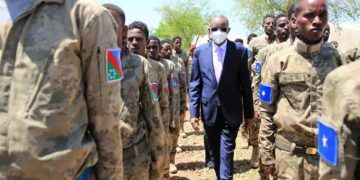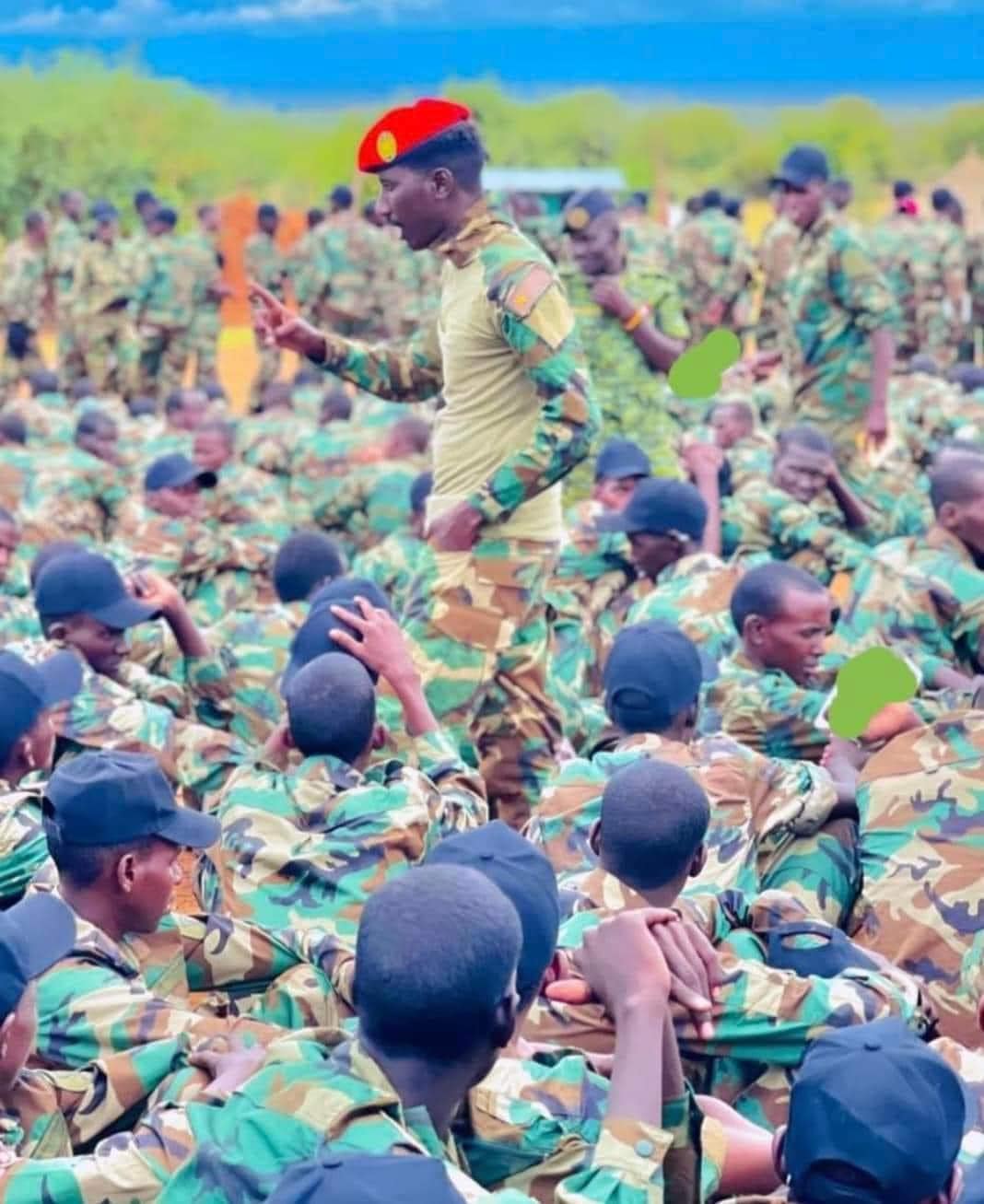
MOGADISHU, SOMALIA – A short video has put Somalia’s most vital partnership under strain. The clip spread across social media late last week. It shows men in Somali National Army uniforms stepping on the American flag. Within a day, the defence ministry had detained the soldiers and opened a probe. The US Embassy in Mogadishu then issued a blunt warning: anti-American acts harm a bond built on billions of dollars in aid. Somalia runs its war on foreign firepower and foreign money. So the American flag affair could hardly have come at a worse time.

An American Flag Video the Government Could Not Ignore
The footage spread within hours, and the defence ministry moved with rare speed. Kaab TV reported on July 11 that the men filmed trampling the American flag were in custody. Raxanreeb put the arrests at several and said the ministry had released their names. A formal probe is under way. Officials also promised legal steps against anyone found responsible.
The ministry left no room for doubt. It called the conduct “unacceptable” and said it did not reflect “the values, discipline, or official position of the Somali National Army or the Federal Government of Somalia.” The men, it insisted, had acted on their own. Somalia “remains committed to its longstanding partnership with the United States,” the statement added. That speed tells its own story. Villa Somalia knew at once how much damage a stomped American flag could do.
The embassy replied on July 12 with praise wrapped around a threat. It welcomed the government’s “quick response and decisive actions.” Yet it reminded Mogadishu that “the United States has provided billions of taxpayer dollars in assistance to Somalia,” much of it for the fight against the militants who target Somali civilians.
The sharpest line came last. “Malfeasant actors” who seek to tarnish ties with the United States “harm the Somali people and must continue to be held accountable,” the embassy said. In plain terms, Washington framed the American flag video as an attack on the partnership itself, not a barracks lapse. Moreover, Raxanreeb reported that the embassy warned such acts could damage strategic ties between the two countries.
The Worst Possible Moment for Mogadishu
Timing turns an embarrassment into a threat. In early July, leaked papers showed Washington plans to block UN funding for the African Union mission from next year. Officials fear that move would end the roughly 12,000-strong force. Meanwhile, Mogadishu is already pleading for the money that keeps its front lines manned. Every dollar now comes with more questions attached. Soldiers filmed grinding the American flag underfoot hand ammunition to every skeptic in Washington who asks why the aid should continue.
The political backdrop makes the optics worse. President Hassan Sheikh Mohamud claims a mandate to May 2027 under a disputed charter change, while the opposition says his term ended in May 2026. As The Somali Digest has argued, al-Shabaab’s offensive feeds on Mogadishu’s political chaos. A government at war with its own regions and its own legitimacy cannot afford to insult the patron paying for its survival.
The irony is hard to miss. Two days before the American flag video triggered arrests, US aircraft were striking al-Shabaab on Mogadishu’s behalf. AFRICOM confirmed on July 10 that it had hit the group on July 8, about 90 km northwest of Kismayo, jointly with the federal government. Such strikes remain the sharpest edge of Somalia’s war. The Danab commandos, built with American money and training, carry much of the raiding in the south.
Remove that edge and the picture darkens fast. Al-Shabaab has already reversed two years of army gains in central Somalia. Analysts also warned the group would gain the edge over the national army as foreign support receded. Every drawdown so far has proved the pattern. So the question is not whether Somalia can afford to lose American backing; it is how fast the front would break without it.
A Partnership Running on Thin Goodwill
The swift arrests will probably contain this episode. Washington got the arrests it wanted, and Mogadishu got to display discipline it rarely shows elsewhere. Yet the deeper damage lies in what the images confirm. American taxpayers fund, train, and arm the very force whose members trampled the American flag for a social media crowd. However sincere the apology, that picture will outlast the probe.
The forecast is grim for Villa Somalia. Goodwill in Washington is thinner than at any point since the federal revival, and the funding fight will sharpen through the autumn. Still, the swift response shows the government grasps the stakes. Whether a leadership consumed by term extensions and feuds with its regions can convince its patrons to keep paying, with or without an American flag under its soldiers’ boots, is another matter.