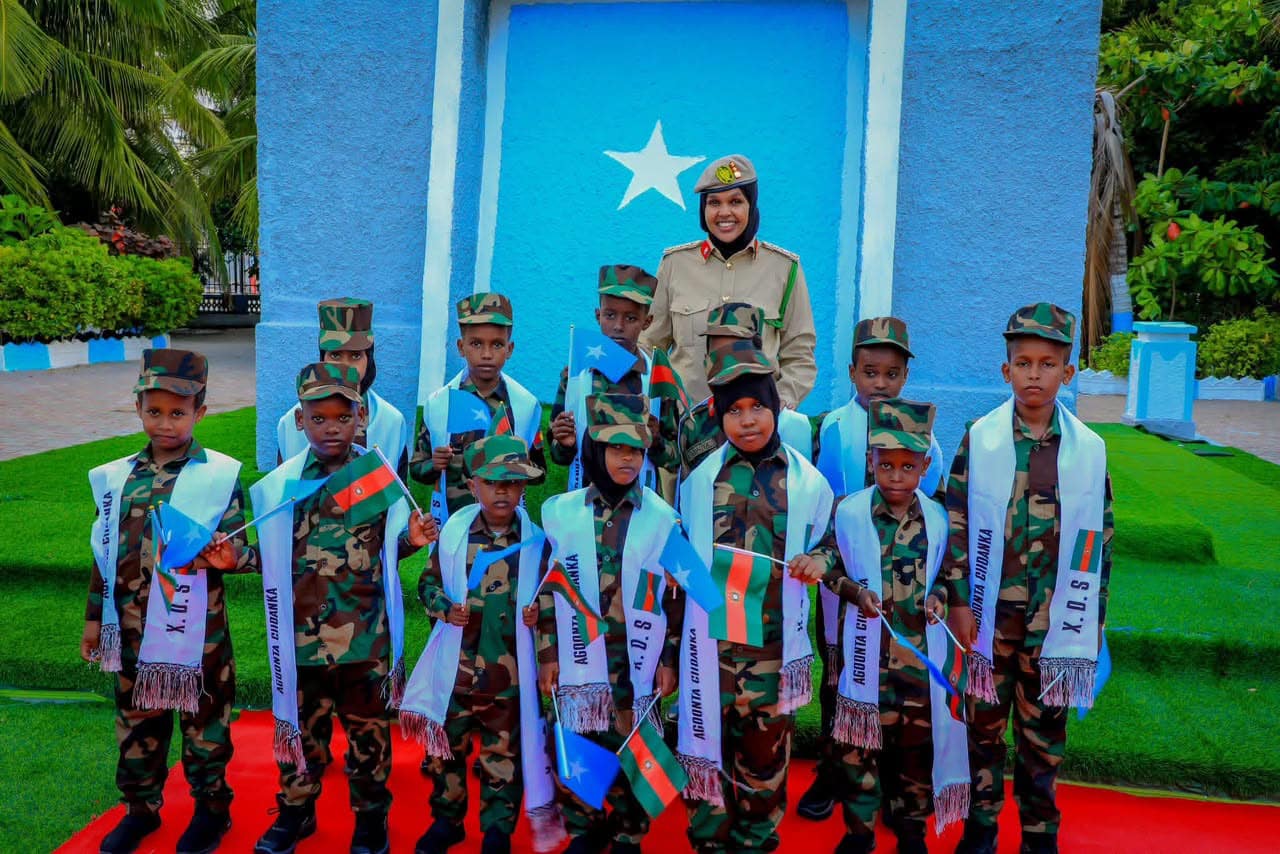
MOGADISHU, SOMALIA – Families raising the children of Somali National Army soldiers killed fighting al-Shabaab say the monthly allowance for each child fell from $200 to $100 this month, five months after President Hassan Sheikh Mohamud laid the foundation stone of the Orphans Care Agency and told the army that the state would stand by its orphans, and they say nobody has told them why. On Friday 25 September the former intelligence chief Fahad Yasin demanded that the president name the legal basis for the cut, the authority that approved it and the reason it falls on the army’s most vulnerable dependants. His statement came a day after President Hassan Sheikh Mohamud told the United Nations General Assembly that the transfer of full security responsibility to Somali forces must be properly financed.

What the Orphans Care Agency Was Promised in April
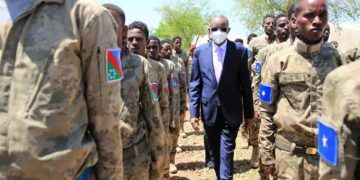
President Hassan Sheikh Mohamud, Defence Minister Ahmed Moalim Fiqi and senior army commanders laid the foundation stone for the headquarters of the Somali National Army Orphans Care Agency in Mogadishu on Sunday 12 April, the army’s sixty-sixth anniversary. The Council of Ministers had approved the agency on a proposal from the defence ministry, and officials described it as the body that would provide care, schooling and welfare for the children of soldiers killed in service. “We have taken the initiative to stand today for the orphans of the Somali National Army,” the president said. Ahmed Moalim Fiqi said he hoped that by the same date next year the headquarters would be “completed and operational, caring for the young children left behind by the martyrs.”
Families caring for those children said on Friday 25 September that the payment of $200 per child arrived this month as $100, with no notice and no explanation from any authority. They describe the allowance as the only reliable income many of these households have, spent on food, school fees and medical care. Their questions to the federal government are specific: why the payment was halved, whether the cut is temporary or permanent, and whether every family in the programme lost half or only some of them. Neither the Orphans Care Agency nor any ministry had answered any of the three publicly by Saturday, and the government has not publicly linked the reduction to the fall in foreign aid.
Fahad Yasin wrote the same day that the federal government issued Decree 198 this year for the agency caring for the orphans of fallen soldiers, the disabled and the retirees of the Somali National Army, and that any reduction in their entitlements must rest on clear law, a transparent process and accountability. On Saturday 26 September the House of the People’s Defence Committee summoned Ahmed Moalim Fiqi, whose timetable has the Orphans Care Agency’s headquarters operating by April 2027, and the army commander to appear on 4 October over cuts it said had reached close to 6,000 retired and disabled soldiers and families of the fallen. The International Monetary Fund has noted that Somalia’s 2026 budget includes domestically financed social spending for the first time, and the World Bank estimates that growth slowed to about 3 percent in 2025 as foreign assistance fell.
Where Fahad Yasin Is Speaking From
“This issue did not begin recently; there have long been complaints regarding the treatment of certain segments of the Somali National Army, specifically the families of fallen soldiers, disabled troops and retirees,” Fahad Yasin wrote on Facebook on Friday 25 September. He called on President Hassan Sheikh Mohamud “and his administration to disclose to the public and the military the legal basis for this decision, the approving authority, the legal mandate under which it was implemented,” and the reason the cost was being placed on the army’s weakest members. “The martyrs withheld nothing from the nation; they gave the most precious thing a human being possesses, their lives,” he wrote.
Fahad Yasin ran the National Intelligence and Security Agency for former President Mohamed Abdullahi Farmaajo, first as deputy director from August 2018 and then as director from August 2019. Prime Minister Mohamed Hussein Roble suspended him on 6 September 2021 over the death of the NISA officer Ikran Tahlil Farah, and Farmaajo made him national security adviser two days later, a post he held until May 2022. He won the Beledweyne seat HoP086 in the 2022 parliamentary election, lost it when the federal electoral implementation team voided the result for irregularities, and failed to have that decision overturned at the Supreme Court. In November 2025 he returned to the centre of opposition politics with the National Pride Alliance, fronted by former Prime Minister Abdi Farah Shirdon and aimed at the 2026 election.
On 5 September Fahad Yasin tied the Speaker of the House of the People to the Doolow strike, and on 25 September he took up the cause of the children the Orphans Care Agency was created to serve, in the same week that the president was in New York asking the United Nations to finance the security transition. Beledweyne, the constituency he was denied in 2022, is where hundreds of residents, elders and politicians demonstrated on Thursday 24 September against holding the Hirshabelle election in Hiiraan without a political agreement. Another former NISA director, Abdullahi Mohamed Ali Sanbaloolshe, praised that demonstration on Friday, telling the people of Hiiraan that “your voice has reached Somalis and the rest of the world.”
The Army Villa Somalia Says Is Ready to Take Over the War
President Hassan Sheikh Mohamud told the General Assembly on Thursday 24 September that Somalia needed predictable and sustained financing for its security transition, including adequate funding for the African Union mission, and that the handover of full security responsibility to Somali forces must be properly financed. Ahmed Moalim Fiqi, whose ministry proposed the Orphans Care Agency to the cabinet, had declared the country ready on 1 September for a Somali-led security framework that is accountable, efficiently managed and financially sustainable, while the national security adviser told the same conference that the army had yet to demonstrate the readiness an African Union drawdown depends on.
Roughly 3,000 soldiers passed out at Xananbuure on Sunday 16 August, the largest class the army has graduated on Somali soil since 1991, trained on Saudi money by instructors from Romania, Ukraine and Sudan. Salaries at the intelligence agency Fahad Yasin once ran were late in early September for its special forces, its Qoryooley units, checkpoint personnel and officers in the regions, including men on the Basra front against al-Shabaab. Officials in that agency’s finance department were reported to be in detention at the time. The brigade that collapsed at Teedaan in the summer had been pleading for ammunition before it fell, and federal and South West forces were moving reinforcements into Baidoa this week against former President Abdiaziz Hassan Mohamed Laftagareen’s fighters. The children of soldiers killed on those fronts are the ones the Orphans Care Agency was founded in April to look after.
On 12 September the House of the People voted by 138 to two, with three abstentions, to stop deducting $100 a month from each member’s allowance. The deduction had paid for a scheme created in 2013 to cover lawmakers’ medical emergencies and funerals, which originally allocated $30,000 for each member who died, the value of twenty-five years of one orphan’s allowance at the new rate. Members told the chamber that the deductions had raised almost one and a half million dollars during the current parliament, and officials said the House would now meet those costs directly. Thirteen days after that vote, the families of soldiers killed by al-Shabaab said their children had been paid $100 each for September by the government that opened the Orphans Care Agency in April.