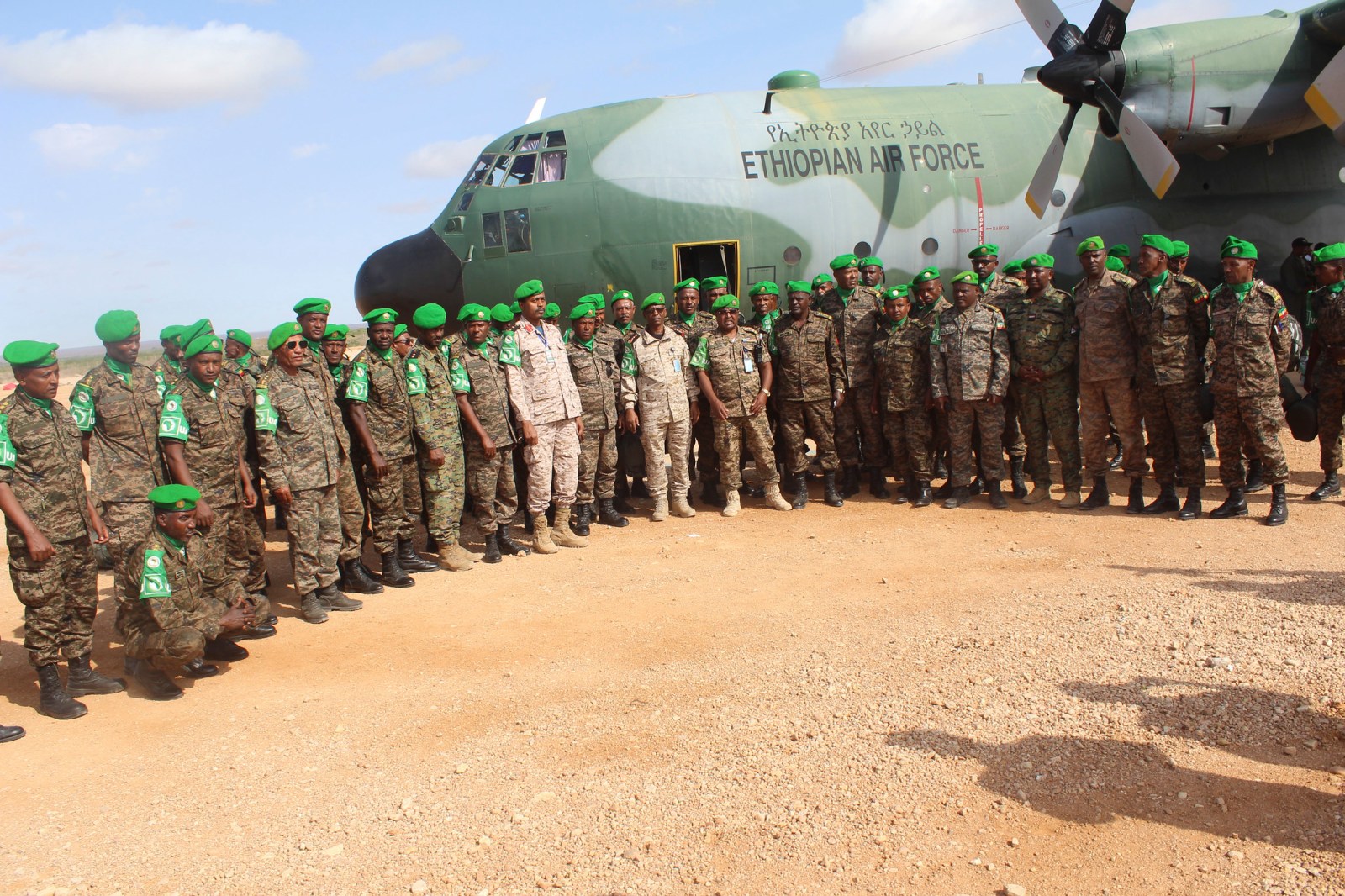
MOGADISHU, SOMALIA – Ethiopia is preparing to pull more than 3,000 soldiers of the Ethiopian National Defence Force (ENDF) out of Somalia in the coming days or weeks to fight the rebellion that has reopened the war in Tigray, according to people familiar with the plan, and a Somali defence ministry official said on Thursday 1 October that Addis Ababa had told Mogadishu nothing about it. The plan surfaced on Wednesday 30 September, the day after President Hassan Sheikh Mohamud sat with Prime Minister Abiy Ahmed in Addis Ababa on a visit a senior Somali official says Abiy requested. Ethiopian units operate in Bay, Bakool, Gedo and Hiiraan, and Baidoa, the capital of the first of those regions, went under a dusk curfew the same Wednesday after a third round of fighting between the federal army and the forces of the state president Villa Somalia removed in March.

More Than 3,000 ENDF Soldiers and No Word to Mogadishu
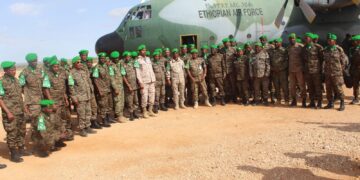
People familiar with the plan, who were not authorised to speak publicly, said on Wednesday that it would be among the largest Ethiopian drawdowns from Somalia in years, and the report of the planned withdrawal did not say whether the soldiers involved serve under the African Union’s AUSSOM mission, under the bilateral arrangements that keep further Ethiopian units in the country, or under both. An Ethiopian government spokesman did not answer questions about the fighting at home or the troops abroad. The ENDF has kept thousands of soldiers in Somalia for years, some wearing the African Union’s colours and others there by direct agreement with Mogadishu, and its units work across Bay, Bakool, Gedo and Hiiraan, several of them close to the Ethiopian border.
A Somali defence ministry official said on Thursday that Ethiopia had given Mogadishu no notice of any such plan. “Ethiopia has not informed us of any plan to withdraw its troops from Somalia. If they tell us, we will tell you,” the official said, speaking on condition of anonymity. Neither government has said whether President Hassan Sheikh Mohamud and Prime Minister Abiy Ahmed discussed the ENDF presence when they met in Addis Ababa on Tuesday, and no agreement of any kind was announced after the meeting.
In November 2020 Addis Ababa withdrew about 3,000 ENDF soldiers from Somalia within days of the first Tigray war breaking out, troops serving outside the African Union mission who had been fighting al-Shabaab beside the Somali army. That war ended with the Pretoria agreement of November 2022, after two years and hundreds of thousands of dead. The new fighting has reopened it on the same ground. Government forces said on Monday 28 September that they had taken the strategic town of Alamata, and the fighting has since moved north towards Mekelle, with at least 52 civilians killed in three days around Alamata and more than 700 wounded treated at hospitals supported by Médecins Sans Frontières in Korem, Alamata and Shire.
The Addis Ababa Meeting Abiy Ahmed Asked For
President Hassan Sheikh Mohamud flew to Addis Ababa on Tuesday 29 September for what Villa Somalia called a one-day working visit, and both governments said the two leaders discussed bilateral relations and the political and security situation in the Horn of Africa. A senior Somali official said the visit was Abiy’s request, made before the UN General Assembly in New York and accepted on condition that it come after it. “Abiy requested the trip, the president accepted, but he asked that it be after the UN General Assembly,” the official said. Neither government’s account of the meeting mentioned the war the ENDF is fighting in northern Ethiopia. The two governments rebuilt relations under the Ankara Declaration of December 2024, which closed the quarrel over Ethiopia’s January 2024 memorandum with Somaliland, and Mogadishu’s foreign ministry said in September that the declaration now governs relations with Ethiopia.
Hussein Abdirisaq, a political analyst in Mogadishu, tied the timing to Abiy’s position at home. “Whenever Abiy Ahmed faces heavy pressure at home, he invites President Hassan Sheikh to Addis Ababa, looking for what appears to be support,” he said, adding that the pattern had been seen several times before. The ENDF is fighting in Tigray, Afar and Amhara, and seven armed groups, among them the Tigray People’s Liberation Front, the Oromo Liberation Army and Amhara Fano forces, have announced an alliance whose stated aim is to remove Abiy Ahmed’s government and set up a transitional administration. The ENDF chief, Field Marshal Birhanu Jula, has accused Egypt, Sudan and Eritrea of backing the armed groups, and all three have denied it.
Afar carries the road between Addis Ababa and the port of Djibouti, through which most of Ethiopia’s trade moves. From Addis Ababa President Hassan Sheikh Mohamud went on Wednesday to Djibouti, a longstanding security partner of Mogadishu, and he is expected next in Egypt. Egypt sits beside the ENDF among AUSSOM’s troop contributors, together with Burundi, Djibouti, Kenya and Uganda. Within a week the Somali president, whose four-year term ran out in May, will have called on Ethiopia and on Egypt, the government Ethiopia’s army chief accuses of arming the war against Abiy Ahmed.
The ENDF Leaves Bay as Baidoa Goes Under Curfew
In August the ENDF handed its base at Buurhakaba to the Somali army’s 60th Division, ending a garrison it had held since 2014 on the road between Mogadishu and Baidoa, in a district where every road out is held by al-Shabaab. The handover came under AUSSOM’s drawdown, months before the mission’s mandate expires on 31 December, after Washington told the African Union on 1 July that it would not support the UN logistics office that supplies the mission beyond December. Troop contributors meeting in Kampala on 31 July asked for a further 18 to 24 months and named no way to pay for them.
Former President Abdiaziz Hassan Mohamed Laftagareen’s Darawish attacked the 60th Division inside Baidoa at dawn on Monday 28 September, the third assault on the city since 17 August. On Wednesday the South West State security minister, Isaaq Mohamed, imposed a curfew barring people and vehicles from moving after the Maghrib prayer and told the security forces to concentrate on order inside the city. Médecins Sans Frontières treated 94 wounded after the August fighting, 29 of them women and 20 of them children, and 71 more were brought to Bay Regional Hospital after the round of 3 September. Federal troops took Baidoa in March, when President Hassan Sheikh Mohamud removed former President Laftagareen, and the division sent to Bay for the war against al-Shabaab is now fighting the deposed president’s men inside the city.
In early September AUSSOM marked the end of a three-year ENDF tour in its Sector 4, with a handover at Beledweyne and the Halgan forward operating base in which newly arrived Ethiopian soldiers replaced the departing ones, some of them airlifted straight to their bases. Beledweyne voted on Wednesday in the HirShabelle state elections, and Villa Somalia’s candidate for vice president, Abdifatah Hassan Afrah, cast his ballot in the city after days in which politicians opposed to the presidency’s plan for the state had been active there. Fresh ENDF soldiers had reached Hiiraan only weeks before people familiar with Addis Ababa’s plans said thousands of Ethiopian troops would be leaving Somalia.
From Occupiers in 2024 to an Unannounced Exit in 2026
In June 2024, at the height of the dispute over the Somaliland memorandum, President Hassan Sheikh Mohamud’s national security adviser, Hussein Sheikh-Ali, said Ethiopian forces still in Somalia after December 2024 would be regarded as occupiers. That September former President Laftagareen defended the 25 South West members of parliament who had argued for keeping the Ethiopian troops, likening them to the thirteen founders of the Somali Youth League while Mogadishu cast them as traitors. Abdinasir Mohamed, a security analyst in Mogadishu, recalled on Thursday that when Mogadishu demanded the ENDF be removed from AUSSOM over the memorandum, Addis Ababa worked hard to stop it, and he said that history is why he doubts the plan will be carried out.
“It is very welcome news that the Ethiopians leave Somalia,” Abdinasir Mohamed said, before adding that Ethiopia would never willingly give up its influence in the country, above all on security. “But if it is true, it deserves to be welcomed.” The Ankara Declaration settled the memorandum dispute in December 2024, Ethiopia kept its place in AUSSOM, and the ENDF units Mogadishu once threatened to treat as occupiers became the garrisons in Bay, Bakool, Gedo and Hiiraan that the federal army has begun taking over as the money for the mission runs out.
The Somali soldiers who took over Buurhakaba belong to the same 60th Division that former President Laftagareen’s Darawish attacked inside Baidoa on Monday, and al-Shabaab holds the roads around both towns. If more than 3,000 ENDF soldiers leave in the coming weeks, the positions they vacate will fall to an army whose division in Bay is fighting the forces of the president Villa Somalia removed in March. On Thursday, two days after President Hassan Sheikh Mohamud sat with Abiy Ahmed in Addis Ababa, his defence ministry said it had heard nothing of the plan from Ethiopia.