GARMAAL, SOMALIA– A drone strike that Puntland security sources first described as a clean hit on fleeing pirates has come apart within forty-eight hours into a dispute over who actually died near Garmaal on Tuesday. Local reporting has since named all four men killed, Ahmed Ali Jama Dhahar, Heego Mohamed Ducaale, Waraad Yusuf Ubeed and Caydarus Yusuf Ilmi, identifying three as fishermen unconnected to the hijacking, with only the boat’s operator linked to the men holding the Lutuf. Somalia’s former foreign affairs minister has gone further, accusing Turkiye of carrying out what he called a massacre of Somali citizens on Puntland’s coast, a charge Ankara has neither confirmed nor denied. What began as an unclaimed strike on suspected pirates is now a dispute over four names, an open Puntland investigation, and a Turkish role in Somalia’s waters that no government will describe in public.

The Dead at Garmaal Turn From Pirates to Fishermen
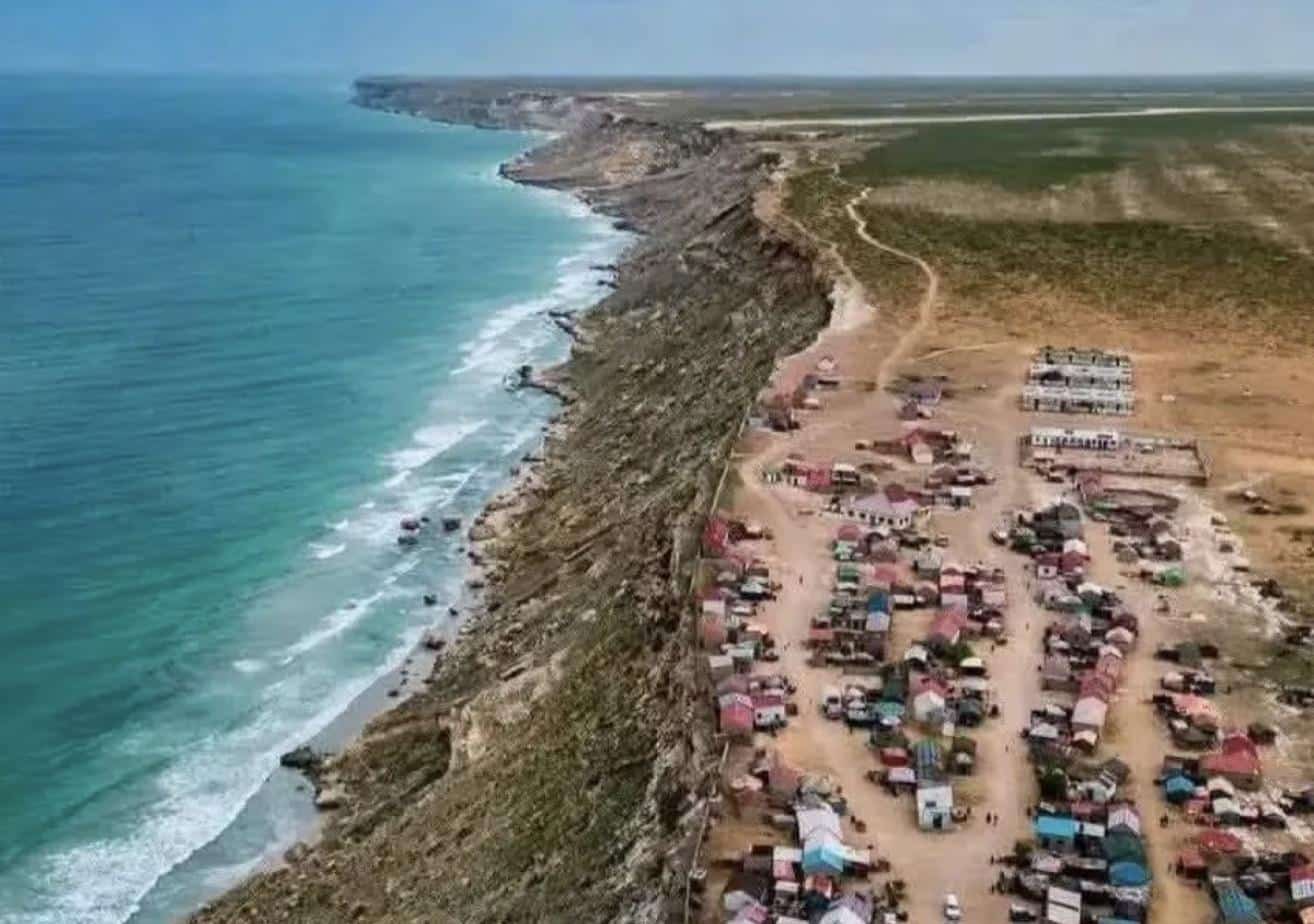
The Lutuf, sailing under Cameroon’s flag, was boarded by eight armed men roughly four nautical miles south of Mareeyo shortly before noon on August 17, according to the shipping monitors that track the corridor. The hijackers reportedly left the vessel by small boat the next day to gather supplies onshore near Garmaal, in Dangorayo district, and it was during that shore run that the strike hit. Puntland security sources gave the first account: four suspected pirates killed while returning toward the coast, a version that matched the unclaimed strike already reported on the Nugaal coast earlier in the week. Within a day, residents in Garmaal had complicated that account beyond recognition.
Local accounts named all four dead men and described three of them as fishermen who had gone out to secure their own boat to a mooring point off Garmaal, work unconnected to the Lutuf beyond sharing the same stretch of water. The fourth, the boat’s operator, was reportedly in contact with the men holding the hijacked ship, the one thread connecting any of the dead to the hijacking Puntland’s original account described. Two more men were wounded in the strike and taken to Garowe for treatment. Puntland’s administration has not issued a public account reconciling the two versions.
What Garowe has done since is procedural: police and investigators were sent to Garmaal, and residents were told not to move the bodies or disturb other evidence at the scene, standard practice for an investigation still underway. The gap between an official version built on unnamed sources and a corrected one built on named victims has now opened twice in a single month. It happened in Baidoa, where the government’s own casualty count met a correction from the city’s own former officials; it is happening again at Garmaal, where a fishing crew has displaced the pirates Puntland’s first account described.
An Accusation That Names Turkiye
Somalia’s former foreign affairs minister, Abdisaed Muse Ali, broke the pattern of official silence on Thursday. In a post naming Ankara directly, he wrote that “the massacre of Somali citizens on Puntland’s coast is a brutal act of aggression that the Turkish government has injected into Somalia’s politics.” It is the first time a senior Somali official has attached Turkiye’s name directly to a strike on Somali soil; the government’s own account of the August 17 hijacking and the strike that followed had named no author at all, consistent with Ankara’s practice everywhere it operates inside Somalia. Turkiye has never publicly claimed a strike on Somali territory, and it maintained that silence again after Garmaal, declining to confirm or deny either the operation or the identities of the men it killed.
The accusation lands on ground that Ankara has already primed. Turkish strikes drew comparable anger in Southwest State earlier in August, when residents burned a Turkish flag over drone strikes accused of killing livestock and rural herders, and Turkiye offered no response to that episode either. The pattern is consistent enough now to describe on its own terms: Turkish aircraft operate over Somali territory on a schedule Mogadishu does not disclose, strikes land, and neither government confirms who ordered them or why. Garmaal adds a maritime dimension to that pattern, since the Lutuf itself was carrying equipment belonging to the Turkish government toward Mogadishu when it was hijacked. That makes the ship whose recovery prompted the strike part of Ankara’s own supply line into the capital, tying Turkiye’s commercial presence in Puntland’s waters directly to the military response that followed it.
Turkish naval vessels were reported in the area before Tuesday’s strike, according to witness accounts that circulated when the hijacking first became public, part of a piracy revival that has produced five vessel seizures since April and left dozens of seafarers in captivity across the Gulf of Aden and Somali Basin. Ankara’s 2024 maritime agreement with Mogadishu, a ten-year arrangement under which Turkiye builds and defends Somalia’s navy and territorial waters in exchange for a reported share of exclusive economic zone revenue, gives Turkish forces a standing rationale for operating in exactly these waters. Nothing in that agreement obliges Ankara to say when its aircraft kill someone in them.
Garowe Investigates Without a Public Word
Puntland’s response to Garmaal has stayed inside the investigation: police and investigators were sent to the scene, residents were told not to move the bodies or disturb evidence, and no account beyond the initial description of suspected pirates has been attributed to the regional government. That restraint is defensible: publishing a finding before an investigation concludes would commit Puntland to a version of events it might have to retract, precisely the trap the first “suspected pirates” account fell into once the victims were named. An administration that wants its eventual account believed has reason to gather the facts before it speaks, and jurisdiction over a strike on Puntland’s own coast sits with Garowe’s own security apparatus, an authority Puntland has otherwise guarded closely against federal encroachment.
Abdisaed Muse Ali’s criticism did not stop with Ankara alone. He turned the same charge on Garowe: “What troubles me even more is that Puntland’s current leadership sits in office yet has never once spoken about the youth massacred in Garmaal,” he wrote, faulting the regional government for a silence he had condemned in Turkiye only sentences earlier. The charge sits awkwardly against Puntland’s wider record on piracy, which the region’s own leadership has repeatedly tied to the security vacuum Mogadishu’s politics have created along this coast. Garowe has spoken often about piracy’s return in general; it has said nothing yet about Tuesday’s four dead in particular, and that gap between an investigation still open and a position not yet taken is what Ali’s post does not allow for.
How the investigation resolves will shape which account of Garmaal survives in public memory. If it eventually confirms three of the four dead had no role in the hijacking, Garmaal becomes a case study in the cost Puntland’s fishing communities pay for a war being fought over their own waters by outside powers. If it does not, the burden falls on Puntland to explain why its own first account diverged so sharply from what residents on the ground reported within a day of the strike. Either outcome argues for the regional government to close the gap between procedure and public statement quickly, before the silence itself becomes the story Ali is already telling to a Somali public primed to believe the worst.
A Presence Nobody Has to Explain
Garmaal is the second time in three weeks that a Turkish strike inside Somalia has produced local anger with no government response to answer it. Livestock and herders were the casualties in Southwest State; a fishing crew and a boat operator are the casualties on the Nugaal coast. In both cases the dead were identified by name only after residents and local reporting corrected an official account that arrived first and asked fewer questions. In both cases Ankara said nothing, and Mogadishu, which depends on Turkish air power, training and now a ten-year hydrocarbons and maritime security relationship to project any authority beyond the capital, had even less reason to ask.
That dependence is the throughline connecting Garmaal to the mandate Turkiye has spent the past year underwriting. Turkish support did not create President Hassan Sheikh Mohamud’s expired term or the federal defiance it has provoked from Puntland to Jubaland, but it has insulated him from the cost of both, and a drone campaign that kills without explanation is one more service Ankara provides without a public account of what it costs. Somalia’s federal government has never disclosed how many strikes Turkish aircraft have flown inside its territory, against whom, or under what rules, and the four names now attached to Tuesday’s dead are a test of whether that will change.
That will probably not happen on Ankara’s own initiative: its silence has survived louder provocations than one post from a former foreign minister, and Puntland’s investigation, whenever it concludes, will move at Garowe’s own pace. What Garmaal has produced instead is a record: four named men, a contested account of who they were, and a strike that neither the government whose aircraft carried it out nor the government whose territory absorbed it has yet been willing to describe in public.