GAROWE, SOMALIA– Puntland has become the first Somali authority to formally demand that foreign governments account for military strikes carried out on its own territory, after its security ministry condemned bombardments off the Nugaal coast on August 18 and August 20 that it says hit fishermen and destroyed civilian property. The same statement opened a second front, disclosing an investigation into information that forces from outside Puntland may be driving the piracy revival now gripping the Somali Basin. It named no navy and no foreign actor in either case. Together the two claims place Garowe in a position Villa Somalia has vacated, asking who is firing into Somali waters while the federal government, whose cargo the hijackers seized and whose principal patron is the likeliest author of the strikes, says nothing at all.

A Statement That Names No Navy
Puntland’s Ministry of Security and Disarmament, Demobilization and Reintegration issued the condemnation on Friday, opening with the piracy itself and then turning on the response to it. The ministry said it was conducting a special investigation into information that forces outside Puntland may be involved in the new wave of hijackings, and that piracy could be serving as cover for political and economic objectives pursued by others. It named nobody and published no evidence for the claim. What the document did commit to was operational, since security agencies and district authorities along the coast have been mobilised against the networks, and Garowe repeated its willingness to work with any government or partner trying to secure the release of the vessels currently being held.
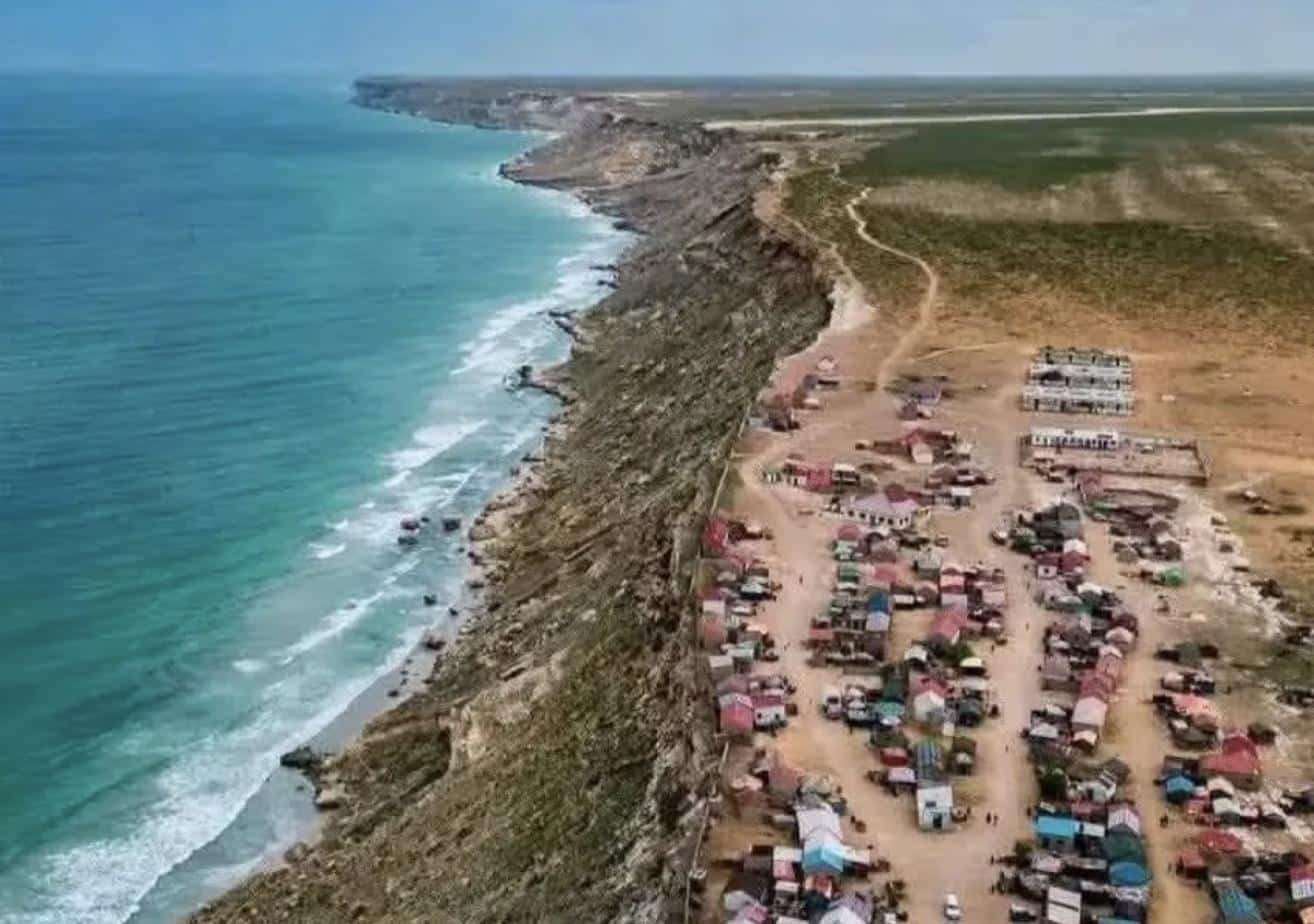
The second half of the statement is where the demand sits. Puntland condemned strikes it attributed to international warships operating close inshore, in the waters around Garmaal where hijacked ships are anchored, and told the governments behind them to provide an immediate account of the operations, their purpose and the circumstances around them. Fishermen and their property were hit on August 18 and again on August 20, the ministry said, warning that operations conducted this way risk killing people with no connection to piracy. It added that such strikes damage the cooperation between Puntland’s own security agencies and the international partners who need that cooperation to function, all without identifying a single navy by name.
Four men were buried at Garmaal on Thursday, in the Nugaal coastal belt where the first of the two strikes landed. Their names emerged locally within a day, and three of the four were described as fishermen with no part in the hijacking that security sources had originally cited as the reason for the attack. Relatives have accused Turkiye directly, and Ankara has said nothing, the federal government in Mogadishu has said nothing, and until Friday the only formal Somali response of any kind came from a former foreign minister writing on his own account.
Puntland Claims a Jurisdiction Mogadishu Has Not Used
The case Puntland is making rests on a claim about territory. Strikes are landing on its coast, its residents are being buried afterwards, and its investigators are the ones sent to the scene, so its government takes the view that the states flying the aircraft and sailing the ships owe it an explanation. That reading follows the logic Garowe has applied to every federal encroachment on its security file since 2023, and the demand it produces is a narrow one. Puntland wants to be told what happened in waters its own forces police, and it has attached to that demand an offer to keep working alongside the navies concerned and to help recover the ships they are there to recover.
Villa Somalia has made no comparable request, and the cargo aboard the hijacked ship suggests why. The Lutuf was carrying Turkish weapons and supplies bound for the military training centre Ankara runs in Mogadishu when eight armed men boarded it four nautical miles off Mareeyo on August 17. Ten crew were aboard, from India, Turkiye, Georgia and Serbia, two of them Serbian security contractors. A federal government that has spent the past year leaning on Turkish aircraft, Turkish instructors and a Turkish maritime agreement to project authority it cannot generate on its own has little appetite for asking Ankara to explain a strike carried out while recovering Ankara’s own freight.
The outside-forces claim in the same statement continues an argument Puntland’s leadership has been making for some time. President Said Abdullahi Deni has publicly accused the federal government of creating the pirate groups now working off the north-eastern coast, and the ministry has placed a version of that charge into an official document, hedged as an open investigation and stripped of names. No evidence has accompanied it, and no date has been given for when the inquiry will report. What the document does achieve is a framing the federal government has not attempted, treating the piracy revival and the foreign military response to it as a single problem sitting inside one jurisdiction.
Thirteen Ships Where Last Year There Were Five
The scale of what Puntland is policing has changed sharply in eight months. Six armed men boarded the Eritrea-flagged tanker Sibu 1 off Yemen on Thursday and turned it toward the Somali coast. The United States Treasury had sanctioned that vessel in December over its role in a shadow fleet moving Iranian petroleum products around American restrictions. It was at least the thirteenth ship attacked this year off Somalia or in the Gulf of Aden, against five such attacks recorded across the whole of 2025. Six vessels are currently held by pirate groups with more than a hundred crew aboard them, and the two hijackings closest together came four days apart.
Several conditions converged over the past year to produce a curve that steep. Naval assets that once patrolled the Somali Basin have been pulled toward the Strait of Hormuz and the Red Sea, as the war with Iran and the Houthi campaign against shipping absorbed the available hulls. Higher oil prices have meanwhile made tankers worth the risk of taking. A senior researcher at the Institute for Security Studies in Pretoria put the underlying condition plainly, observing that the piracy of the last decade “was always suppressed” and “never really fully eradicated”. The economics onshore never changed either, and the fishing communities along Puntland’s coast have watched foreign trawlers work their grounds for as long as the suppression lasted.
Attribution is the point on which the analysts watching this revival diverge most sharply. Jay Bahadur, who co-directs the Scopus Insights consultancy, doubts the Houthi hypothesis, since the Sibu 1 was itself an Iran-linked vessel. He points toward Yemeni criminal networks: “You’re having these traditional, longstanding relationships built around arms trafficking and human smuggling built up between Yemeni criminal actors and Somali criminal actors.” That description sits close to what Puntland’s ministry alleged on Friday without matching it, since a smuggling network is a commercial actor and the statement gestured at political ends. Egypt has meanwhile opened its own channel over sailors taken off the Somali coast, which is more than Mogadishu has publicly done for any of the crews.
A Government That Told the Peacekeepers to Leave
Six days before the first strike, President Hassan Sheikh Mohamud told African Union troops that Somalia no longer required foreign peacekeepers to guarantee its security, a message delivered as the mission supplying them faces the worst funding crisis of its two decades in the country. In the week that followed, unidentified aircraft and warships operated over and off Somali territory, killed people on a Puntland beach, and were asked for an account by a regional administration in Garowe. The federal government that had just declared its own sufficiency asked for nothing at all.
The maritime file makes that gap starker still, and the reason sits in the agreement itself. Ankara’s ten-year arrangement with Mogadishu commits Turkiye to building and defending Somalia’s navy and its territorial waters in exchange for a reported share of exclusive economic zone revenue. The force best placed to answer a hijacking off Eyl is therefore a foreign one, operating under a contract the federal government signed. Somalia has never disclosed how many strikes Turkish aircraft have flown inside its territory, against whom, or under what rules of engagement. A state that cannot police its own waters and will not ask who is firing into them has conceded the substance of the sovereignty its president spent the middle of August asserting.
Puntland’s demand will most likely go unanswered. Navies operating under coalition mandates rarely explain individual engagements to sub-national authorities, and no government has yet acknowledged carrying out either strike, which leaves nobody obliged to respond to a letter from Garowe. What the statement has established is a record: two dated incidents, a named stretch of Puntland coastline, a claim that fishermen and their property were hit, and a formal request now sitting on paper for whoever eventually decides to answer it. Every week that passes without a reply strengthens the case Puntland has been making since the hijackings resumed, which is that the authority governing these waters now belongs to whoever happens to be armed in them.