MOGADISHU, SOMALIA – An investigation published on 1 September traced a working partnership between al-Shabaab and the Houthis that moves weapons, training and drone expertise across the Gulf of Aden, built around a Somali intermediary who bought military-grade arms in Yemen and shipped them home. The man, Jibril Yahya Ali, known as Gacaamey, was killed on 12 February near Al-Ghaydah in eastern Yemen, and al-Shabaab appointed a replacement, which suggests the arrangement outlived him. More than a hundred of the group’s fighters have trained in Yemen in bomb-making, antiaircraft operations and drone assembly. The cargo comes ashore on poorly monitored stretches of Somalia’s northern coastline, which is the same water where a hijacked ship was held last month, where unacknowledged aircraft have been bombing, and where Washington is negotiating a base.

Gacaamey Bought His Weapons From the Houthis
Gacaamey was thirty-eight, had studied veterinary medicine in Yemen, and ran a charity, a foreign-exchange outlet and an import-export company in Mogadishu, three businesses that between them gave him a reason to move money and freight across the Gulf of Aden without attracting attention. The Houthis gave him a furnished apartment in Sanaa and a Yemeni passport issued under an assumed name, and he appeared at their official functions, which is a level of accommodation states extend to people they consider useful, and not to freelance traders. An internal assessment by Yemen’s Counter-Terrorism Service described him as a central figure in the relationship, specifically in transferring weapons, military equipment and technical expertise to the Somali group.
He was killed driving along the coast with his new wife on 12 February, and the question of who killed him has no settled answer. Two American sources attributed the strike to the United States, while US Central Command said it was not a military operation and the Central Intelligence Agency declined to say whether it was responsible. That is a familiar shape on this file, since the Somali coast has now absorbed strikes from at least three directions this year that no government will formally claim, and the men killed in them are identified afterwards by reporters instead of by the states that fired.
Al-Shabaab named a successor to run its interests in Yemen within weeks of the strike, and a former United Nations arms monitor reads that appointment as evidence the pipeline is still operating, in a country where the group has spent two years recovering ground it lost in 2022. The two movements come from religious traditions that have spent centuries in opposition, and officials in Mogadishu, Washington and Sanaa told the investigation that hostility towards the United States and Israel has been sufficient to override the theology. Each side has what the other lacks, since al-Shabaab holds money and the Houthis hold missiles, drones and the people who know how to use them.
What Al-Shabaab Went Shopping For
In 2024 al-Shabaab sent Sheikh Ahmed Elmi Samatar to Yemen carrying a procurement list that included shoulder-fired antiaircraft missiles, Katyusha rockets, sniper rifles, attack drones, antitank missiles and night-vision equipment. Yemeni authorities arrested Samatar in January 2025 and later released him in a prisoner exchange with the Houthis, after which he returned to Somalia and left Gacaamey to represent the group in Sanaa. Which of those items actually reached Somali soil has not been established, and officials in Mogadishu and Washington are said to be most worried about attack drones and missiles capable of reaching military bases. A list is not an inventory, and the gap between the two is the whole of what nobody can currently measure.
Training has moved in both directions, since more than a hundred al-Shabaab fighters have travelled to Yemen for instruction in bomb-making, antiaircraft operations and drone assembly, with one group spending three months this year in the Sa’dah region, and Houthi instructors have made the reverse journey to teach inside Somalia. Three months of instruction is a syllabus, not a briefing. In June a four-member Houthi delegation crossed by boat and travelled to Jilib, the group’s main stronghold in the south, where the discussion reportedly covered countering Israeli activity at Berbera and included a promise of more advanced weapons and further training.
Foreign aircraft have been operating over Somali territory continuously through August, striking the Nugaal coast and then riverbank positions thirty kilometres from Mogadishu, and the Somali government has declined to identify whose aircraft they were. An insurgency that acquires shoulder-fired missiles and trained crews changes the arithmetic of that air campaign in an afternoon, and it would do so at a moment when the mission underwriting the ground war is losing its funding and its largest contributor.
The Coast Where the Boats Unload
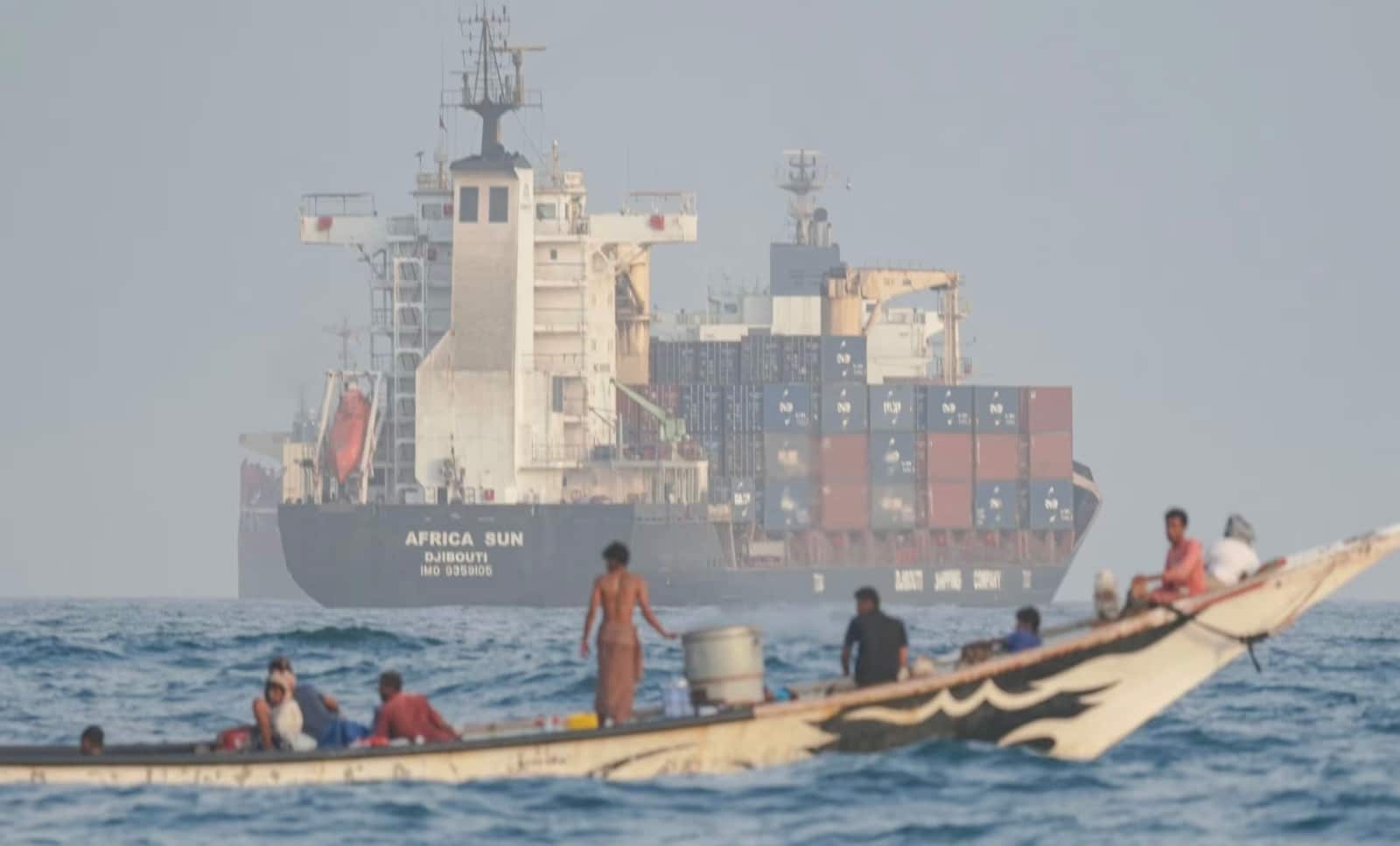
Weapons bought from the Houthis are concealed behind front companies, shipped through Yemeni ports, carried across the Gulf of Aden in speedboats and fishing vessels, landed on thinly watched sections of Somalia’s northern coastline and then moved overland to units in the south. In April 2025 American forces destroyed two unflagged vessels travelling from Yemen towards Somali waters, which US Africa Command said were carrying advanced conventional weapons. A United Nations expert panel has separately recorded the two groups exchanging intelligence and trafficking weapons, with Houthi trainers travelling to Bari and eastern Sanaag, which are Puntland regions. Everything in those descriptions places the pipeline on the Puntland shore, on a crossing narrow enough that a fishing boat leaving a Yemeni beach after dark can be unloading in Somalia before the following night, in traffic indistinguishable from the fishing and smuggling that has used those waters for generations.
That is the coastline every foreign power has spent August arguing over, and the one the Houthis appear to use without argument. It is where the MV Lutuf was held at anchor until two and a half million dollars freed the ship, where Puntland says Turkish aircraft killed thirteen people and destroyed fishing dhows, and where Washington is negotiating an expanded base at Bosaso for counterterrorism and maritime security. Two thousand kilometres of it are administered by a government that has spent the month insisting nobody consults it about operations in its own waters.
The competing claims over that shoreline have produced airstrikes, a ransom, a diplomatic row and a base negotiation, and they have not produced a body that monitors what lands on the beaches at night. Puntland has the police, the courts and the coastal knowledge; the federal government holds the legal authority to license maritime operations and has declined to explain what it did during the last crisis on that coast; foreign navies patrol the shipping lanes further out. The gaps between those three authorities are where the speedboats run, and the Houthis have been using them for at least two years while the argument about jurisdiction continued above their heads.
Money, Motive and the Corridor
Al-Shabaab collects at least a hundred million dollars a year through extortion, compulsory taxation and roadside checkpoints, according to an American intelligence assessment, and that revenue is what pays for Houthi weapons and Houthi instructors. The Houthis want the cash, and they want a foothold on the southern side of the Gulf of Aden from which to watch commercial traffic moving through the Bab al-Mandab, a waterway they have already shown they will fire on. General Dagvin Anderson, who commands American forces in Africa, framed the relationship as a threat reaching well beyond Somalia and Yemen because of what it could do to one of the world’s most important trade and energy corridors, which is a fair description of a waterway carrying a substantial share of the traffic between Asia and Europe.
The Berbera thread runs through all of it, because the Houthis fear that Israel could use the port to watch or strike Yemen, their leader has threatened to hit any Israeli presence established in Somaliland, and that fear is part of what the delegation carried to Jilib in June. A Somali insurgency is being armed partly as a consequence of a dispute over a port on the Somali coast that Mogadishu does not control, by a Yemeni movement worried about a third country that has no declared presence there. Somali territory has become an argument other people are having.
None of this has been independently verified in its particulars, and the precise weapons transferred remain unknown. What can be said is that the security transition rests on an assumption that the enemy stays roughly the same size and roughly the same shape while foreign troops leave, and this account describes an enemy that is already holding ground thirty kilometres from the capital and shopping for the equipment to contest the air above it, which means the timetable was written on the other assumption.