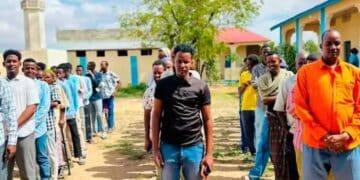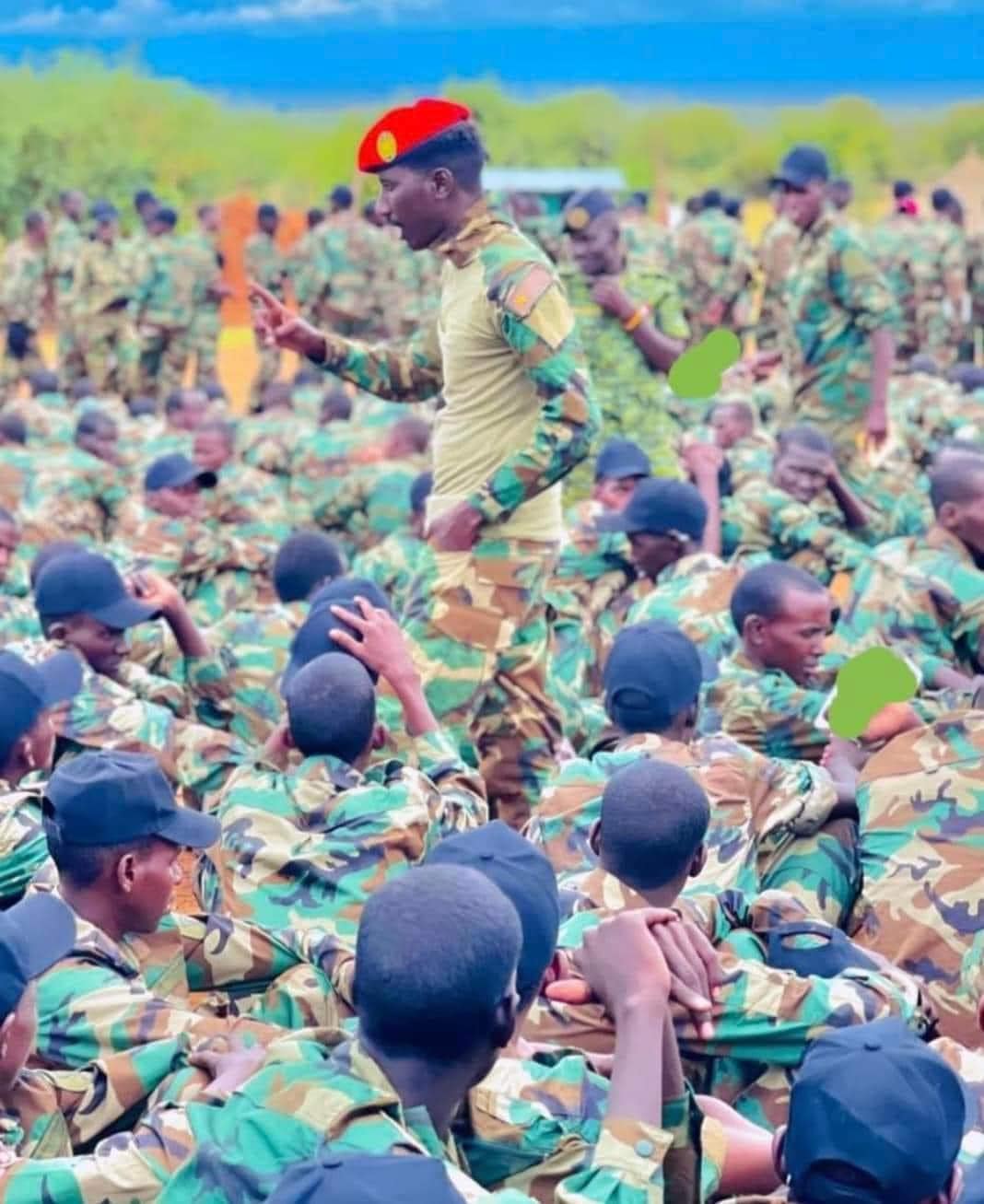
MAHAS, SOMALIA – Al-Shabaab attacked the settlement of Teedaan in Mahas district on Saturday, and by the end of the day the government was no longer there. Residents described a long exchange in which both sides used heavy weapons, and independent accounts say federal forces and the allied local militia pulled out and left the area to the group. The army command has said nothing about the casualties, nothing about the withdrawal, and nothing about whether it intends to go back. Another piece of Hiiraan changed hands, and the silence from Mogadishu was the loudest part of it.

What makes this more than a village is the timing. Two days earlier the commander of American forces in Africa had said publicly that Somali towns cleared years ago are back on the target list because the attention that held them went elsewhere, and he tied continued American engagement to Somalia’s politics settling down. Hiiraan is where that sentence is being tested in real time, and the test is not going the way Mogadishu would like.
The temptation is to file Teedaan under the ordinary attrition of a long insurgency, a hamlet lost among many, worth a line in a weekly summary. That reading misses what the past year in Hiiraan has actually looked like. The government is not being pushed out of this region in set-piece battles it narrowly loses. It is leaving, quietly and without explanation, from places it once made a point of holding.
What happened at Teedaan
Teedaan sits under Mahas district in Hiiraan, in the belt of farming and grazing settlements that the government and its clan allies have been trying to hold since the offensive of 2022. These are not fortified towns with garrisons and perimeters. They are places where a small detachment of soldiers and a larger body of local fighters share a position, depend on the same roads for resupply, and hold on for as long as the surrounding countryside stays friendly and the reinforcements remain plausible.
The fighting began when al-Shabaab assaulted the position directly rather than harassing it, which is itself a signal about how the group reads the balance of forces in the district. Witnesses described a heavy engagement, with both sides using weapons beyond small arms, and said that while the shooting continued nobody could tell what the casualties amounted to on either side. That confusion is normal in the first hours and usually clears within a day.
By evening the picture had settled into something simpler. Government forces had left the settlement, the group was in control of it, and local sources reported no counterattack being organised from anywhere nearby. There was no announcement of a tactical repositioning, no claim that the withdrawal was deliberate, and no indication of a plan to retake the ground. The position simply stopped being the government’s.
Al-Shabaab’s own media then put out a far larger version of events, claiming it had killed 41 soldiers and overrun a base. Those figures come from the group’s own outlet, they serve an obvious purpose, and they cannot be verified from any independent source. Treating them as fact would mean accepting an insurgency’s accounting of its own victory, which is a habit worth avoiding regardless of how the fighting actually went.
What can be established is narrower and still serious enough. A position was attacked, the defenders withdrew, the group took the ground, and the government has not disputed any part of that sequence. On a day when the only detailed account in circulation came from al-Shabaab, the more revealing question is not what the group said but why nobody in Mogadishu bothered to answer it.
The silence is the policy
Somali army commands are usually quick to push back when a claim of this kind is inflated, and they have good reason to be, because letting a number like 41 stand unchallenged hands the group both the battlefield and the story that gets told about it. Rebuttals are cheap, they take a single statement, and they are the minimum a defence establishment owes the families of the men involved. On this occasion no response came at all.
The result is that al-Shabaab’s account is the only detailed version of Teedaan available to anyone following the war, including the soldiers still holding neighbouring positions and the clan militias deciding whether to keep fighting alongside them. A propaganda defeat has been added to a territorial one, and the second was avoidable in a way the first may not have been.
This also fits a habit that has been visible in Hiiraan for the better part of a year. Losses go unacknowledged for weeks or forever, while recaptures are announced within hours, often with photographs and a ministerial quote. The asymmetry is deliberate and it is understandable in political terms, since a government fighting for its own legitimacy has little appetite for publishing a list of the places it no longer controls.
The cost of that choice arrives later and falls on the government itself. An administration that reports only its victories eventually loses the ability to explain why the map keeps shrinking, and it forfeits the credibility it needs when it asks donors for money, asks troop contributors to stay, or asks clan militias to hold a line one more time. Silence buys a quiet week and spends something harder to replace.
To understand why the loss of one settlement should carry this much weight, it helps to look at what the government had already given up in the same district a year earlier.
Mahas was the town that mattered
The story of Teedaan begins with the district capital rather than the village. Al-Shabaab took Mahas on 27 July 2025, and it was the group’s first capture of a Somali town in more than a decade. Mahas had been in government hands since 2014, when Somali and Ethiopian forces pushed al-Shabaab out of Hiiraan, and holding it had become one of the standing proofs that the gains of that period were durable.
The manner of the fall should have been treated as the warning it was. Government troops withdrew overnight without notifying the fighters they were supposed to be defending the town alongside, and the Macawisley were watching the northern approaches when the assault came from the south. A garrison town of real strategic value changed hands not because its defenders were beaten in the field but because nobody told them what was happening or what to expect.
Mahas is not a minor place on the map, and its loss was not a local misfortune. The town is the junction that links Hiiraan to Galgaduud and Middle Shabelle, with roads running out to Beled Weyne, Buulo Burte, Mataban, Ceel Buur and Guriceel. Whoever holds Mahas has a decisive say over how forces, supplies and taxed goods move across a wide stretch of central Somalia, which is precisely why the group wanted it and why its recapture was never seriously attempted.
Al-Shabaab has now held the town for a year, long enough to install the courts, the checkpoints and the tax collection that make its control administrative rather than merely military. In that time the government has not mounted an operation to take it back, and the district has quietly been reorganised around the group’s presence rather than the state’s absence.
Teedaan sits inside that district. What happened on Saturday was not a fresh incursion into government territory but the continued clearing of the countryside around a capital the government lost twelve months ago, which is a different and more advanced stage of the same problem.
A year of losses in Hiiraan
Mahas was not an isolated shock either, and reading it that way flatters the government’s position. It followed Aadan Yabaal in April 2025 and Moqokori in June, and by that summer the group had retaken more than twenty settlements across Hiiraan, Lower Shabelle and Middle Shabelle since February alone. The direction of travel was established long before anyone had heard of Teedaan.
From Mahas the group pushed outward rather than consolidating, and it took the roads linking the town to Beled Weyne, which had the effect of isolating the government forces and clan militias stationed in the regional capital. Mataban came under threat in the same movement. A campaign that began by taking a junction has spent the past year turning that junction into a base from which the rest of the region can be worked through methodically.
The Macawisley matter enormously in how this ends. The clan militias that fought beside the army in the 2022 offensive, with American air support overhead, delivered most of the early gains in Hiiraan and paid for them in casualties that the federal government has never fully acknowledged. They were the reason the region was taken, and their willingness to keep standing is the reason any of it was held.
That willingness is now being worked on directly. Residents of newly captured areas report that al-Shabaab has assured them they will not face reprisals, and the assurance is being extended explicitly to Macawisley members. An insurgency that offers terms to the militia that once beat it is not being merciful; it is removing the incentive to fight, and it can afford to do so because the alternative on offer from Mogadishu has thinned to very little.
Almost every gain from 2022 in Hiiraan has now been reversed, which is the context in which a village most readers have never heard of becomes worth writing about. Teedaan is not the story. It is the latest data point in a story that has been running for a year, in a region where the state’s presence has been contracting steadily and without comment.
The warning that came first
The most striking assessment of this pattern came not from a Somali official but from an American general, days before Teedaan fell. Speaking to Somali television, General Dagvin Anderson recalled that he had pushed down the Lower Shabelle alongside Somali forces in 2019, and that he had returned as AFRICOM commander to find the same towns back on the target list, which he described plainly as a source of frustration.
His explanation was the part that should have stung. The ground was lost, he said, because the focus on terrorism was not there and had gone elsewhere, a formulation that avoided naming what the elsewhere consisted of while leaving very little doubt. In the same interview he warned that continued political infighting would make American engagement very hard to sustain, which converted an observation about the past into a condition on the future.
Teedaan is a small and exact illustration of the complaint. It fell in a week when the federal government was occupied with opening a parliamentary session, managing a contested speakership, and arguing with its own opposition over whether the committee running that election is even lawful. None of those disputes are trivial, and all of them consumed the attention of the people who would otherwise have to answer for a lost position in Hiiraan.
Villa Somalia did find time for other things in the same period. It signed on to a Saudi-led maritime coalition covering waters it cannot patrol, and it had Somalia’s internal politics struck from the Kampala communique on the grounds that foreign summits should not discuss domestic Somali affairs. Both were acts of diplomacy conducted with some energy.
Neither of them defends a village in Hiiraan, and that is the uncomfortable arithmetic Anderson was pointing at. The capacity exists to sign agreements, edit texts and attend summits. What has gone missing is the sustained attention that keeps a garrison supplied and a militia confident, which is the only thing that holds ground.
What Hiiraan tells you about the transition
All of this arrives at the worst possible moment for the security transition everyone claims to be managing. The African Union mission loses United Nations logistics support after December, the emergency summit in Kampala produced no replacement funding, and the troop contributors went home with the same shortfall they arrived with and a clearer sense that the mission has an expiry date.
The entire argument for keeping that mission in place has rested on a single proposition, which is that Somali forces cannot yet hold ground on their own and need more time. Hiiraan is the evidence for that proposition, and it is getting stronger in the wrong direction, because a region that was cleared with foreign air support and local manpower has been given back over the course of a year without a serious defence being mounted.
There is a second reading available, and it is harder for Mogadishu to hear. Washington has begun placing its bets where results are visible rather than where protocol says they belong, which is why the AFRICOM special operations commander spent Sunday signing an agreement in Bosaso rather than in the capital. Puntland clears mountains and receives a partnership. The federal government loses settlements and receives a warning.
None of this makes al-Shabaab as strong as its own statements claim, and the distinction matters for anyone trying to judge what comes next. The group did not defeat a state at Teedaan. It walked into a gap that a state had left, in a district whose capital it already governs, against defenders who were not told whether anyone was coming for them.
Hiiraan is being lost through absence rather than through battle, and absence is the one thing that a communique, a maritime coalition or a signature somewhere else cannot fix. Until the attention returns, the map will keep contracting quietly, and the announcements will keep coming only when there is something to celebrate.