
MOGADISHU, SOMALIA – Turkiye’s land forces commander, Gen. Metin Tokel, pinned a presidential medal on a Somali officer in Mogadishu this week. The gesture revealed more about Ankara’s position in Somalia’s crisis than any communique from the stalled election talks. Garowe Online reported on July 11 that the decoration, conferred on behalf of President Recep Tayyip Erdogan, went to Lt. Col. Aadan Mohamed Farah. He commands the Somali National Army’s 18th Gorgor Brigade in Middle Shabelle. The Turkish military now decorates the commanders it trains, while Turkish diplomats referee the political contest those same commanders help shape. That double role, patron of one side and umpire of the whole game, is becoming the central fact of Somalia’s July.

A Medal That Skipped State Protocol
According to the reports cited by Garowe Online, the award was presented directly by the visiting Turkish commander. It did not pass through Somalia’s formal procedures for accepting foreign state decorations. Neither the Turkish embassy in Mogadishu nor Somalia’s Ministry of Defense commented, and the claims about the process could not be independently verified. The silence is itself instructive, because the questions raised are not ceremonial. A foreign army honoring a serving Somali officer outside state protocol implies a direct relationship that runs around, rather than through, the government in whose name that officer fights.
The recipient’s portfolio makes the questions sharper. Lt. Col. Aadan commands forces protecting the areas of Middle Shabelle where Turkiye is developing military facilities, so the Turkish military was, in one reading, simply rewarding the guardian of its own assets. The same reports allege something more corrosive. They link the officer to the operations in South West State that removed the administration of Abdiaziz Laftagareen earlier this year, and they claim the medal recognized that role. Neither Ankara nor Mogadishu has confirmed the reason for the award, and the allegation should be treated as exactly that.
Yet even the unconfirmed version circulates widely because it fits a pattern Somalis have already watched unfold, one The Somali Digest documented when Villa Somalia executed its Southwest takeover. If a foreign president’s medal can plausibly be read as payment for an internal political operation, the damage to the army’s neutrality is done regardless of the truth.
For the officer corps, the incentive structure is now explicit. Advancement flows from the Turkish military relationship, and that relationship flows through Villa Somalia. Commanders who deliver politically useful outcomes can expect recognition from two capitals at once. Those who hesitate serve under those who did not.
The Turkish Military Referees a Game It Plays In
The medal ceremony landed in the middle of Ankara’s most delicate week as a broker. Turkiye renewed its mediation of Somalia’s election dispute on July 6, and Turkish intelligence officials held preliminary talks with government and opposition representatives in Mogadishu the following day. The choice of personnel drew immediate fire. Senator Abdi Ismail Samatar called it a serious mistake for the opposition to accept Turkiye’s deputy intelligence chief as a mediator. A spy agency invested in one side, he argued, cannot arbitrate between both.
Puntland and Jubaland went further and rejected the Turkiye-led Mogadishu talks outright, citing concerns over neutrality after raising the same objections inside the Somali Future Council. Their absence hollows out whatever the talks produce. The two states form the backbone of the resistance to President Hassan Sheikh Mohamud’s extended mandate, a front that has been hardening since the federal rift first widened.
Technical committees from the government and the Future Council did meet face to face on July 9, inside the secured perimeter of Aden Adde airport with Western mediators present. The venue choice reads as a quiet verdict on the Turkish track. The opposition proposes expanded-electorate polls built on the 4.5 clan formula with two electoral commissions. Villa Somalia insists on its one-person-one-vote model and the five-year term its amended constitution grants. Between those positions sits a mediator whose soldiers guard one side’s facilities and decorate its commanders. Ankara may still deliver a deal, but every Turkish military ceremony in Mogadishu raises the price the other side demands for believing in it.
Jets Over Baidoa and a Pattern Puntland Recognises
The week’s other Turkish deployments deepen the impression of a patron at work. Garowe Online reported that Turkish fighter jets were deployed to Baidoa on July 6 amid reported security fears. The same day, mortar rounds struck near the inauguration of the new South West State administration. That administration exists because federal forces pushed out Laftagareen, and the officer just decorated by Erdogan’s envoy is the man reports associate with that push. Air cover for the inauguration of a government installed by force completes a circle that opposition leaders describe as Turkish military underwriting of Villa Somalia’s state-capture strategy. The federal government rejects that characterization and casts its Southwest intervention as constitutional enforcement.
Puntland has responded the way it usually responds to federal encroachment, by cutting the connective tissue. It banned the Turkish fishing firm SOMTURK from its waters on July 5, having earlier barred Turkish naval patrols from its coastline. Its officials now describe Ankara plainly as a party to the conflict. Garowe has also accused Mogadishu of smuggling weapons into its territory to incite civil war. The federal government has not answered that allegation, which follows a documented campaign to destabilize the state. From Garowe’s vantage point, the medal in Mogadishu is the visible edge of an alignment in which Turkish military hardware, training, and now honors flow to the side attempting to centralise the federation. Puntland’s stability, meanwhile, is treated as an obstacle to wear down.
What Ankara’s Bet on Villa Somalia Buys
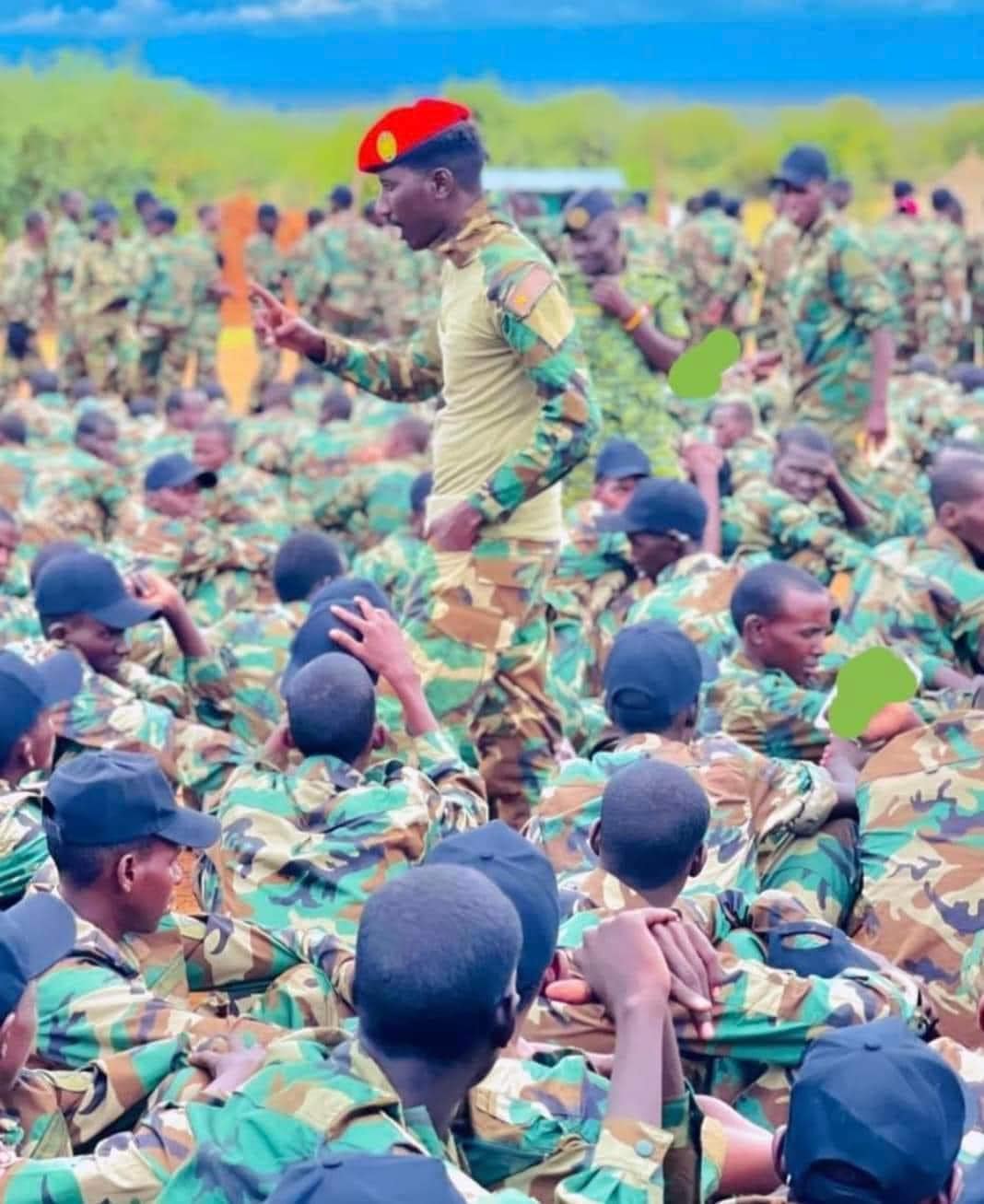
None of this is new in kind. Turkiye has trained Somali forces for more than a decade. The Gorgor brigades are the flagship product of the TURKSOM academy, whose latest officer class graduated on July 9 with Hassan Sheikh presiding. Erdogan has commercial stakes to protect as well, including an oil exploration program he has publicly placed on a nine-month clock. What has changed is the political context around the partnership. Training an army for a consensual state is assistance; equipping and decorating it for a president whose opponents say his legal term expired on May 15 is a wager on one man’s survival.
The wager may yet pay. Hassan Sheikh controls the capital, the treasury, and the international signature, and a Turkish military shield makes him harder to dislodge. The costs, however, compound quietly. Each ceremony erodes the mediation track that remains Somalia’s only nonviolent exit from the standoff. Each deployment gives Puntland and Jubaland fresh evidence for treating federal institutions as captured. And each decorated commander teaches the officer corps that the shortest route to promotion runs through foreign patronage and political operations. Al-Shabaab will not need that lesson taught twice as it studies the fractured force arrayed against it. Ankara set out to build a Somali army; it is closer to owning a Somali faction.