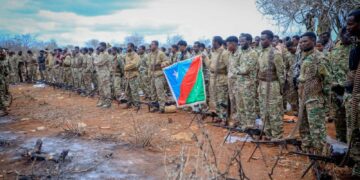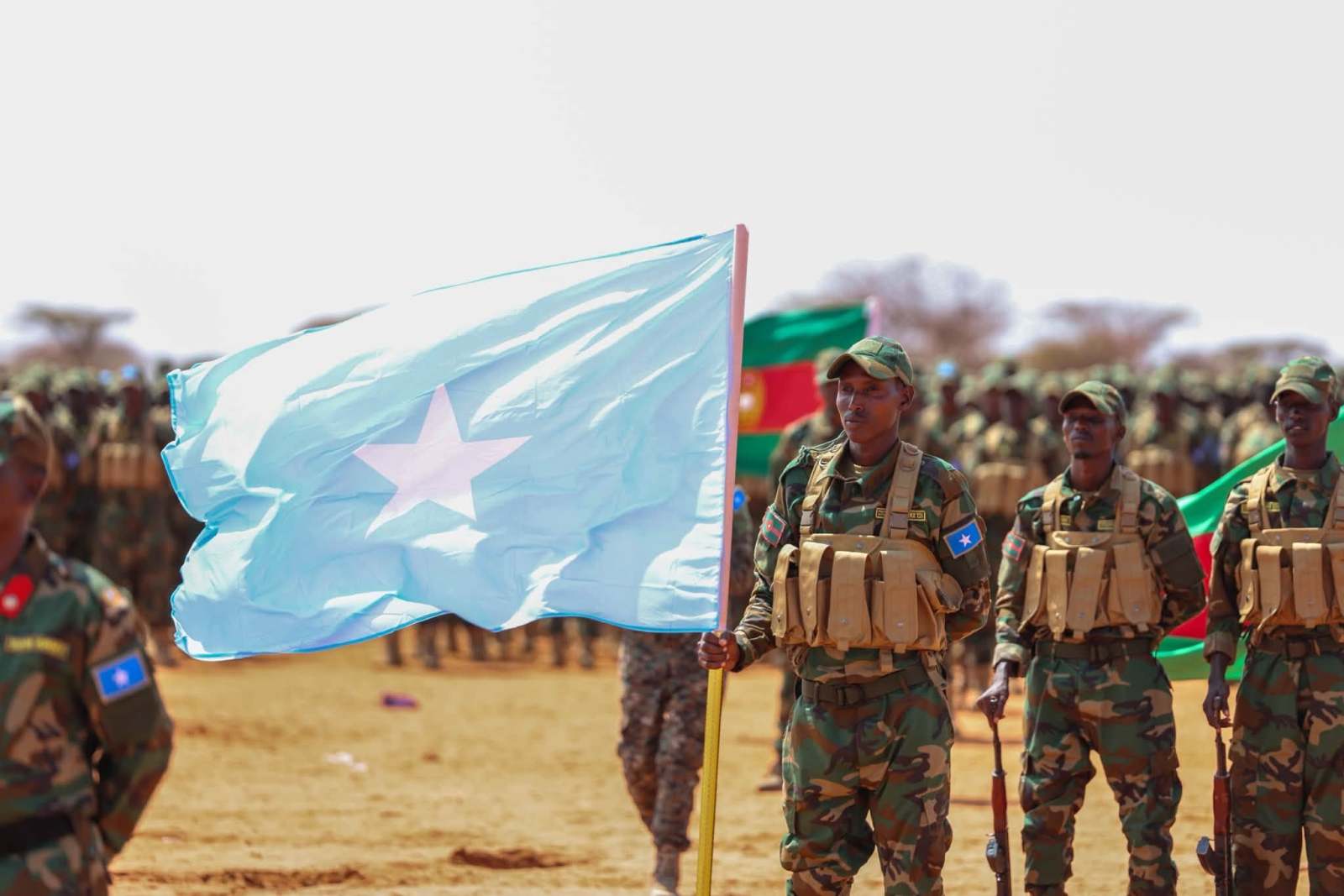
MOGADISHU, SOMALIA – Somalia’s national security adviser, Aways Haji Yusuf, confirmed on Tuesday 1 September that soldiers from the Saudi-funded Xananbuure programme have crossed into Ethiopia’s Somali Region, and said they were on leave to visit their families with the government’s knowledge. The first reports, four days earlier, had nearly 200 newly trained soldiers intercepted by regional forces and held at Wardheer, Qabridahar and Jigjiga. The men belong to the class of roughly 3,000 that passed out at Xananbuure on 16 August with President Hassan Sheikh Mohamud presiding, the largest the army has graduated on Somali soil since 1991, and a fortnight later part of that class sits in a neighbouring state’s custody. Mogadishu’s explanation concedes that the soldiers were recruited from across the border, that its newest infantry went on leave into another country, and that it cannot say why an allied regional administration detained them.

What the Adviser Confirmed About Xananbuure
The adviser’s statement answered the question of whether the crossing happened and left every other question open. He said the soldiers had spent more than a year at Xananbuure in Galgadud, that they had permission to visit their families, and that the government was aware of their presence in the Somali Region. He closed with the line that the government would inform the media “if there are other issues”. Nothing in the statement addressed whether the men were armed when they crossed, whether they travelled under a commander, which unit they belong to, or whether Mogadishu has asked Addis Ababa or the regional administration in Jigjiga for access to them or for their return.
The accounts he was answering had been circulating since Saturday 29 August, when the first reports described nearly 200 soldiers from Xananbuure entering the region through the border near Shilabo district in Qorahay Zone and near Wardheer. One group was intercepted by the Liyu Police at Neefkuceshe in Dollo Zone while travelling in seven Toyota Probox cars and was taken to Wardheer, and a second was stopped around Caleen in Qorahay Zone in two cargo trucks and three smaller vehicles. By Sunday 30 August a further account put the number at 231, with 123 held at a locality reported as Laascaanood, 88 at Wardheer and 20 at Caleen, and said the men were being assembled at Qabridahar, while a separate report placed around 200 of them in Jigjiga.
Those figures have not been reconciled by anyone with the authority to do so, and neither the federal government, the Galmudug administration nor the Somali Regional State has published a number, a location or a legal status for the detainees. The adviser’s version, in which men on leave crossed a border to see their families, and the regional version, in which police intercepted convoys of soldiers travelling in hired vehicles and held them at three points, both fit the same facts. The government has said nothing about the desertion reports at all. A soldier on leave does not need to be intercepted by the Liyu Police, and a government that issued the leave would know how many men it issued it to.
A Recruitment Base Across the Border
Leave to visit families in Ethiopia’s Somali Region means the families live there, and the adviser’s statement therefore confirms the reports that many of the detained men were recruited from across the border. One Nairobi-based analyst with Sahan Research called the admission refreshing and commendable “but likely to generate more questions”, and asked whether Somalia recruited forces from the Somali Regional State with the permission of the regional and federal authorities in Ethiopia, and if not, how Addis Ababa would respond. The Xananbuure intake was reported at 5,107 recruits across two camps in Galgadud, drawn from every federal member state, and the federal government has never published its selection process or the origin of its recruits.
Recruiting Somalis from Ethiopia for camps like Xananbuure is an old practice with a new sensitivity. The army that has fought al-Shabaab since 2007 has always drawn on the wider Somali population of the Horn, and the border between Galgadud and the Somali Region is a line on a map that the clans living on both sides of it have never treated as one. Ethiopia’s Somali Region now has its own regional force, its own police and its own president. Its Liyu Police stopping convoys of Somali soldiers at three points and moving them to Wardheer and Qabridahar is a regional government asserting that men in Somali uniform do not travel through its territory unannounced.
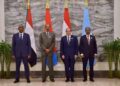
Mogadishu has said the Ankara Declaration now governs its relations with Ethiopia, and that declaration commits both governments to respect each other’s sovereignty and territorial integrity. Several hundred federal soldiers crossing an international border in hired cars, whether on leave or in flight, is the kind of event the declaration was written to prevent. It has arrived at a moment when Ethiopian troops have already withdrawn from Burhakaba and when the two governments sit in different regional camps, Addis Ababa closer to the United Arab Emirates and Mogadishu closer to Riyadh and Ankara. The Saudi money that trained the men at Xananbuure is itself part of that alignment, which gives the regional administration in Jigjiga a reason to look carefully at who these soldiers are and who paid for them.
Retention Was the Question Xananbuure Never Answered
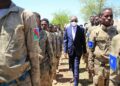
The graduation on 16 August was the largest the army has held since 1991, and it left open the questions of pay, retention and who funds the war after December, the first of which has now been tested inside a fortnight. President Hassan Sheikh Mohamud told the class to protect the sovereignty of the country and serve with honesty, Galmudug President Ahmed Abdi Karie Qoorqoor pledged his administration’s support, and the defence minister, the army commander and the leadership of the 21st Division sat on the dais. Fourteen days later a portion of the class had left the camp, crossed the border and been detained, and the ministry that organised their training has not named the unit they were assigned to or the command responsible for their pay.
Unpaid salaries, poor conditions, mistrust of commanders, refusal of a deployment and a political dispute have all been raised in public discussion as reasons for the departure, and none has been confirmed by a soldier from the group or by an official, while the record of the units the graduates were joining is public. The brigade that fell at Teedaan in July had been starved of ammunition, according to serving officers, and Adan Yabaal, taken in December 2022, was lost again in April 2025 to the same enemy this class was raised to fight. A recruit who has spent a year at Xananbuure listening to what happens to the units ahead of him has information about his future that the ceremony did not supply.
Riyadh agreed in February to fund training for about 5,000 soldiers, and the 3,000 at Xananbuure were the bulk of that pledge delivered in one class. Uganda has set 1 August 2027 as the date its last troops leave Somalia, while the mission’s support structure is being auctioned off in Mogadishu. Every one of the 3,000 was counted toward the force that is supposed to hold Basra, thirty kilometres from Villa Somalia, after the foreign contingents go. Several hundred of them are in a police compound in Wardheer, and the government’s first public statement about them was that they are on family leave.
Addis Ababa Holds the Soldiers and the Answer
The regional administration in Jigjiga has issued no statement on the men it is holding, and the Ethiopian federal government has said nothing at all. That leaves Mogadishu’s account as the only official version and the detentions as the only official act. The regional police intercepted the convoys, chose the towns where the soldiers are held and moved them between Wardheer, Qabridahar and Jigjiga, and every one of those decisions was taken without a Somali official in the room. Whatever Mogadishu says about leave, the men’s release now depends on a regional president in Ethiopia and on a federal government in Addis Ababa with which Mogadishu has spent two years arguing over the Somaliland memorandum.
The federal government’s position on Ethiopia has been that the Ankara Declaration settled the relationship and that the memorandum with Somaliland is no longer relevant, and its position on its own army has been that a class of 3,000 finishing on Somali soil demonstrates a state rebuilt. The Xananbuure detentions put both positions to the test in the same week. A government whose soldiers are held by a neighbour’s regional police has to ask that neighbour for them back. The request will be read in Addis Ababa alongside the questions the analyst raised, about whose citizens these men are, who recruited them, and whether anyone in Ethiopia agreed to it. Whatever answer Jigjiga gives will say more about the state of the relationship than any communique signed in Ankara.
The federal government has spent the past month sending soldiers against Laftagareen’s forces around Baidoa, holding the corridor at Basra with Turkish aircraft overhead, and negotiating with its own opposition over an election it has agreed to hold within seven months. Its newest and largest class of infantry was supposed to be the answer to the drawdown that Uganda has now dated, and the adviser’s statement concedes that the government knew the Xananbuure class had scattered across a border and chose to call it leave. A state that cannot say how many of its soldiers a neighbour is holding, or why they left, has told the region what its largest graduation since 1991 was worth.