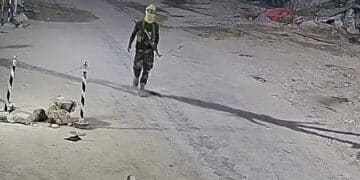
MOGADISHU, SOMALIA – The national intelligence agency said on Sunday 20 September that it had killed an al-Shabaab commander and three of his men at Guulane and Al-Furqaan in Middle Shabelle, wounded a second commander, and caught the group as it left a meeting in the Guulane area. The agency published the names, which it rarely does. Omar Siyad Caraaye, killed in the operation, was the al-Shabaab official responsible for one of the clans living in Middle Shabelle, and Abdi Mohamed Nur, wounded beside him, held the same portfolio for clan affairs. Two of the dead were the riders who drove the commanders’ motorcycles and the fourth was a bodyguard. The operation was carried out, in the agency’s own phrase, with international partners.

What the Agency Published About Guulane
Forces of the National Intelligence and Security Agency, working with international partners, conducted planned operations in the Guulane and Al-Furqaan areas of Middle Shabelle region, the statement said, killing a commander and three militia of what the government calls the Khawarij, while a second commander was wounded. The operation took place as the men came out of a meeting convened in the Guulane area. The agency then listed who they were, giving four identities and two job titles, which is more detail than it has released about any single operation this year. Somali outlets carried the names within hours of the statement going out.
Knowing that a gathering of al-Shabaab officials would be held at Guulane, and knowing when it would break up, is the whole of the operation. The men were on motorcycles when they were hit, which is how mid-level officials move through the Shabelle farmland, and the two riders killed alongside them belonged to that arrangement. Somali intelligence has claimed this kind of timing before, at Ceelbaraf and at Moqokori among others, and has rarely supplied the names to go with it. Four men died at Guulane and Al-Furqaan on Sunday afternoon, and no independent account of the scene has come out of the villages since.
Three days before Guulane the same agency said it had arrested eleven men in Mogadishu and Afgooye and published no names, no arrest times, no charges and no court records. An office that withheld the identity of eleven living detainees released the identities of four dead men and the portfolios two of them held, and both decisions were taken in the same week by the same directorate. Dead men do not appear in court, and nobody will ask the agency to produce them. The eleven arrested at Afgooye and in the capital remain unnamed four days later, no prosecutor has been identified, and the agency has issued nothing further about them.
Both Named Men Held the Clan Portfolio
Omar Siyad Caraaye and Abdi Mohamed Nur, the two men named at Guulane, held what the agency called responsibility for a clan, which in al-Shabaab’s structure covers a specific and well understood set of duties. The officials in those posts negotiate with elders, settle disputes between families over land and water, collect the assessments the group levies on farms and herds, adjudicate marriage and blood-money cases, and decide which lineages are taxed and which are left alone. This is the part of the organisation that governs, and in Middle Shabelle it has been doing that work continuously for the better part of fifteen years.
Al-Shabaab absorbs battlefield reversals without losing the countryside because that apparatus keeps running when its fighters withdraw. Farmers in the riverine districts take disputes to its courts because a judgment there is enforced next season, while a federal judgment arrives with a garrison and leaves when the garrison does. The Biyomaal and the Habar Gidir both went to al-Shabaab for mediation during the Lower Shabelle land dispute in July, and the federal government was the party neither side thought to ask. The group’s courts have operated continuously in those districts through every change of garrison since 2011.
Killing two clan officers at Guulane is a strike on that machinery, and the agency’s decision to spell out the function in its own statement is the most substantive line in the announcement. Somali readers were told exactly what the dead men did for a living. Nothing has been published about who succeeds them, and al-Shabaab has filled equivalent posts within days on every previous occasion, including after the killings of its Hiiraan and Middle Shabelle officials over the past two years. The group has not acknowledged the Guulane losses, which is its usual practice when officials of this rank are hit.
Middle Shabelle Is Where the Government Also Rules by Clan
Ground around Guulane is the same ground on which the federal government has spent the year assembling clan arrangements of its own. A soldier was killed by a clan militia at Ceelbaraf on 11 September, and Mogadishu answered with an investigation it has not reported on, the second such promise in that district in nine months. The Macawisley who carry the campaign against al-Shabaab across Hiiraan and Middle Shabelle are clan militias by construction, raised through elders and paid through them. The army chief spent August weighing whether to recall Ali Jeyte to lead them, which is a decision about a clan figure and not about a military appointment.
Hirshabelle settled its own presidency this month in the same currency, by handing one candidate the ruling party card. The Hawadle leadership that objected has been holding meetings in Beledweyne ever since, with former state presidents attacking each other in public over who speaks for the clan, and the quarrel has drawn in two former intelligence chiefs and a former state president. Villa Somalia selects state presidents through bargains with lineages while its intelligence service kills the officials who perform the identical function for the insurgency.
Neither fact makes the Guulane operation less real or the two men less dangerous, and the agency is entitled to count it as a success. It does explain why removing two clan officers will move the war less than the statement implies. What they administered is a web of relationships with elders and farmers, held in place by the absence of any other authority that will settle a quarrel over a riverbank, and an air strike takes the officeholder away without touching the office. Middle Shabelle has changed hands repeatedly since the 2022 offensive, and the clan courts have gone on sitting through every rotation of the garrisons.
The Partners in the Sentence
International partners is a phrase that carries more weight in September 2026 than it did a year ago. The strikes supporting Somali intelligence operations in the Shabelle valleys come from American aircraft and rest on the logistics the United Nations support office still provides, and Washington has told the United Nations it will fund a twelve month drawdown and then stop. That countdown begins in January 2027, and the support office is to be liquidated at the end of it.
Operations of the Guulane type are the first capability to thin when that happens, because they depend on surveillance hours, a strike asset held on call and the intelligence fusion that fixes a meeting to a place and a moment. Somali forces can raid a compound without foreign help and have done so repeatedly. Catching four men on motorcycles in the minutes after a meeting ends is a different proposition, and it is precisely the proposition the December drawdown negotiations in the Security Council will settle the future of. No alternative provider of those surveillance hours has been publicly identified by Mogadishu or by the African Union.
Omar Siyad Caraaye and Abdi Mohamed Nur held the clan file for al-Shabaab in Middle Shabelle, and both were reachable at Guulane on a Sunday afternoon because somebody knew where the meeting was. Whoever inherits the file will have read the statement naming them. So will the elders in the villages between Jowhar and the Al-Furqaan crossing, who have to decide each season which authority is worth dealing with, and who have watched the aircraft that make operations like this possible come under a deadline. The defence ministry said this week that al-Shabaab could not take a single village if the African Union mission withdrew, and the men at Guulane were killed by a capability that mission’s backers are winding down.